Yu Jie, Dong Biao, Zhao Minmeng, Liu Long, Geng Tuoyu, Gong Daoqing, Wang Jian
College of Animal Science and Technology, Yangzhou University, Yangzhou 225009, China.
Department of Animal Science and Technology, Jiangsu Agri-Animal Husbandry Vocational College, Taizhou 225300, China.
Animals (Basel). 2021 Nov 6;11(11):3174. doi: 10.3390/ani11113174.
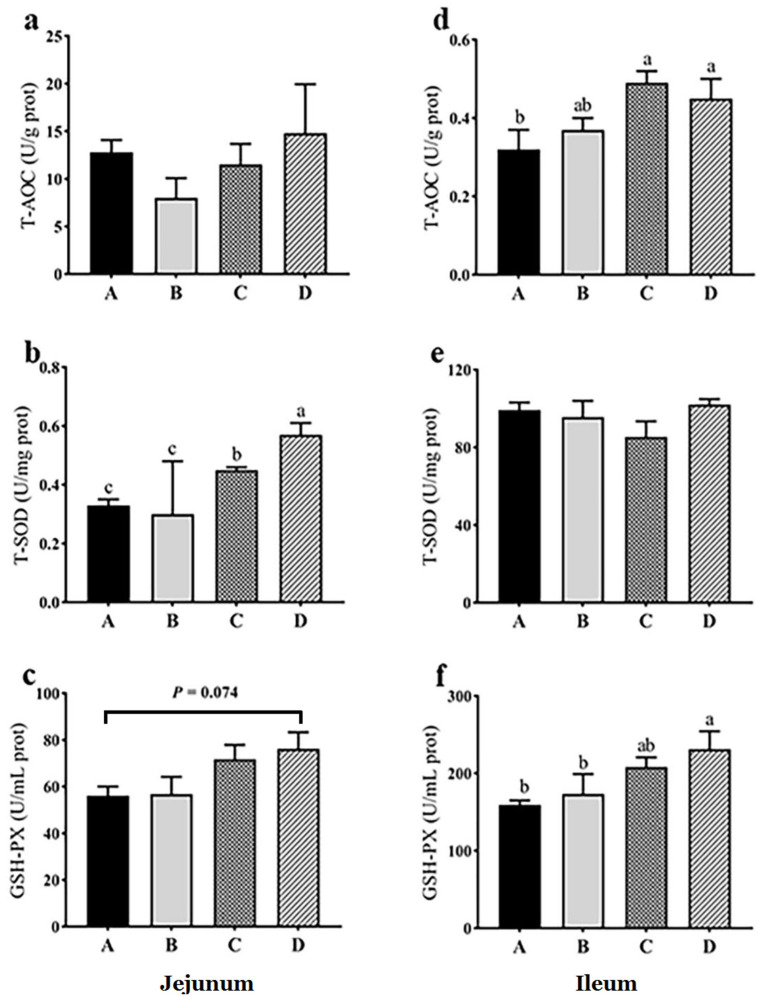
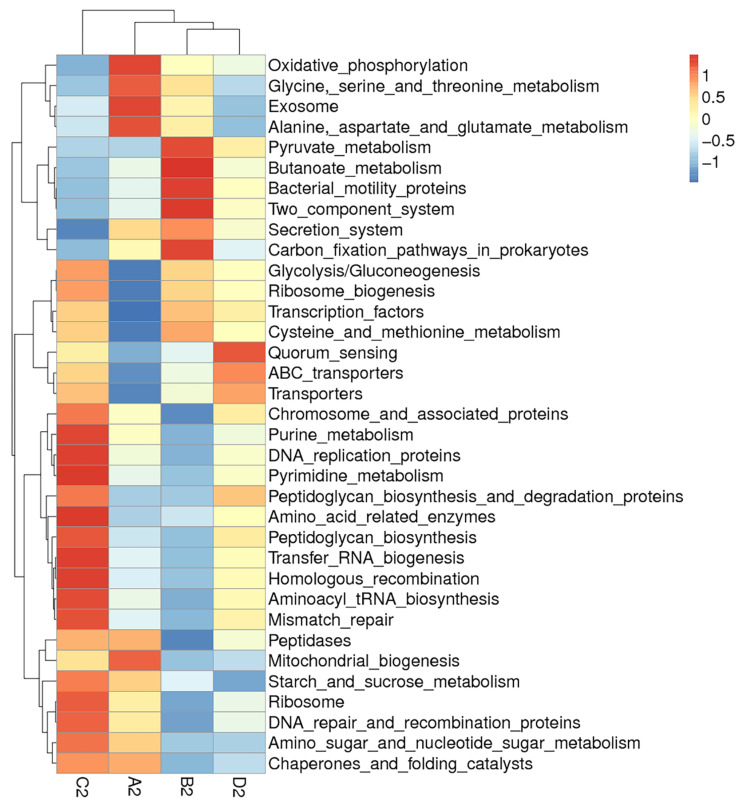
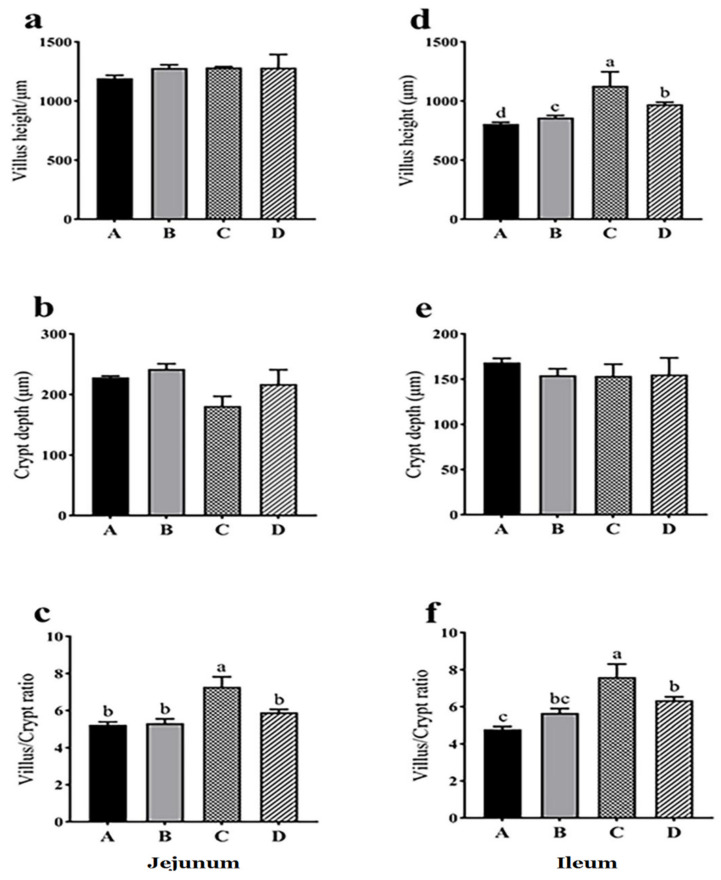
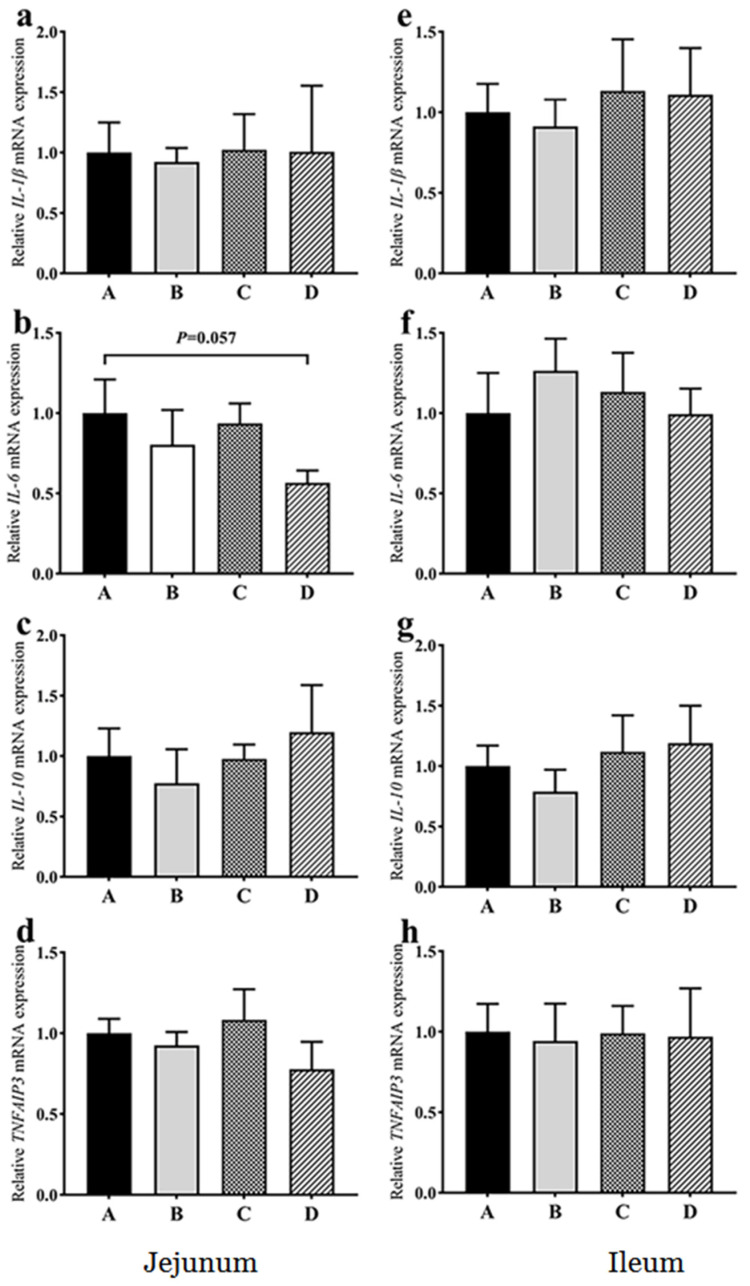
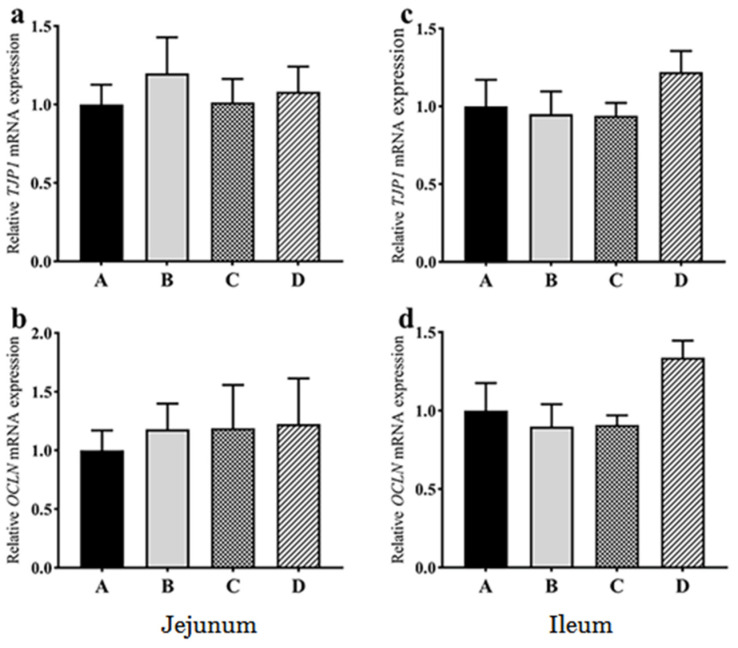
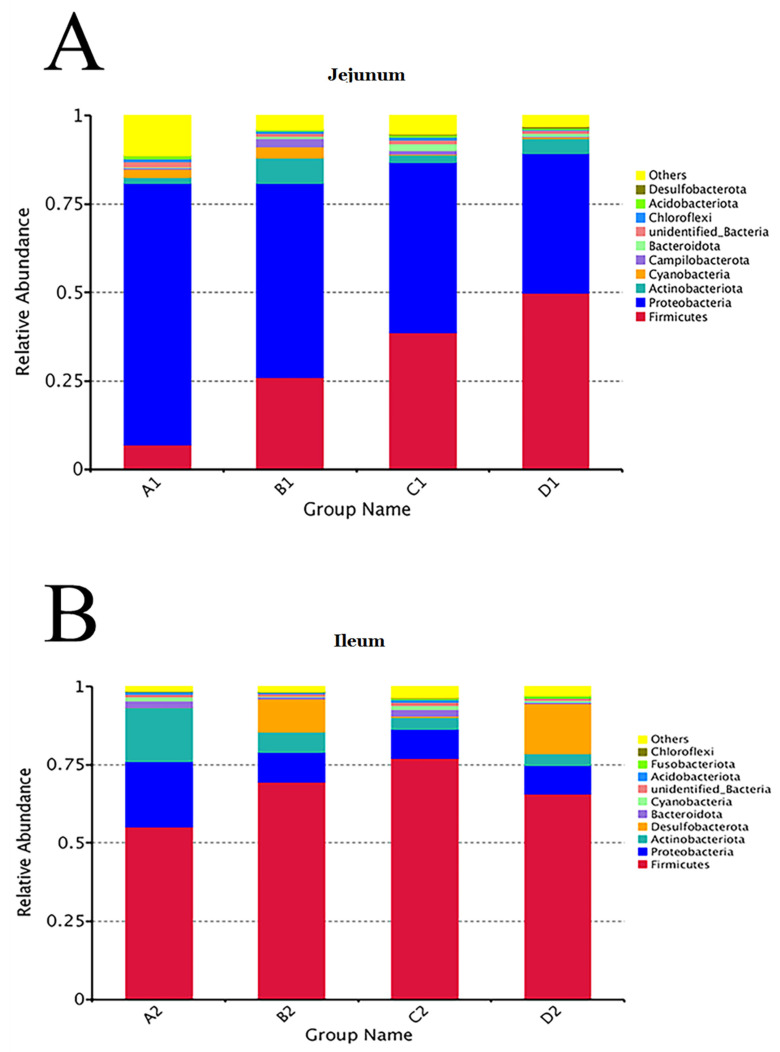
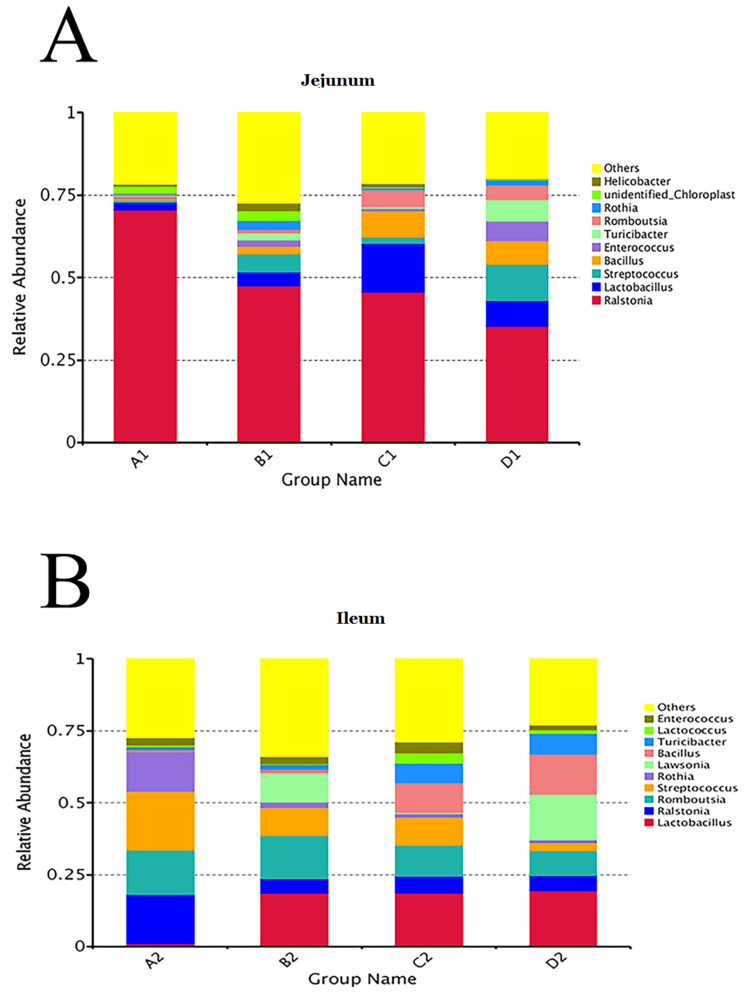
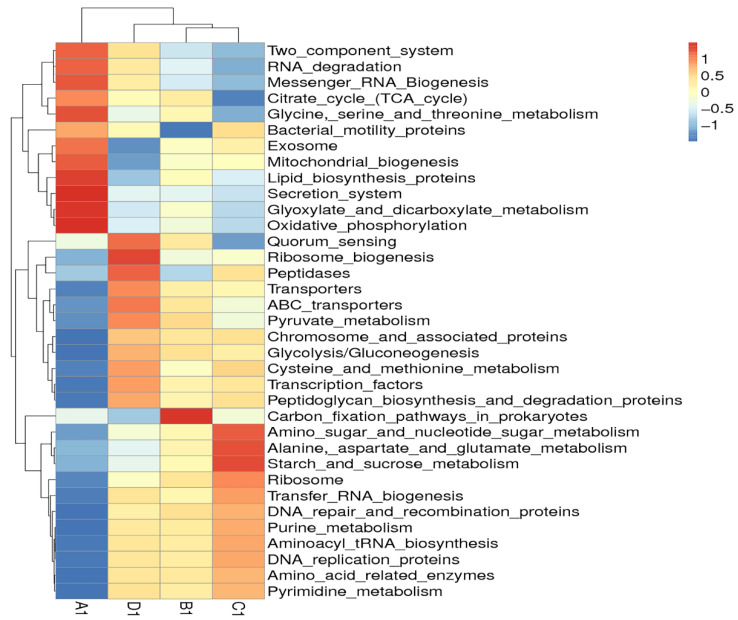
Probiotics are a substitute for antibiotics in the sense of intestinal health maintenance. and , as probiotic bacteria, have been widely used in animal production. The aim of this study was to investigate the effects of the two probiotic bacteria in geese. A total of 288 1-day old, healthy Yangzhou geese were randomly assigned into 4 groups (A, B, C and D) with 6 replicates of 12 birds each. Group A, as control, was fed a basal diet, and the treatment groups (B, C and D) were fed the basal diet supplemented with 250 mg/kg (the viable count was 3.0 × 10 CFU/g), 250 mg/kg (the viable count was 2.0 × 10 CFU/g), or a combination of the two probiotic bacteria for 70 days, respectively. The results indicated that: compared with the control group, dietary probiotics (1) promoted the growth and feed intake of the geese, (2) increased the absolute weight of duodenum, (3) increased the antioxidative capacity (total antioxidative capacity (T-AOC), total superoxide dismutase (T-SOD) and glutathione peroxidase (GSH-PX)) of intestinal mucosa, (4) improved intestinal morphology (the ratio of villus height to crypt depth), (5) but did not induce inflammation and changes of tight junction in the intestine, which was indicated by no induction of pro/inflammatory cytokines (, , , ) and tight junction related genes ( and ). Moreover, dietary probiotics increased the relative abundances of phylum and genus and decreased the relative abundances of phylum or genus in the intestinal content. In addition, the alpha diversity (observed species, Chao1, and estimate the number of OTUs in the community(ACE)) was reduced and the predicted functions of intestinal microflora, including peptidases, carbon fixation and metabolic function of starch and sugar, were enhanced by dietary probiotics. In conclusion, dietary probiotics promote the growth of geese by their positive effects on intestinal structure and function, the composition and functions of gut microflora, and intestinal antioxidative capacity.
从维持肠道健康的意义上讲,益生菌是抗生素的替代品。作为益生菌,已被广泛应用于动物生产中。本研究的目的是调查两种益生菌对鹅的影响。总共288只1日龄健康扬州鹅被随机分为4组(A、B、C和D),每组6个重复,每个重复12只鹅。A组作为对照组,饲喂基础日粮,处理组(B、C和D)分别饲喂添加250 mg/kg (活菌数为3.0×10 CFU/g)、250 mg/kg (活菌数为2.0×10 CFU/g)或两种益生菌组合的基础日粮,持续70天。结果表明:与对照组相比,日粮中的益生菌(1)促进了鹅的生长和采食量,(2)增加了十二指肠的绝对重量,(3)提高了肠黏膜的抗氧化能力(总抗氧化能力(T-AOC)、总超氧化物歧化酶(T-SOD)和谷胱甘肽过氧化物酶(GSH-PX)),(4)改善了肠道形态(绒毛高度与隐窝深度之比),(5)但未诱导肠道炎症和紧密连接的变化,这通过未诱导促炎/炎症细胞因子( 、 、 、 )和紧密连接相关基因( 和 )得以表明。此外,日粮中的益生菌增加了肠道内容物中 门和 属的相对丰度,降低了 门或 属 的相对丰度。另外,日粮中的益生菌降低了α多样性(观察到的物种数、Chao1指数以及估计群落中OTU的数量(ACE)),并增强了肠道微生物群的预测功能,包括肽酶、碳固定以及淀粉和糖的代谢功能。总之,日粮中的益生菌通过对肠道结构和功能、肠道微生物群的组成和功能以及肠道抗氧化能力产生积极影响,促进了鹅的生长。