Cainelli Elisa, Vedovelli Luca, Mastretta Emmanuele, Gregori Dario, Suppiej Agnese, Bisiacchi Patrizia Silvia
Department of General Psychology, University of Padova, 35131 Padova, Italy.
Unit of Biostatistics, Epidemiology and Public Health, Department of Cardiac, Thoracic, Vascular, and Public Health Sciences, University of Padova, 35121 Padova, Italy.
Children (Basel). 2021 Nov 22;8(11):1076. doi: 10.3390/children8111076.
Data on long-term outcomes in the era before therapeutic hypothermia (TH) showed a higher incidence of cognitive problems. Since the introduction of TH, data on its results are limited.
Our sample population consisted of 40 children with a history of hypoxic-ischemic encephalopathy (HIE) treated with TH, with an average age of 6.25 years (range 5.5, 7.33), 24 (60%) males; and 33 peers with an average age of 8.8 years (6.08, 9.41), 17 (51%) males. Long-term follow-up data belong to two centers in Padova and Torino. We measured general intelligence (WPPSI-III or WISC-IV) and neuropsychological functioning (language, attention, memory, executive functions, social skills, visual motor abilities). We also administered questionnaires to their parents on the children's psychopathological profiles and parental stress.
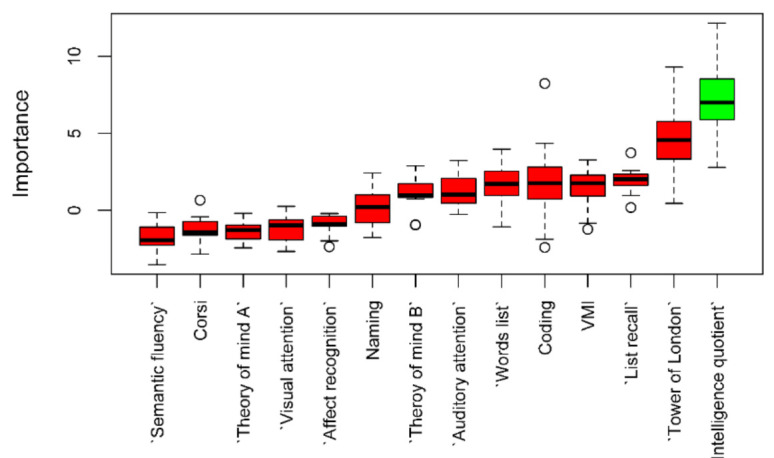
We found differences between groups in several cognitive and neuropsychological domains: intelligence, visuomotor skills, executive functions, and attention. Interestingly, IQ test results effectively differentiated between the groups (HIE vs. controls). Furthermore, the incidence of psychopathology appears to be significantly higher in children with HIE (35%) than in control peers (12%).
Our study supports previous findings on a higher incidence of neuropsychological, cognitive, and psychopathological sequelae after HIE treated with TH. As hypothesized, TH does not appear to ameliorate the outcome after neonatal HIE in those children who survive without major sequelae.
治疗性低温(TH)时代之前的长期预后数据显示认知问题的发生率较高。自引入TH以来,关于其结果的数据有限。
我们的样本群体包括40名接受TH治疗的缺氧缺血性脑病(HIE)患儿,平均年龄6.25岁(范围5.5至7.33岁),男性24名(60%);以及33名同龄对照者,平均年龄8.8岁(6.08至9.41岁),男性17名(51%)。长期随访数据来自帕多瓦和都灵的两个中心。我们测量了一般智力(韦氏幼儿智力量表第三版或韦氏儿童智力量表第四版)和神经心理功能(语言、注意力、记忆力、执行功能、社交技能、视觉运动能力)。我们还向他们的父母发放了关于儿童心理病理特征和父母压力的问卷。
我们发现两组在几个认知和神经心理领域存在差异:智力、视觉运动技能、执行功能和注意力。有趣的是,智商测试结果有效地区分了两组(HIE组与对照组)。此外,HIE患儿的心理病理发生率(35%)似乎明显高于对照同龄儿童(12%)。
我们的研究支持了先前关于TH治疗的HIE后神经心理、认知和心理病理后遗症发生率较高的研究结果。正如所假设的,对于那些没有严重后遗症而存活下来的儿童,TH似乎并没有改善新生儿HIE后的预后。