Liu Zhenyang, Liu Qiumei, Zhang Di, Wei Shuai, Sun Qinxiu, Xia Qiuyu, Shi Wenzheng, Ji Hongwu, Liu Shucheng
College of Food Science and Technology, Guangdong Ocean University, Guangdong Provincial Key Laboratory of Aquatic Product Processing and Safety, Guangdong Province Engineering Laboratory for Marine Biological Products, Guangdong Provincial Engineering Technology Research Center of Seafood, Key Laboratory of Advanced Processing of Aquatic Product of Guangdong Higher Education Institution, Zhanjiang 524088, China.
College of Food Science and Technology, Shanghai Ocean University, Shanghai 201306, China.
Foods. 2021 Oct 27;10(11):2603. doi: 10.3390/foods10112603.
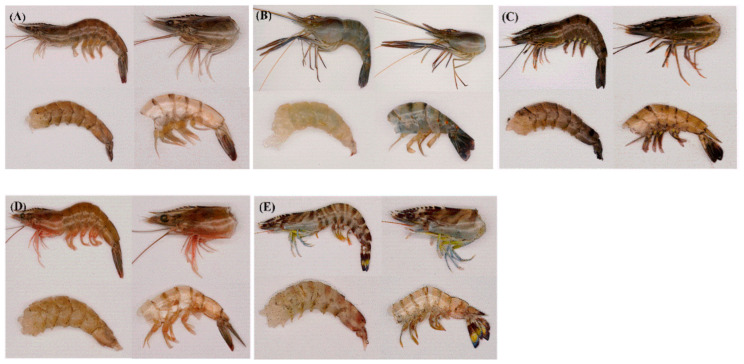
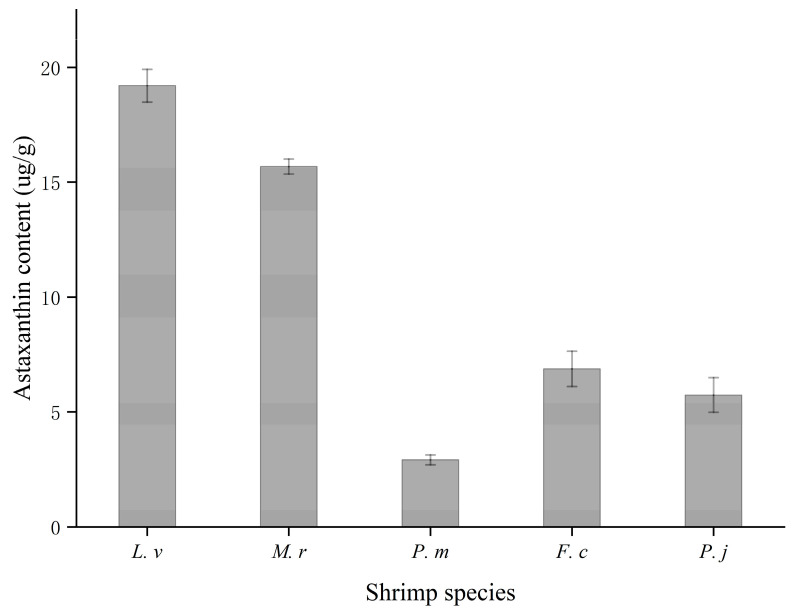
The nutritional components of different parts (meat, head, shell and tail) of (), (), (), (), and () were analyzed and their nutritional values were evaluated. For the five species of shrimp, the meat yield was 37.47-55.94%, and the byproduct yield was 44.06-62.53%. The meat yields of and were the highest (55.94 and 55.92%, respectively), and the meat yield of was the lowest (37.47%). The shrimp contain high amounts of crude protein, and the values of the amino acid score (AAS), chemical score (CS), and essential amino index (EAAI) were greater than or close to 1.00, indicating that shrimp protein had higher nutritional value. The shrimp head was rich in polyunsaturated fatty acids and the ratio of n-6 to n-3 PUFAs was from 0.37 to 1.68, indicating that the shrimp head is rich in n-3 PUFAs and is a good source of n-3 PUFAs. The five species of shrimp were rich in macro- and micro-minerals, especially in shrimp byproducts. The shrimp byproducts were also rich in other bioactive ingredients (astaxanthin), which are also very valuable for developing biological resources. Therefore, shrimp have many nutritional benefits, and their byproducts can also be used to develop natural nutraceuticals, which are considered to be one of the healthiest foods.
对()、()、()、()和()不同部位(肉、头、壳和尾)的营养成分进行了分析,并对其营养价值进行了评估。对于这五种虾类,出肉率为37.47 - 55.94%,副产品率为44.06 - 62.53%。()和()的出肉率最高(分别为55.94%和55.92%),()的出肉率最低(37.47%)。虾含有大量粗蛋白,氨基酸评分(AAS)、化学评分(CS)和必需氨基酸指数(EAAI)的值大于或接近1.00,表明虾蛋白具有较高的营养价值。虾头富含多不饱和脂肪酸,n - 6与n - 3多不饱和脂肪酸的比例为0.37至1.68,表明虾头富含n - 3多不饱和脂肪酸,是n - 3多不饱和脂肪酸的良好来源。这五种虾类富含常量和微量矿物质,尤其是虾类副产品。虾类副产品还富含其他生物活性成分(虾青素),这对于开发生物资源也非常有价值。因此,虾具有许多营养益处,其副产品也可用于开发天然营养保健品,虾被认为是最健康的食物之一。