Zhou Jingxuan, Zhang Nanhai, Zhao Liang, Wu Wei, Zhang Liebing, Zhou Feng, Li Jingming
Beijing Key Laboratory of Functional Food from Plant Resources, College of Food Science and Nutritional Engineering, China Agricultural University, 17 Tsinghua East Road, Beijing 100083, China.
Beijing Advance Innovation Center for Food Nutrition and Human Health, Beijing Engineering and Technology Research Center of Food Additives, Beijing Technology and Business University, 11 Fucheng Road, Beijing 100048, China.
Foods. 2021 Nov 3;10(11):2688. doi: 10.3390/foods10112688.
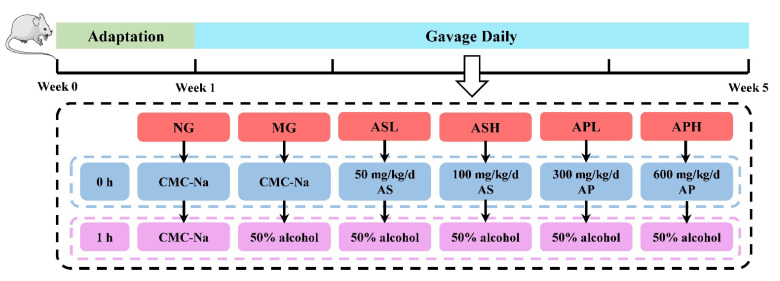
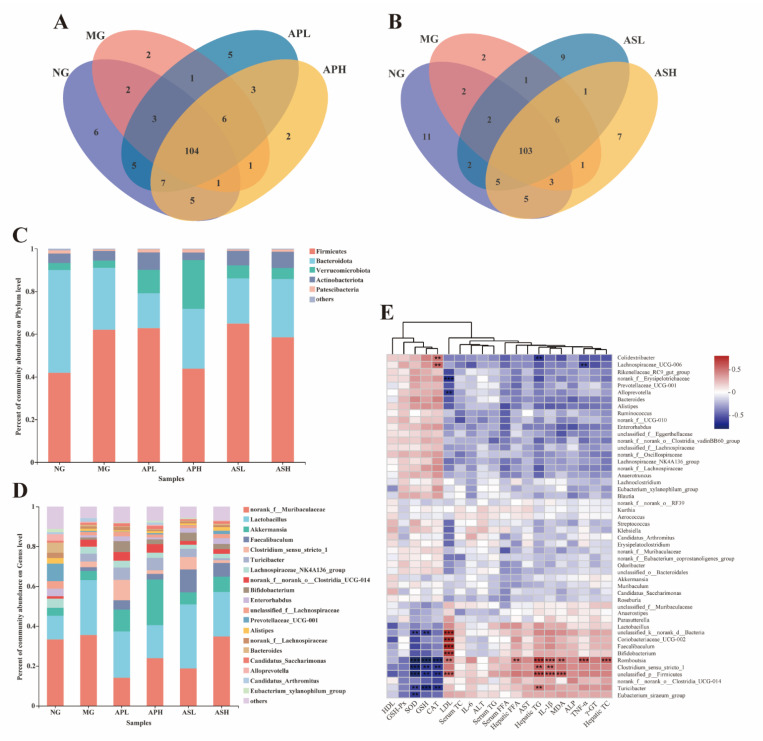
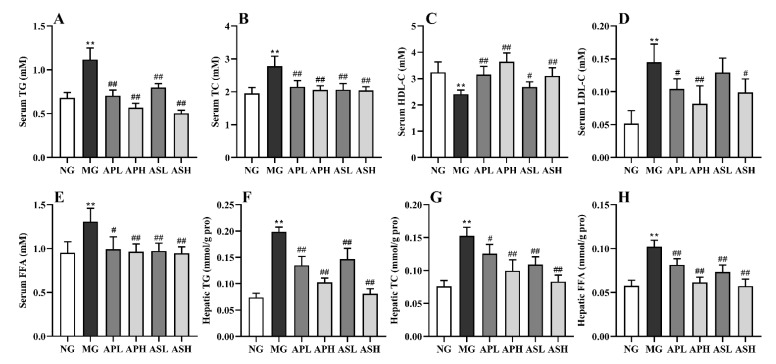
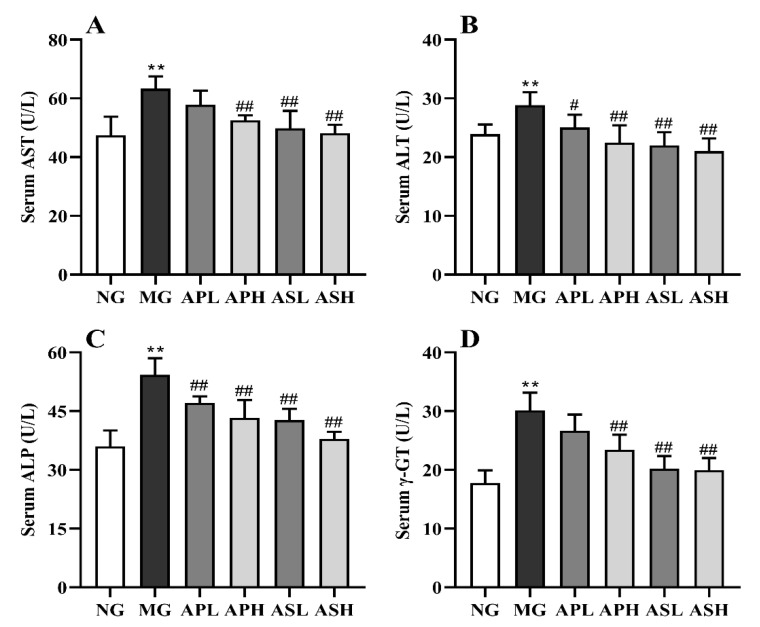
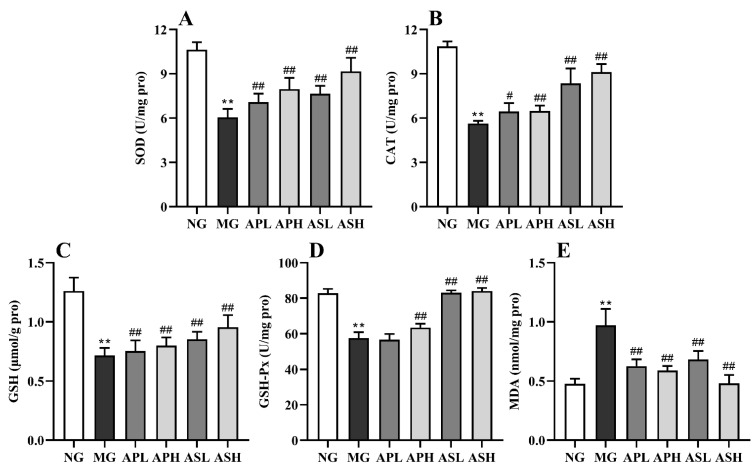
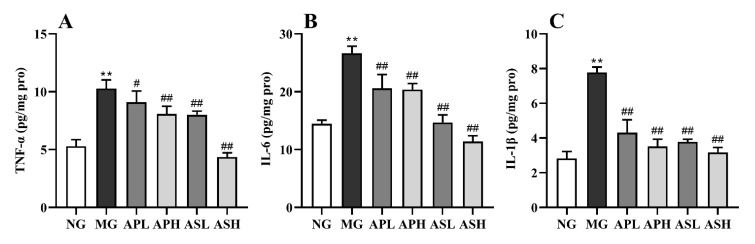
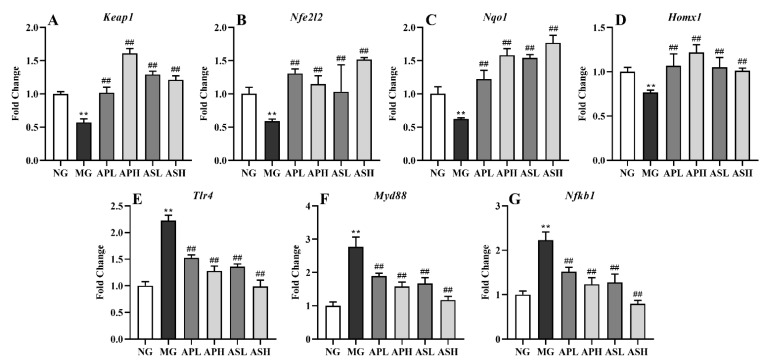
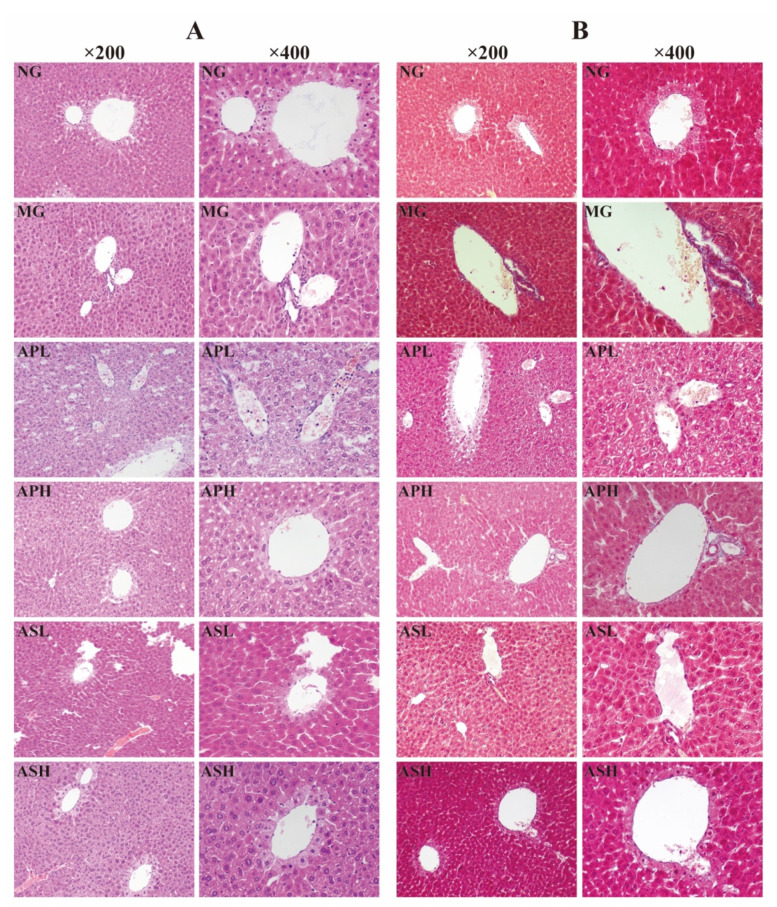
Astragalus, a medical and edible plant in China, shows several bioactive properties. However, the role of astragalus in attenuating alcoholic liver disease (ALD) is less clear. The objective of this project is to investigate the improving effect of astragalus saponins (AS) and astragalus polysaccharides (AP), which are the two primary constituents in astragalus on hepatic injury induced by alcohol, and the potential mechanisms of action. Different doses of AS (50 and 100 mg/kg bw) and AP (300 and 600 mg/kg bw) were orally given to alcohol-treated mice for four weeks. The results demonstrated that both AP and AS could reverse the increase of the levels of TC, TG, FFA, and LDL-C in serum, and the decrease of serum HDL-C content, as well as the elevation of hepatic TC and TG levels induced by alcohol. The activities of AST, ALT, ALP, and γ-GT in ALD mice were raised after AP and AS supplementation. The antioxidant markers (SOD, CAT, GSH, and GSH-Px) were obviously augmented and the pro-inflammatory cytokines (TNF-α, IL-6 and IL-1β) and hepatic histological variations were alleviated by AP and AS, which was in line with the levels of oxidative stress-associated genes (, , , and ) and inflammation-associated genes (, and ). In addition, AS exerted a more efficient effect than AP and the results presented dose proportionality. Moreover, AS and AP could modulate the intestinal microbiota disturbance induced by alcohol. Overall, AS and AP administration could ameliorate lipid accumulation in the serum and liver, as well as hepatic function, oxidative stress, inflammatory response, and gut flora disorders in mice as a result of alcohol.
黄芪是中国一种药食两用的植物,具有多种生物活性。然而,黄芪在减轻酒精性肝病(ALD)方面的作用尚不清楚。本项目的目的是研究黄芪的两种主要成分黄芪皂苷(AS)和黄芪多糖(AP)对酒精诱导的肝损伤的改善作用及其潜在作用机制。将不同剂量的AS(50和100 mg/kg体重)和AP(300和600 mg/kg体重)口服给予酒精处理的小鼠,持续四周。结果表明,AP和AS均可逆转酒精诱导的血清中总胆固醇(TC)、甘油三酯(TG)、游离脂肪酸(FFA)和低密度脂蛋白胆固醇(LDL-C)水平的升高,血清高密度脂蛋白胆固醇(HDL-C)含量的降低,以及肝脏TC和TG水平的升高。补充AP和AS后,ALD小鼠体内天冬氨酸氨基转移酶(AST)、丙氨酸氨基转移酶(ALT)、碱性磷酸酶(ALP)和γ-谷氨酰转移酶(γ-GT)的活性升高。AP和AS可显著提高抗氧化标志物(超氧化物歧化酶(SOD)、过氧化氢酶(CAT)、谷胱甘肽(GSH)和谷胱甘肽过氧化物酶(GSH-Px))的水平,并减轻促炎细胞因子(肿瘤坏死因子-α(TNF-α)、白细胞介素-6(IL-6)和白细胞介素-1β(IL-1β))和肝脏组织学变化,这与氧化应激相关基因(、、和)和炎症相关基因(、和)的水平一致。此外,AS的作用比AP更有效,且结果呈现剂量依赖性。此外,AS和AP可调节酒精诱导的肠道微生物群紊乱。总体而言,给予AS和AP可改善小鼠因酒精导致的血清和肝脏脂质蓄积以及肝功能、氧化应激、炎症反应和肠道菌群紊乱。