Zhang Lu, Tian Maoqing, Song Yuan, Liang Wei, Li Xiaogang, Tong Yongqing, Wang Huiming
Department of Nephrology, Renmin Hospital of Wuhan University, Wuhan 430060, China.
Division of Nephrology, Department of Medicine, Mayo Clinic, Rochester, MN 55905, USA.
Diagnostics (Basel). 2021 Nov 12;11(11):2089. doi: 10.3390/diagnostics11112089.
We aimed to analyze clinical characteristics and find potential factors to predict poor prognosis in patients with coronavirus disease 2019 (COVID-19).
We analyzed the clinical characteristics and laboratory tests of COVID-19 patients and detected SARS-CoV-2 RNA in urine sediments collected from 53 COVID-19 patients enrolled in Renmin Hospital of Wuhan University from 31 January 2020 to 18 February 2020 with qRT-PCR analysis. Then, we classified those patients based on clinical conditions (severe or non-severe syndrome) and urinary SARS-CoV-2 RNA (U or U).
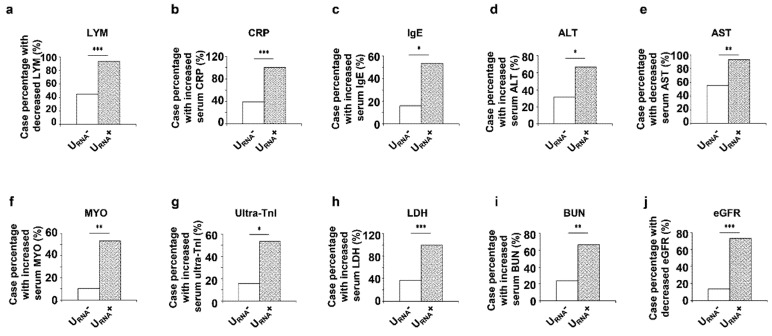
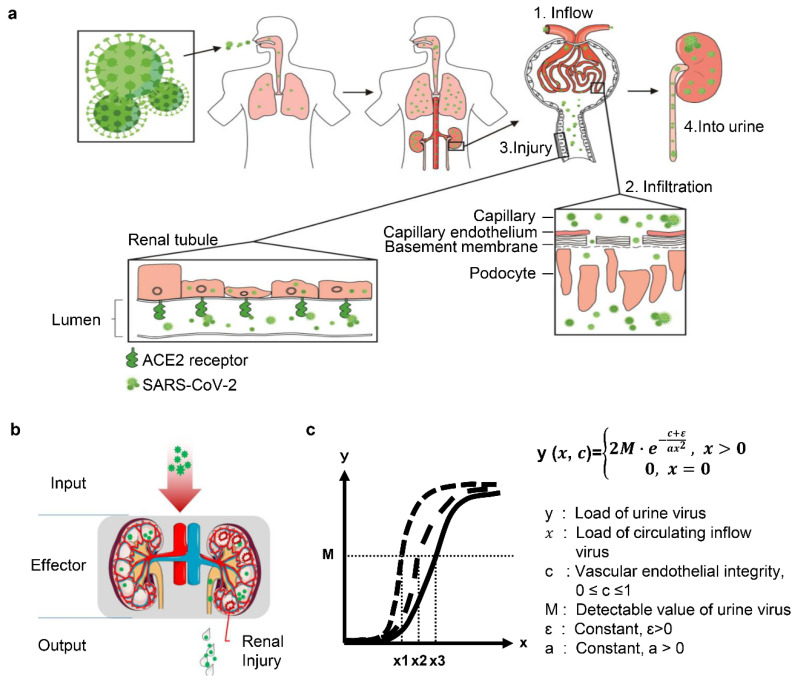
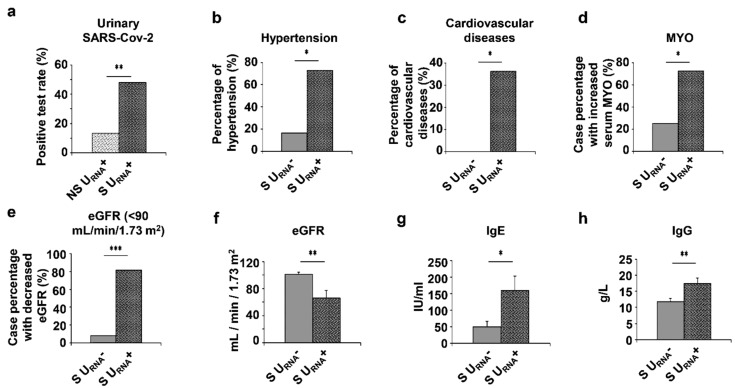
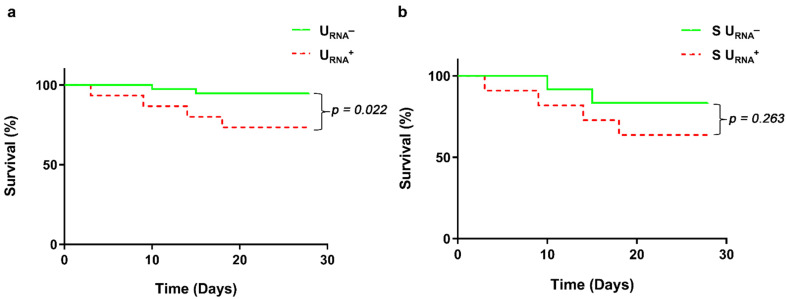
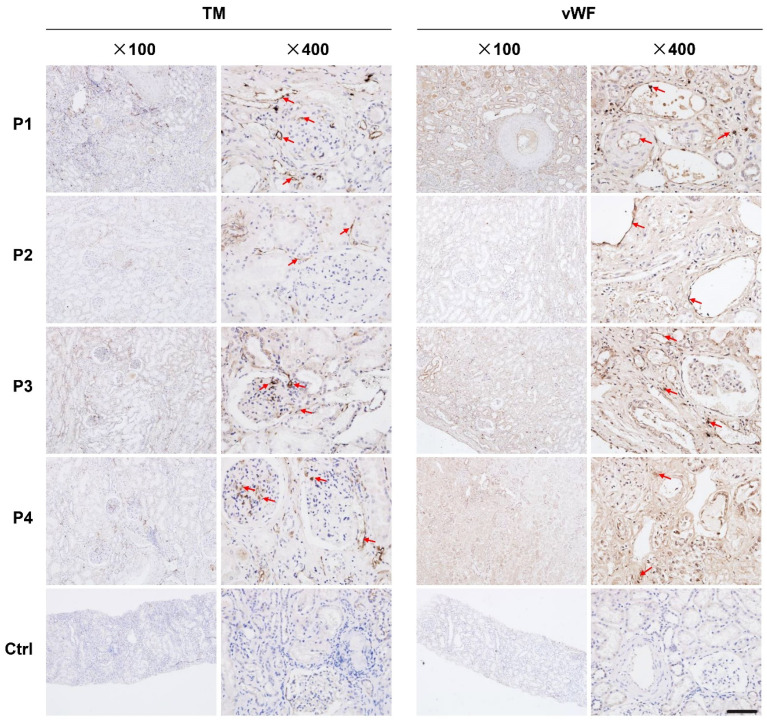
We found that COVID-19 patients with severe syndrome (severe patients) showed significantly higher positive rate (11 of 23, 47.8%) of urinary SARS-CoV-2 RNA than non-severe patients (4 of 30, 13.3%, = 0.006). U patients or severe U subgroup exhibited higher prevalence of inflammation and immune discord, cardiovascular diseases, liver damage and renal dysfunction, and higher risk of death than U patients. To understand the potential mechanisms underlying the viral urine shedding, we performed renal histopathological analysis on postmortems of patients with COVID-19 and found severe renal vascular endothelium lesion characterized by an increase of the expression of thrombomodulin and von Willebrand factor, markers to assess the endothelium dysfunction. We proposed a theoretical and mathematic model to depict the potential factors that determine the urine shedding of SARS-CoV-2.
This study indicated that urinary SARS-CoV-2 RNA detected in urine specimens can be used to predict the progression and prognosis of COVID-19 severity.
我们旨在分析2019冠状病毒病(COVID-19)患者的临床特征,并寻找预测预后不良的潜在因素。
我们分析了COVID-19患者的临床特征和实验室检查结果,并采用qRT-PCR分析法检测了2020年1月31日至2020年2月18日在武汉大学人民医院收治的53例COVID-19患者尿液沉淀物中的严重急性呼吸综合征冠状病毒2(SARS-CoV-2)RNA。然后,我们根据临床状况(重症或非重症综合征)和尿液SARS-CoV-2 RNA(阳性或阴性)对这些患者进行分类。
我们发现,重症综合征COVID-19患者(重症患者)尿液SARS-CoV-2 RNA阳性率(23例中的11例,47.8%)显著高于非重症患者(30例中的4例,13.3%,P = 0.006)。尿液SARS-CoV-2 RNA阳性患者或重症尿液SARS-CoV-2 RNA阳性亚组的炎症和免疫失调、心血管疾病、肝损伤和肾功能不全患病率更高,死亡风险也高于尿液SARS-CoV-2 RNA阴性患者。为了解病毒尿液排泄的潜在机制,我们对COVID-19患者的尸检肾脏进行了组织病理学分析,发现严重的肾血管内皮病变,其特征是血栓调节蛋白和血管性血友病因子表达增加,这两种标志物用于评估内皮功能障碍。我们提出了一个理论和数学模型来描述决定SARS-CoV-2尿液排泄的潜在因素。
本研究表明,尿液标本中检测到的尿液SARS-CoV-2 RNA可用于预测COVID-19病情的进展和预后。