Guller Anna, Kuschnerus Inga, Rozova Vlada, Nadort Annemarie, Yao Yin, Khabir Zahra, Garcia-Bennett Alfonso, Liang Liuen Olivia, Polikarpova Aleksandra, Qian Yi, Goldys Ewa M, Zvyagin Andrei V
Faculty of Science and Engineering, Macquarie University, Sydney, NSW 2109, Australia.
ARC Centre of Excellence for Nanoscale Biophotonics, Macquarie University, Sydney, NSW 2109, Australia.
Biomedicines. 2021 Oct 29;9(11):1578. doi: 10.3390/biomedicines9111578.
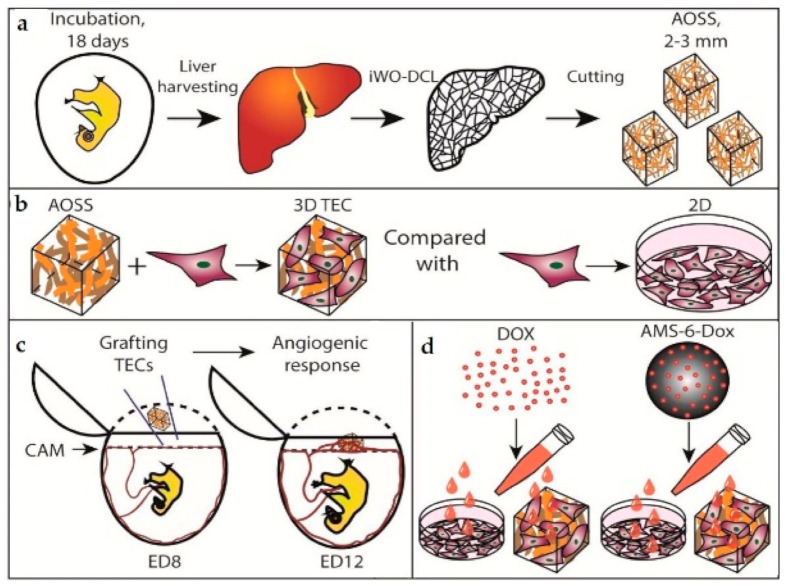
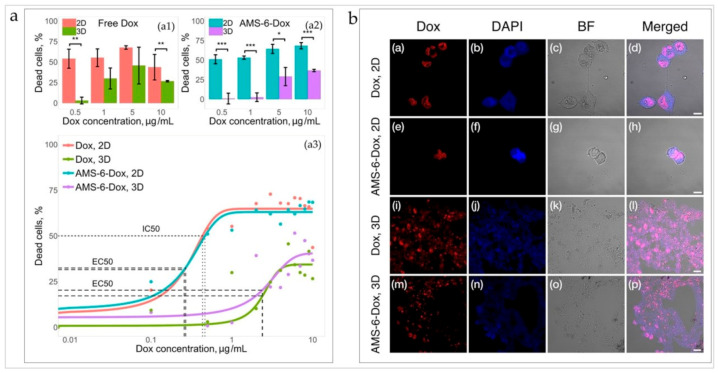
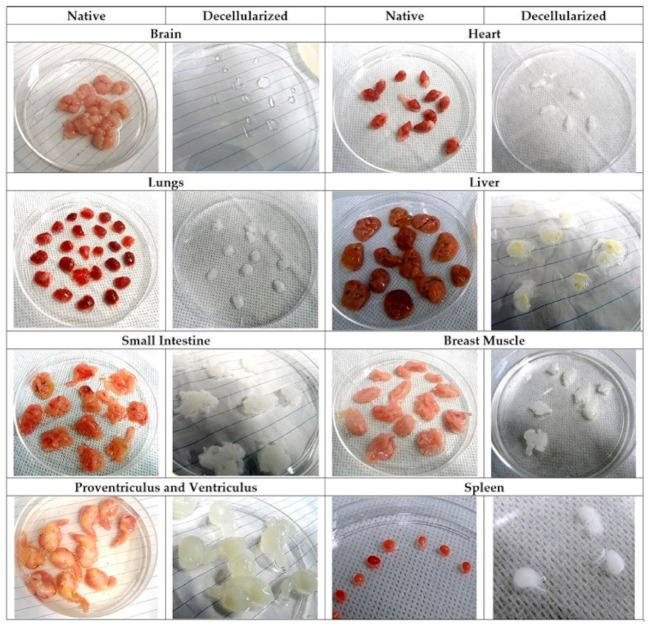
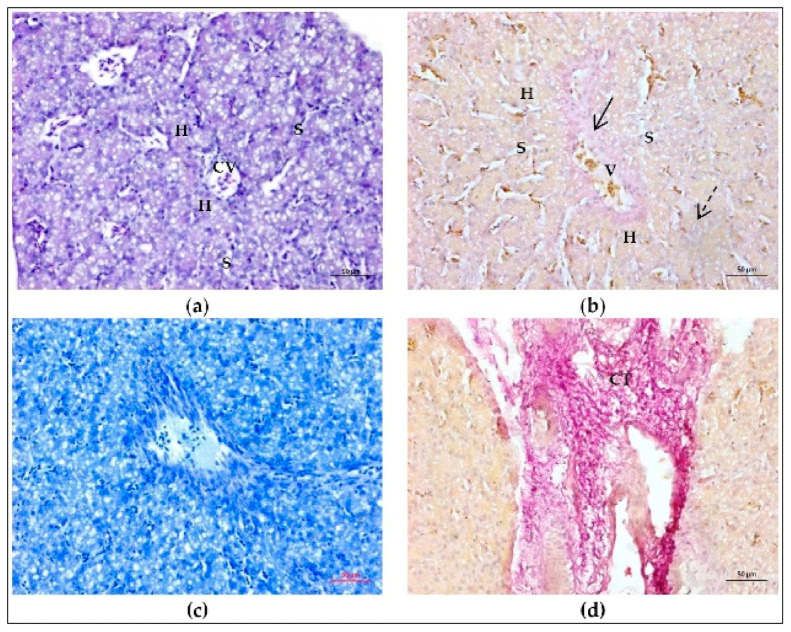
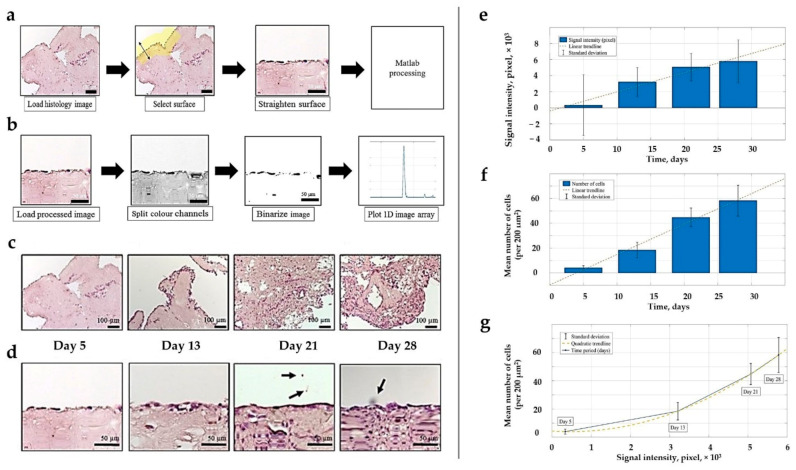
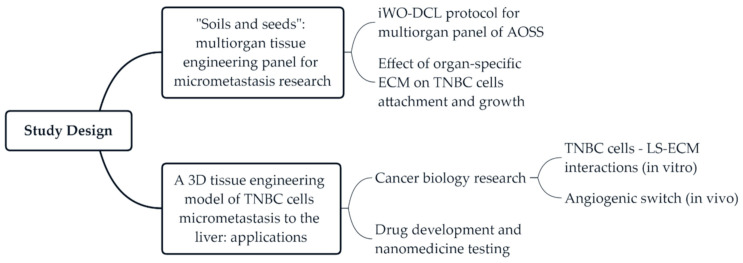
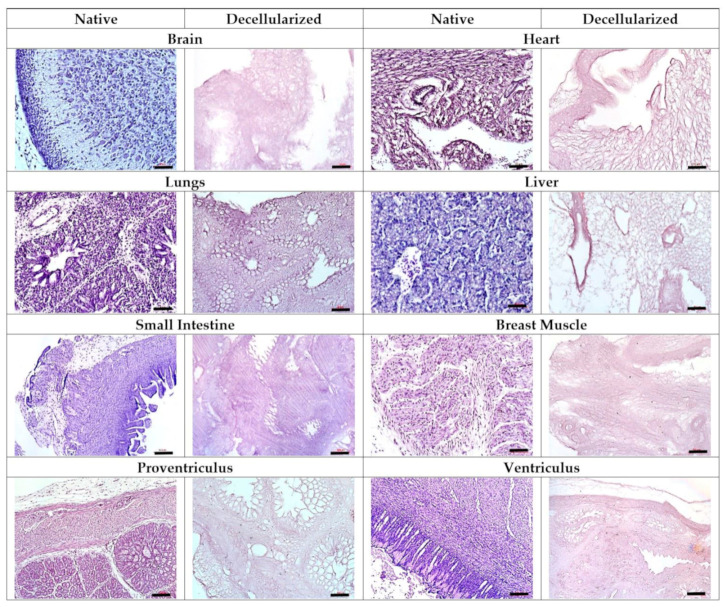
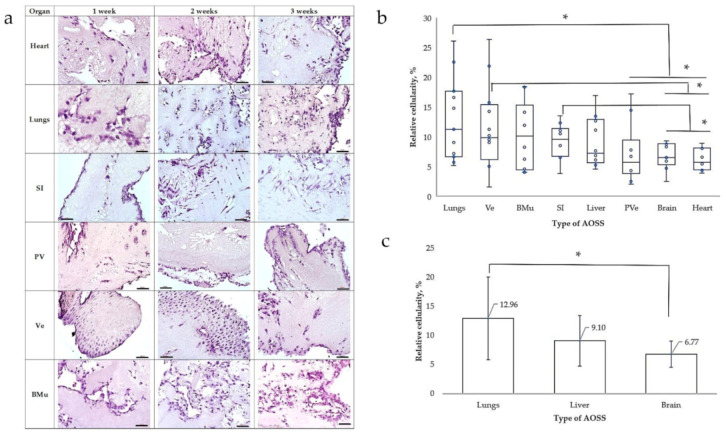
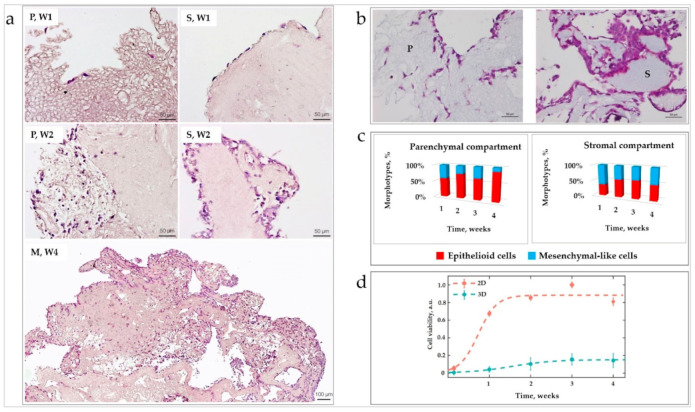
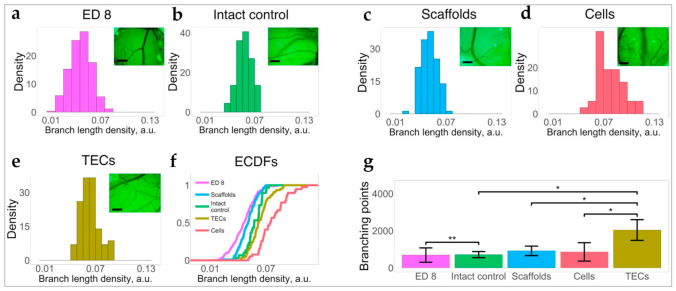
Colonization of distant organs by tumor cells is a critical step of cancer progression. The initial avascular stage of this process (micrometastasis) remains almost inaccessible to study due to the lack of relevant experimental approaches. Herein, we introduce an in vitro/in vivo model of organ-specific micrometastases of triple-negative breast cancer (TNBC) that is fully implemented in a cost-efficient chick embryo (CE) experimental platform. The model was built as three-dimensional (3D) tissue engineering constructs (TECs) combining human MDA-MB-231 cells and decellularized CE organ-specific scaffolds. TNBC cells colonized CE organ-specific scaffolds in 2-3 weeks, forming tissue-like structures. The feasibility of this methodology for basic cancer research, drug development, and nanomedicine was demonstrated on a model of hepatic micrometastasis of TNBC. We revealed that MDA-MB-231 differentially colonize parenchymal and stromal compartments of the liver-specific extracellular matrix (LS-ECM) and become more resistant to the treatment with molecular doxorubicin (Dox) and Dox-loaded mesoporous silica nanoparticles than in monolayer cultures. When grafted on CE chorioallantoic membrane, LS-ECM-based TECs induced angiogenic switch. These findings may have important implications for the diagnosis and treatment of TNBC. The methodology established here is scalable and adaptable for pharmacological testing and cancer biology research of various metastatic and primary tumors.
肿瘤细胞在远处器官的定植是癌症进展的关键步骤。由于缺乏相关实验方法,这一过程的初始无血管阶段(微转移)几乎无法进行研究。在此,我们介绍一种三阴性乳腺癌(TNBC)器官特异性微转移的体外/体内模型,该模型在经济高效的鸡胚(CE)实验平台上全面实现。该模型构建为三维(3D)组织工程构建体(TEC),将人MDA-MB-231细胞与脱细胞CE器官特异性支架相结合。TNBC细胞在2至3周内定植于CE器官特异性支架,形成组织样结构。在TNBC肝微转移模型上证明了该方法在基础癌症研究、药物开发和纳米医学方面的可行性。我们发现,MDA-MB-231在肝特异性细胞外基质(LS-ECM)的实质和间质区室中差异定植,并且与单层培养相比,对分子阿霉素(Dox)和载Dox的介孔二氧化硅纳米颗粒治疗更具抗性。当移植到CE尿囊膜上时,基于LS-ECM的TEC诱导血管生成转换。这些发现可能对TNBC的诊断和治疗具有重要意义。这里建立的方法可扩展并适用于各种转移性和原发性肿瘤的药理测试和癌症生物学研究。