Lucarini Elena, Seguella Luisa, Vincenzi Martina, Parisio Carmen, Micheli Laura, Toti Alessandra, Corpetti Chiara, Del Re Alessandro, Squillace Silvia, Maftei Daniela, Lattanzi Roberta, Ghelardini Carla, Di Cesare Mannelli Lorenzo, Esposito Giuseppe
Department of Neuroscience, Psychology, Drug Research and Child Health, Neurofarba, Pharmacology and Toxicology Section, University of Florence, 50139 Florence, Italy.
Department of Physiology and Pharmacology "V. Erspamer", Sapienza University of Rome, 00185 Rome, Italy.
Biomedicines. 2021 Nov 12;9(11):1671. doi: 10.3390/biomedicines9111671.
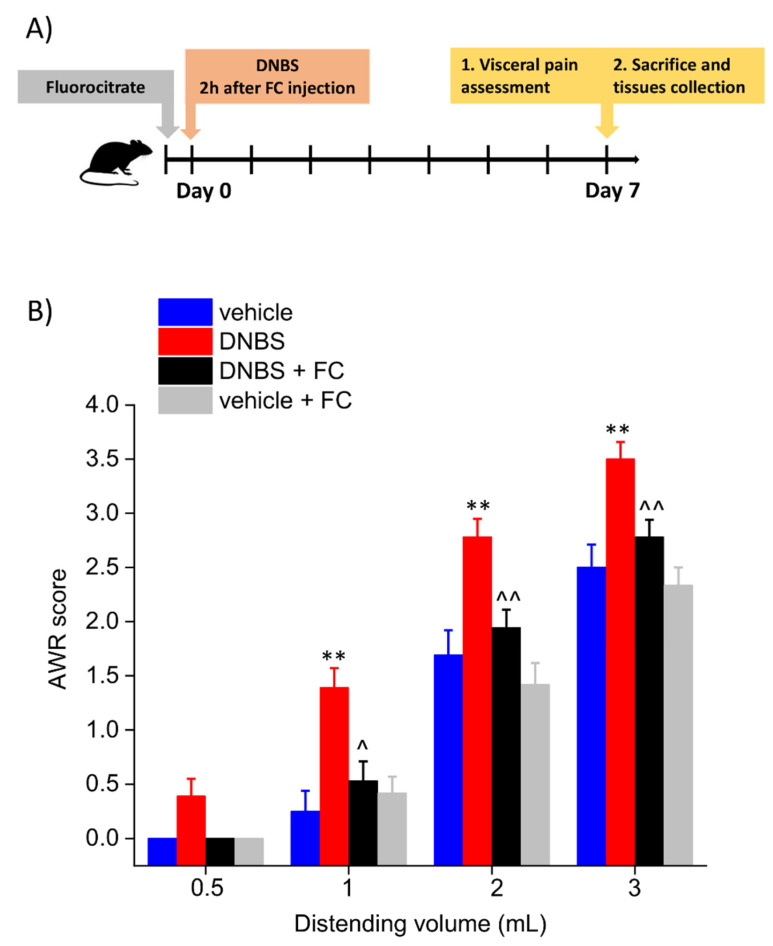
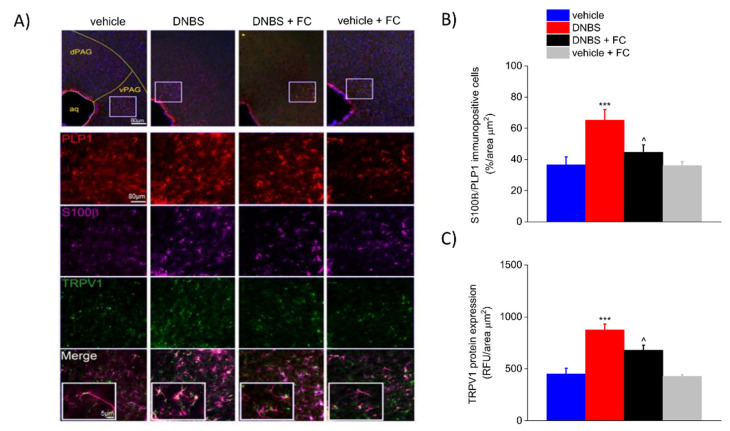
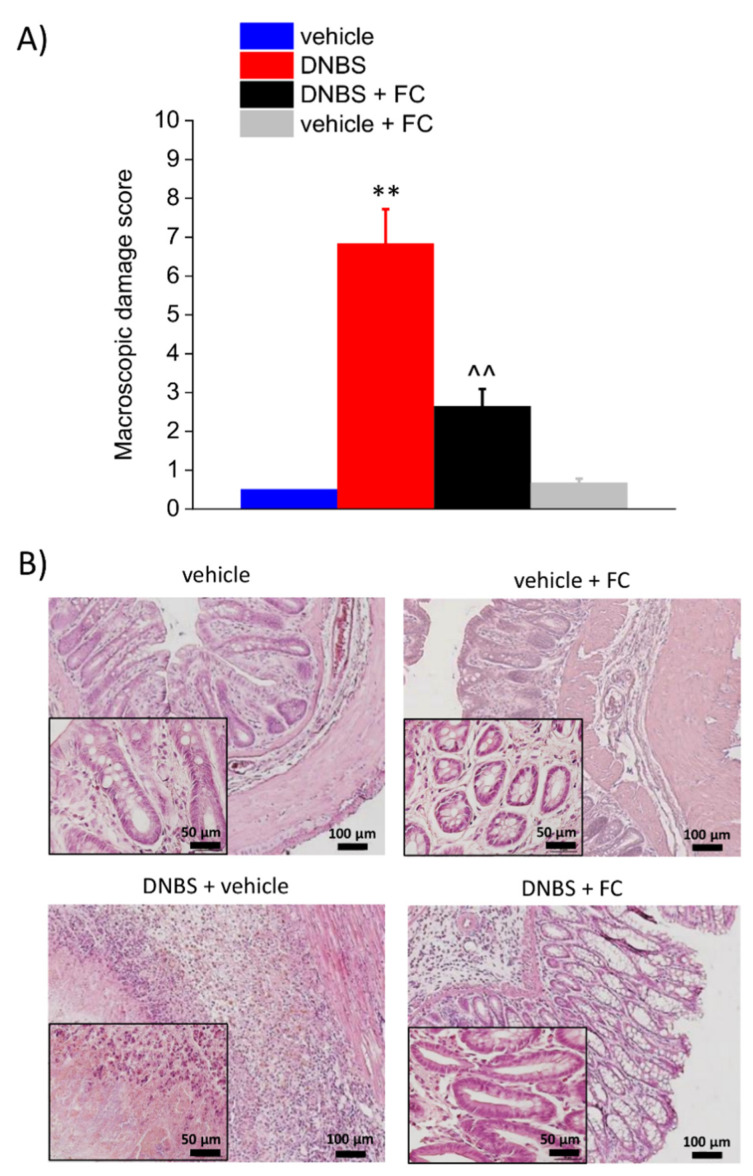
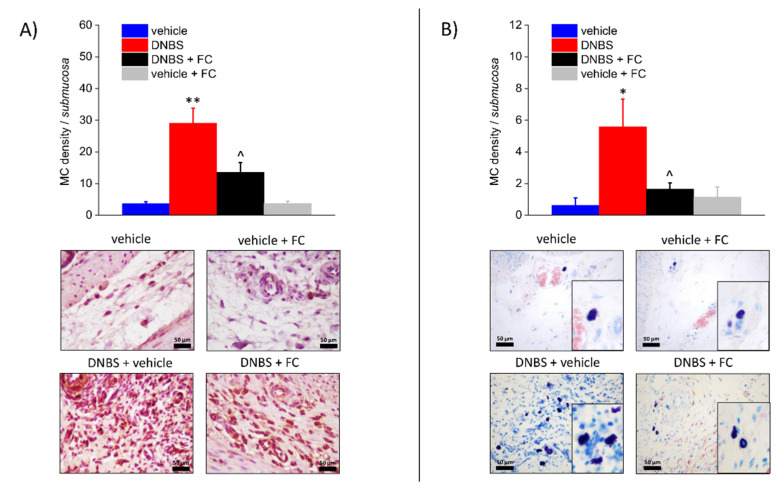
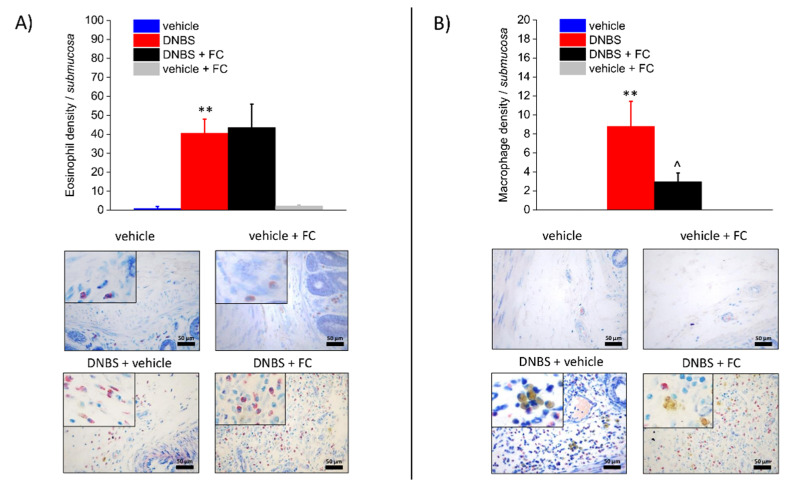
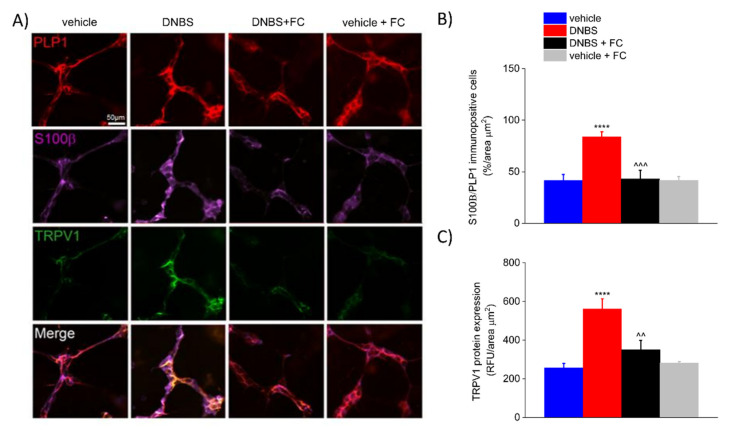
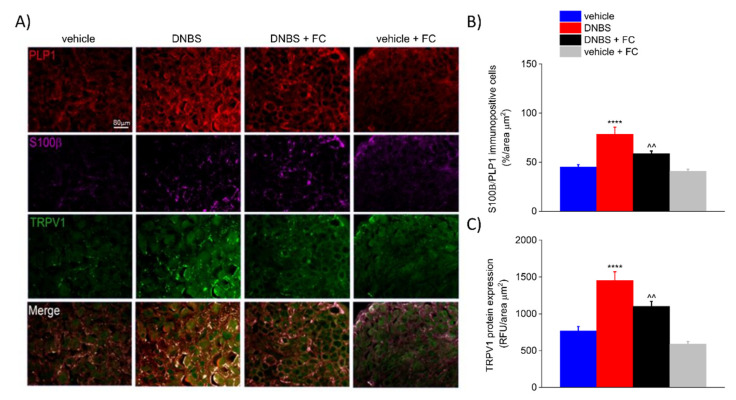
Acute inflammation is particularly relevant in the pathogenesis of visceral hypersensitivity associated with inflammatory bowel diseases. Glia within the enteric nervous system, as well as within the central nervous system, contributes to neuroplasticity during inflammation, but whether enteric glia has the potential to modify visceral sensitivity following colitis is still unknown. This work aimed to investigate the occurrence of changes in the neuron-glial networks controlling visceral perception along the gut-brain axis during colitis, and to assess the effects of peripheral glial manipulation. Enteric glia activity was altered by the poison fluorocitrate (FC; 10 µmol kg i.p.) before inducing colitis in animals (2,4-dinitrobenzenesulfonic acid, DNBS; 30 mg in 0.25 mL EtOH 50%), and visceral sensitivity, colon damage, and glia activation along the pain pathway were studied. FC injection significantly reduced the visceral hyperalgesia, the histological damage, and the immune activation caused by DNBS. Intestinal inflammation is associated with a parallel overexpression of TRPV1 and S100β along the gut-brain axis (colonic myenteric plexuses, dorsal root ganglion, and periaqueductal grey area). This effect was prevented by FC. Peripheral glia activity modulation emerges as a promising strategy for counteracting visceral pain induced by colitis.
急性炎症在与炎症性肠病相关的内脏超敏反应发病机制中尤为重要。肠神经系统以及中枢神经系统内的神经胶质细胞在炎症期间有助于神经可塑性,但肠神经胶质细胞在结肠炎后是否具有改变内脏敏感性的潜力仍不清楚。这项工作旨在研究结肠炎期间沿肠-脑轴控制内脏感觉的神经元-神经胶质网络变化的发生情况,并评估外周神经胶质细胞操作的影响。在给动物诱导结肠炎(2,4-二硝基苯磺酸,DNBS;30mg溶于0.25mL 50%乙醇)之前,用氟代柠檬酸(FC;10µmol/kg腹腔注射)改变肠神经胶质细胞活性,并研究内脏敏感性、结肠损伤以及疼痛通路沿线的神经胶质细胞激活情况。注射FC可显著减轻DNBS引起的内脏痛觉过敏、组织学损伤和免疫激活。肠道炎症与沿肠-脑轴(结肠肌间神经丛、背根神经节和导水管周围灰质区域)TRPV1和S100β的平行过度表达有关。FC可阻止这种效应。外周神经胶质细胞活性调节成为对抗结肠炎诱导的内脏疼痛的一种有前景的策略。