Applied Microbiology, Department of Chemistry, Lund University, P.O. Box 124, SE-221 00 Lund, Sweden.
BioZone Centre for Applied Bioscience and Bioengineering, Department of Chemical Engineering and Applied Chemistry, University of Toronto, 200 College St., Toronto, ON M5S 3E5, Canada.
Int J Mol Sci. 2021 Nov 17;22(22):12410. doi: 10.3390/ijms222212410.
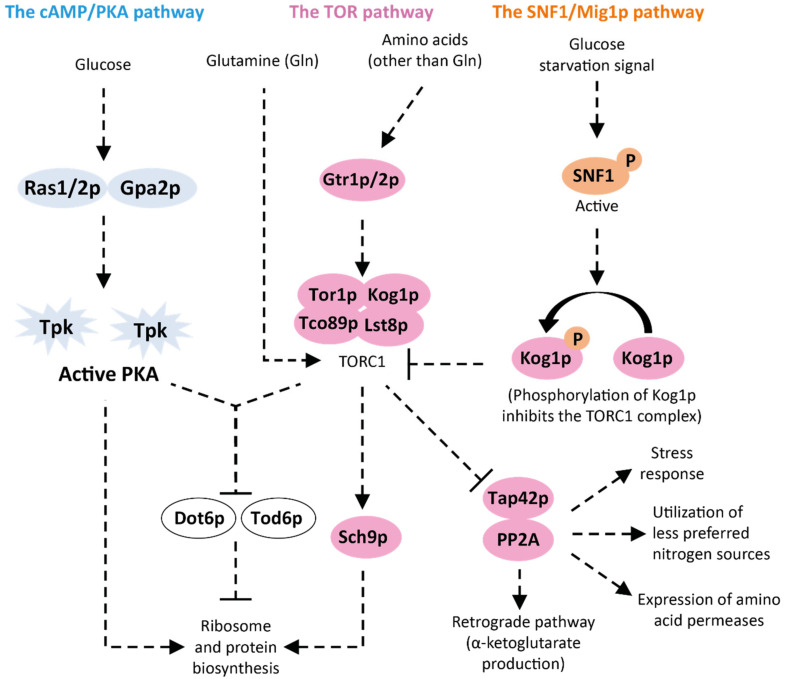
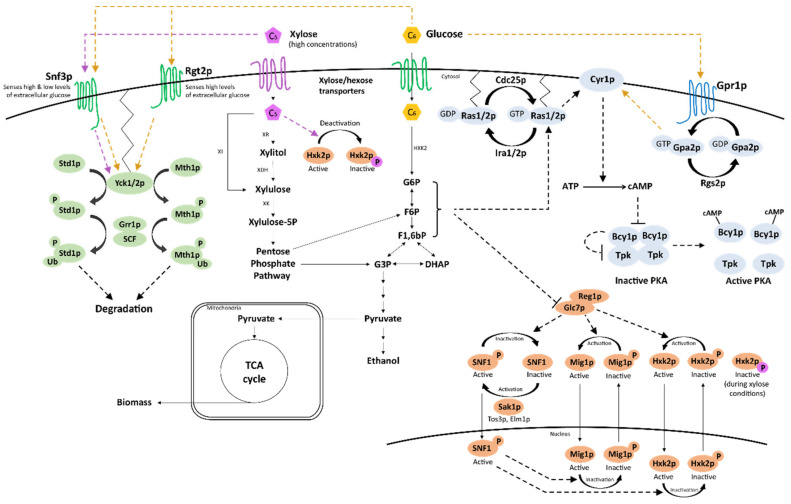
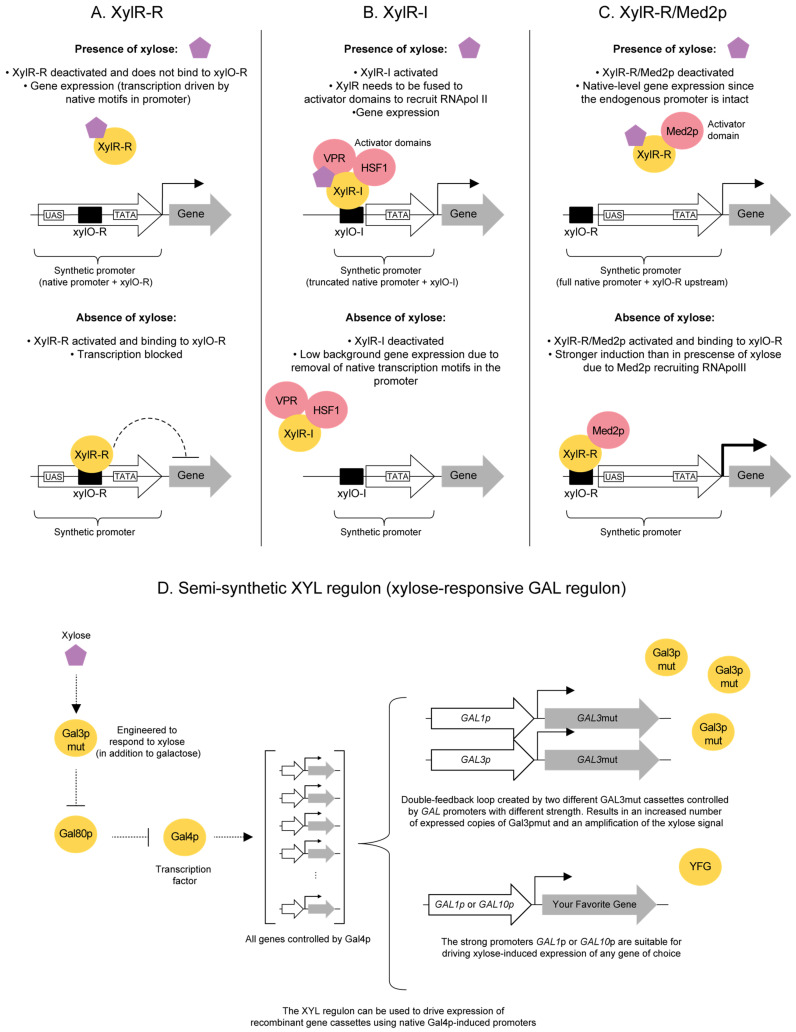
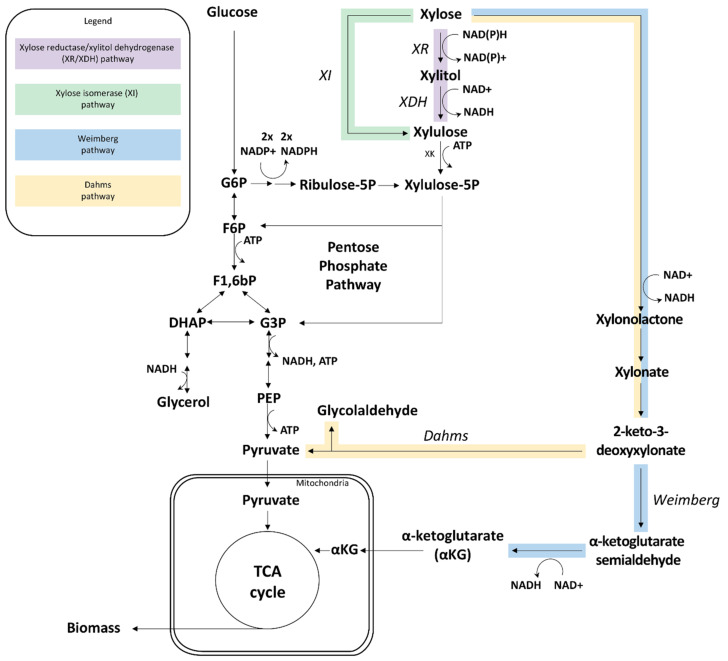
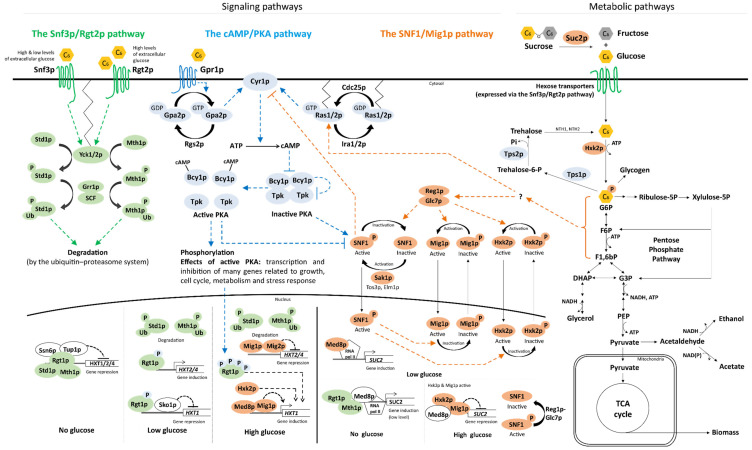
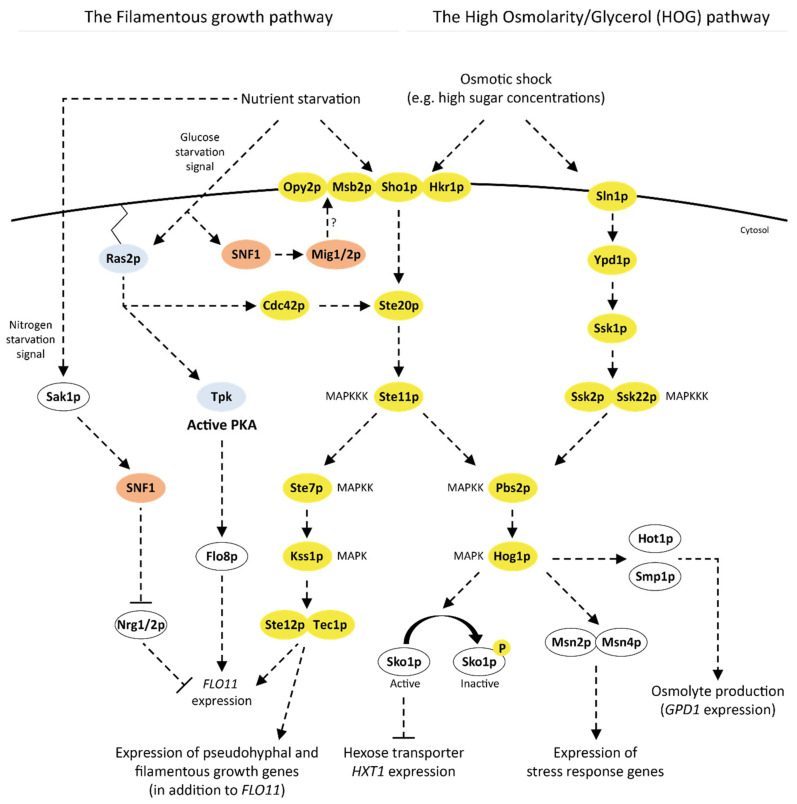
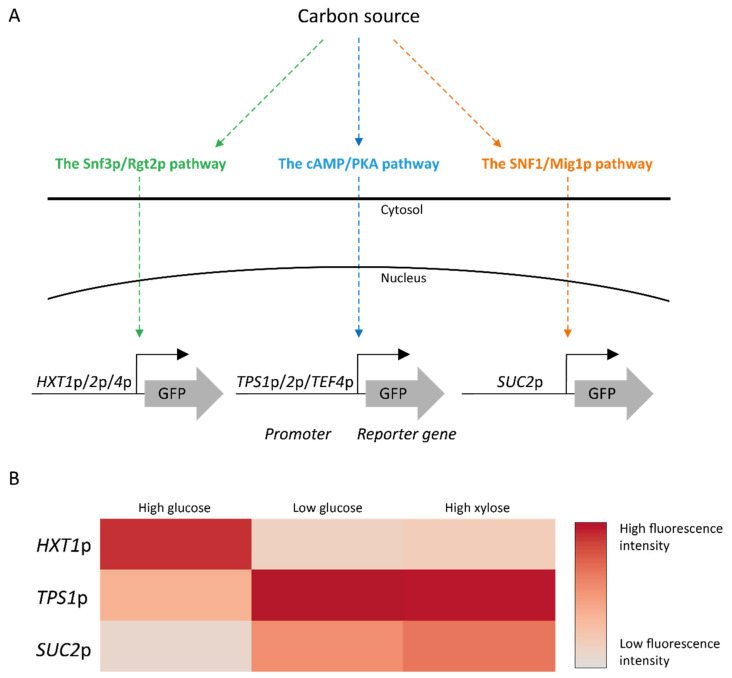
Extension of the substrate range is among one of the metabolic engineering goals for microorganisms used in biotechnological processes because it enables the use of a wide range of raw materials as substrates. One of the most prominent examples is the engineering of baker's yeast for the utilization of d-xylose, a five-carbon sugar found in high abundance in lignocellulosic biomass and a key substrate to achieve good process economy in chemical production from renewable and non-edible plant feedstocks. Despite many excellent engineering strategies that have allowed recombinant to ferment d-xylose to ethanol at high yields, the consumption rate of d-xylose is still significantly lower than that of its preferred sugar d-glucose. In mixed d-glucose/d-xylose cultivations, d-xylose is only utilized after d-glucose depletion, which leads to prolonged process times and added costs. Due to this limitation, the response on d-xylose in the native sugar signaling pathways has emerged as a promising next-level engineering target. Here we review the current status of the knowledge of the response of signaling pathways to d-xylose. To do this, we first summarize the response of the native sensing and signaling pathways in to d-glucose (the preferred sugar of the yeast). Using the d-glucose case as a point of reference, we then proceed to discuss the known signaling response to d-xylose in and current attempts of improving the response by signaling engineering using native targets and synthetic (non-native) regulatory circuits.
扩展微生物的底物范围是生物技术过程中使用的微生物代谢工程的目标之一,因为它可以使广泛的原料作为底物得到利用。最突出的例子之一是对面包酵母进行工程改造,以利用木糖,木糖是木质纤维素生物质中丰富的五碳糖,也是实现从可再生和非食用植物原料生产化学品的良好工艺经济性的关键底物。尽管有许多出色的工程策略允许重组酵母以高产率发酵木糖生成乙醇,但木糖的消耗率仍明显低于其首选糖葡萄糖。在混合 d-葡萄糖/d-木糖培养中,只有在耗尽 d-葡萄糖后才会利用 d-木糖,这导致了过程时间延长和成本增加。由于这种限制,在天然糖信号通路中对木糖的响应已成为下一个有前途的工程目标。在这里,我们回顾了目前对 信号通路对木糖响应的了解。为此,我们首先总结了 对 d-葡萄糖(酵母的首选糖)的天然感应和信号通路的响应。以 d-葡萄糖的情况为参考点,然后我们讨论了 中已知的对 d-木糖的信号响应以及目前通过使用天然靶标和合成(非天然)调节回路进行信号工程来改善响应的尝试。