Kobayashi Mayu, Wada Hideo, Fukui Shunsuke, Mizutani Hiroki, Ichikawa Yuhuko, Shiraki Katsuya, Moritani Isao, Inoue Hidekazu, Shimaoka Motomu, Shimpo Hideto
Mie Prefectural General Medical Center, Department of Gastroenterology, Yokkaichi 510-0885, Japan.
Mie Prefectural General Medical Center, Department of General and Laboratory Medicine, Yokkaichi 510-0885, Japan.
J Clin Med. 2021 Nov 17;10(22):5352. doi: 10.3390/jcm10225352.
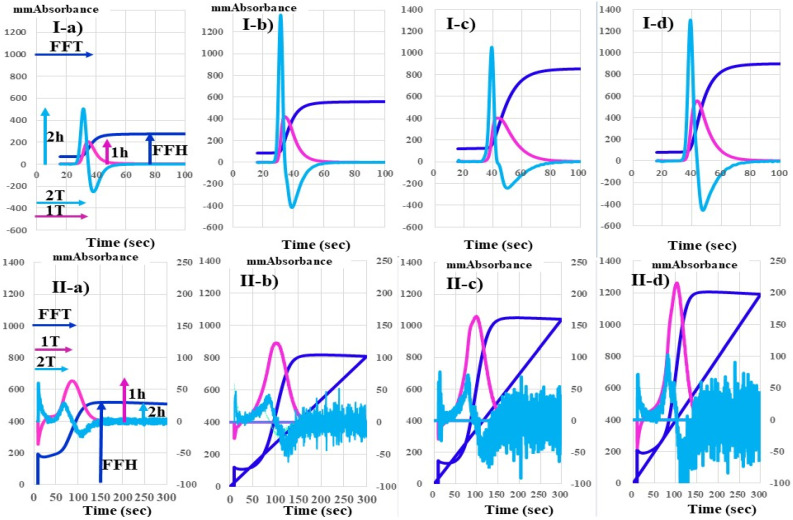
(1) Objective: hypercoagulability in patients with malignant neoplasm were evaluated to examine the relationship with thrombosis. (2) Methods: clot waveform analysis (CWA)-activated partial thromboplastin time (APTT) and CWA-small amount of tissue factor induced FIX activation (sTF/FIXa) assays were performed in 92 patients with malignant neoplasm and the relationship between hypercoagulability and thrombosis was retrospectively examined. (3) Results: The study population included 92 patients with malignant neoplasms. Twenty-six (28.3%) had thrombotic diseases and 9 (9.8%) patients died within 28 days after the CWA. The peak time of the CWA-APTT could not show hypercoagulability in patients with malignant neoplasms. There were almost no significant differences in the peak times of the sTF/FIXa among patients with malignant neoplasms and healthy volunteers. In contrast, the peak heights of the CWA-sTF/FIXa in patients with various malignant neoplasms were significantly higher than those in healthy volunteers. Furthermore, among patients with malignant neoplasms, the peak heights of the sTF/FIXa in patients with thrombosis were significantly higher than those in patients without thrombosis. (4) Conclusions: although the routine APTT cannot evaluate the hypercoagulability, the peak heights of CWA-sTF/FIXa were significantly high in patients with malignant neoplasms, especially in those with thrombosis, suggesting that an elevated peak height of the CWA-sTF/FIXa may be a risk factor for thrombosis.
(1) 目的:评估恶性肿瘤患者的高凝状态,以探讨其与血栓形成的关系。(2) 方法:对92例恶性肿瘤患者进行凝血块波形分析(CWA)-活化部分凝血活酶时间(APTT)及CWA-少量组织因子诱导FIX活化(sTF/FIXa)检测,并回顾性分析高凝状态与血栓形成之间的关系。(3) 结果:研究人群包括92例恶性肿瘤患者。26例(28.3%)患有血栓性疾病,9例(9.8%)患者在CWA后28天内死亡。CWA-APTT的峰值时间未能显示恶性肿瘤患者存在高凝状态。恶性肿瘤患者与健康志愿者的sTF/FIXa峰值时间几乎无显著差异。相比之下,各种恶性肿瘤患者的CWA-sTF/FIXa峰值高度显著高于健康志愿者。此外,在恶性肿瘤患者中,有血栓形成的患者其sTF/FIXa峰值高度显著高于无血栓形成的患者。(4) 结论:尽管常规APTT无法评估高凝状态,但恶性肿瘤患者,尤其是有血栓形成的患者,其CWA-sTF/FIXa峰值高度显著升高,提示CWA-sTF/FIXa峰值升高可能是血栓形成的一个危险因素。