Méndez-Matías Galo, Velázquez-Velázquez Cindy, Castro-Oropeza Rosario, Mantilla-Morales Alejandra, Ocampo-Sandoval Diana, Burgos-González Ana, Heredia-Gutiérrez Carlos, Alvarado-Cabrero Isabel, Sánchez-Sandoval Rosa, Barco-Bazán Abigail, Chilaca-Rosas Fátima, Piña-Sánchez Patricia
Molecular Oncology Laboratory, Oncology Research Unit, Oncology Hospital, National Medical Center, Mexican Institute of Social Security, Mexico City 06720, Mexico.
Biological Sciences Program, Graduate Studies, UNAM, Mexico City 04510, Mexico.
Cancers (Basel). 2021 Nov 9;13(22):5602. doi: 10.3390/cancers13225602.
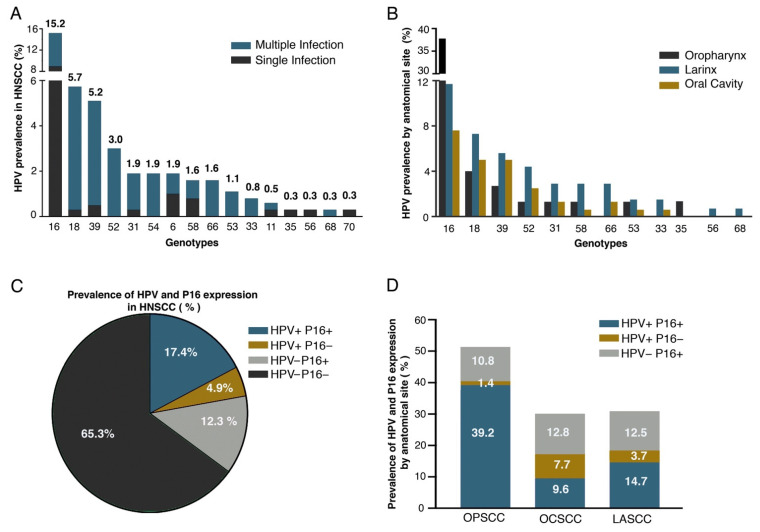
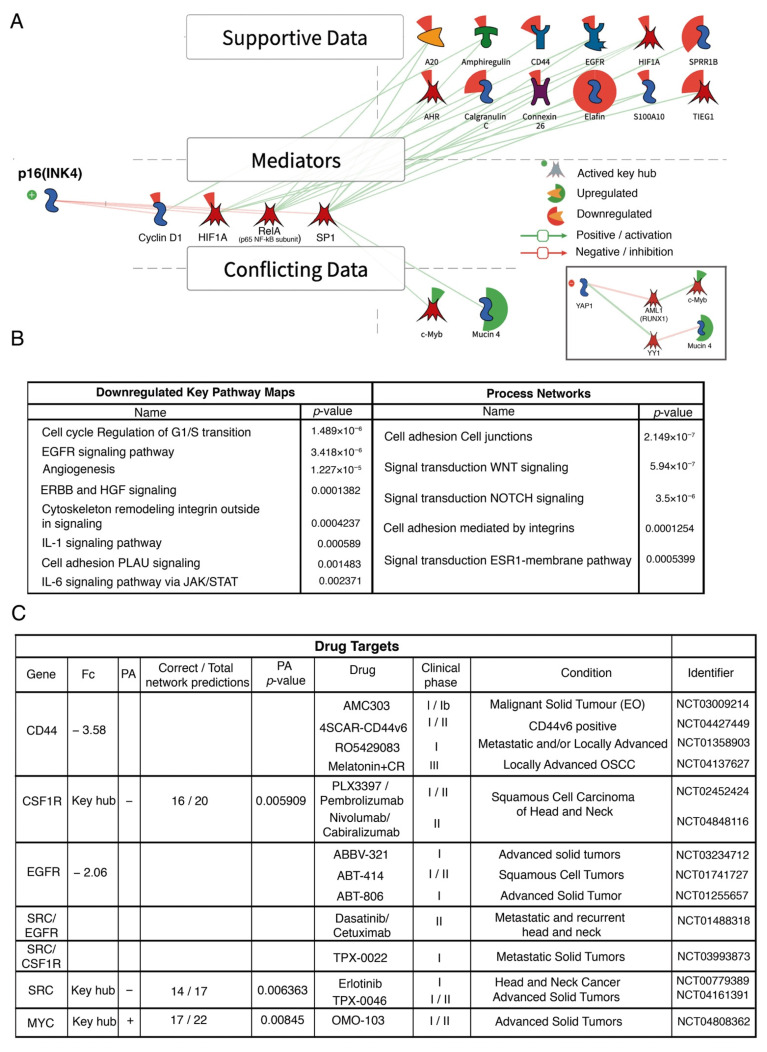
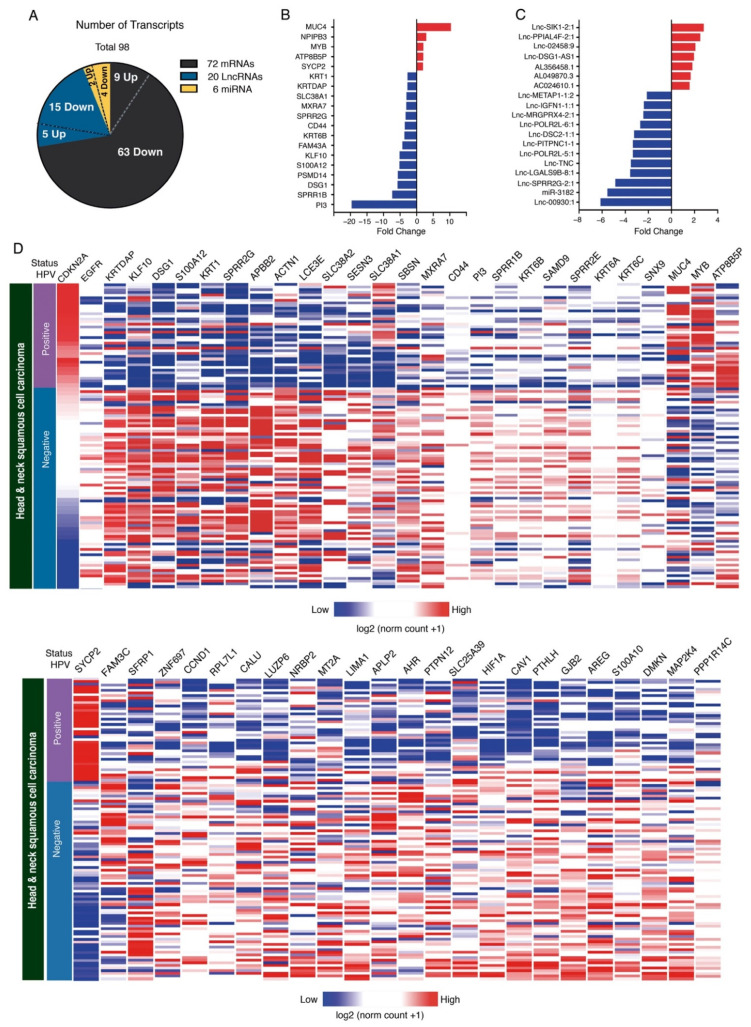
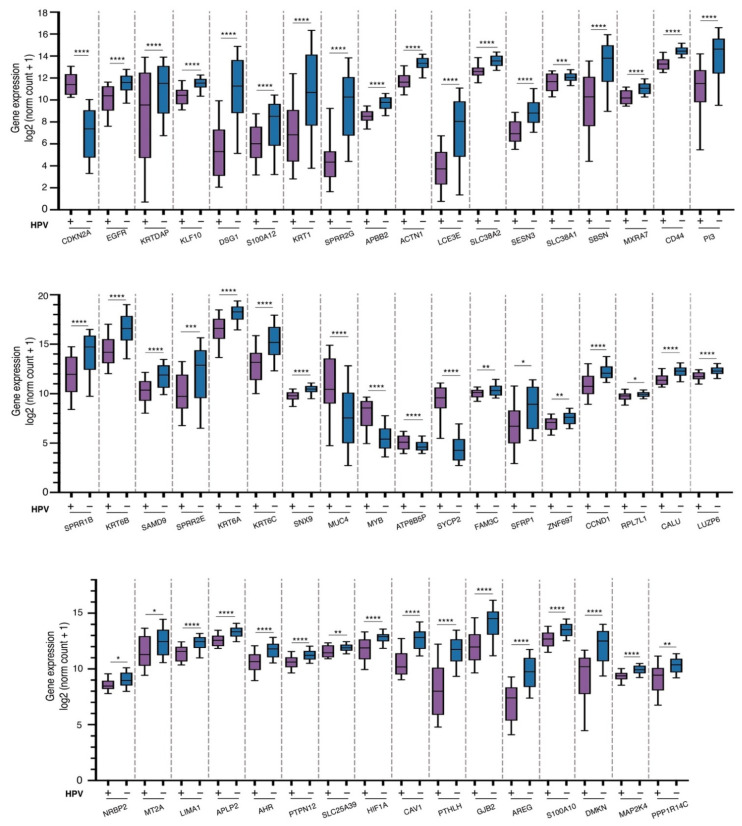
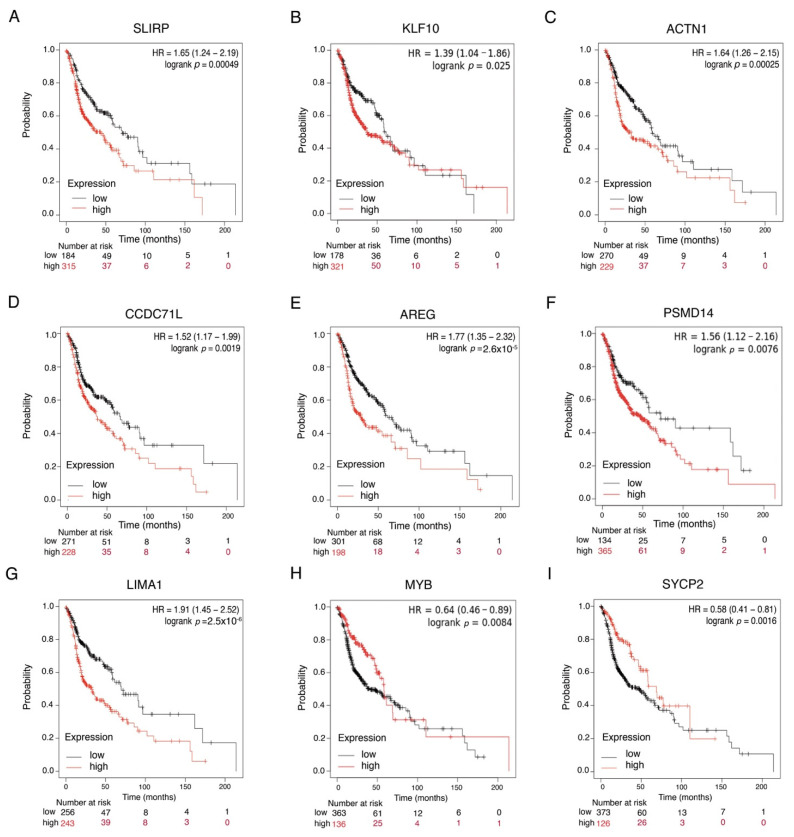
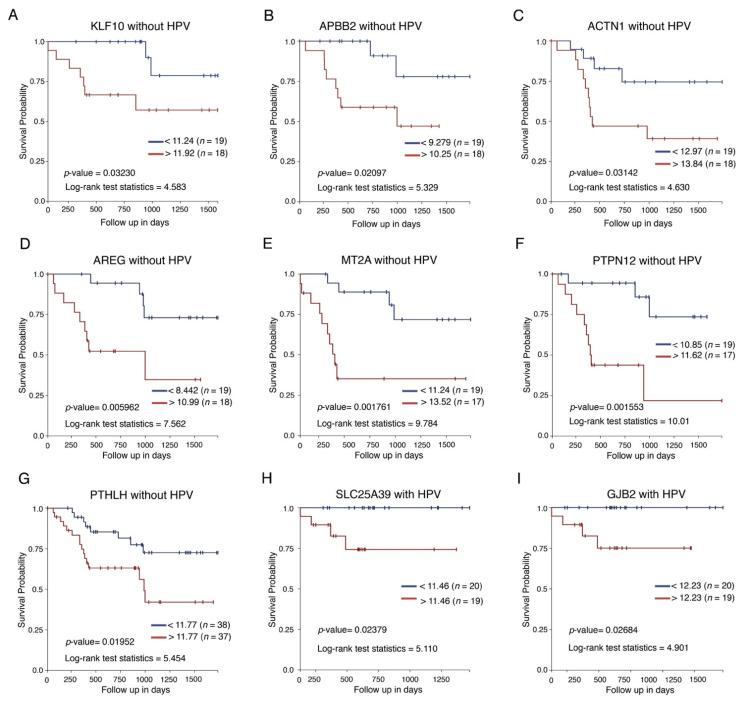
Head and neck squamous cell carcinomas (HNSCC) show a variety of biological and clinical characteristics that could depend on the association with the human papillomavirus (HPV). Biological and clinical characterization is essential to stratify patients based on prognostic and predictive factors. Reports on HNSCC are scarce in Mexico. Herein, we analyzed 414 Mexican patients with HNSCC, including oropharynx (OPSCC), larynx (LASCC), and oral cavity (OCSCC), and identified HPV DNA and p16 expression. Global gene expression profiles were analyzed in 25 HPV+/p16+ vs. HPV-/p16- cases. We found 32.3% p16+ and 22.3% HPV+ samples, HPV 16, 18, 39, 52, and 31 being the most frequent genotypes. For OPSCC, LASCC and OCSCC, 39.2, 14.7, and 9.6% were HPV+/p16+, respectively. High expression of SLIRP, KLF10, AREG, and LIMA was associated with poor survival; in contrast, high expression of MYB and SYCP2 correlated with better survival. In HPV+ cases, high expression of SLC25A39 and GJB2 was associated with poor survival. Likewise, EGFR, IL-1, IL-6, JAK-STAT, WNT, NOTCH, and ESR1 signaling pathways were downregulated in HPV+ cases. CSF1R, MYC, and SRC genes were identified as key hubs and therapeutic targets. Our study offers information regarding the molecular and clinical characteristics of HNSCC in Mexican patients.
头颈部鳞状细胞癌(HNSCC)表现出多种生物学和临床特征,这些特征可能取决于与人乳头瘤病毒(HPV)的关联。基于预后和预测因素对患者进行分层,生物学和临床特征描述至关重要。在墨西哥,关于HNSCC的报告很少。在此,我们分析了414例墨西哥HNSCC患者,包括口咽癌(OPSCC)、喉癌(LASCC)和口腔癌(OCSCC),并确定了HPV DNA和p16表达。对25例HPV+/p16+与HPV-/p16-病例进行了全基因表达谱分析。我们发现32.3%的样本p16呈阳性,22.3%的样本HPV呈阳性,HPV 16、18、39、52和31是最常见的基因型。对于OPSCC、LASCC和OCSCC,HPV+/p16+分别为39.2%、14.7%和9.6%。SLIRP、KLF10、AREG和LIMA的高表达与较差的生存率相关;相反,MYB和SYCP2的高表达与较好的生存率相关。在HPV+病例中,SLC25A39和GJB2的高表达与较差的生存率相关。同样,在HPV+病例中,EGFR、IL-1、IL-6、JAK-STAT、WNT、NOTCH和ESR1信号通路下调。CSF1R、MYC和SRC基因被确定为关键枢纽和治疗靶点。我们的研究提供了有关墨西哥患者HNSCC分子和临床特征的信息。