Schatz Christoph, Sprung Susanne, Schartinger Volker, Codina-Martínez Helena, Lechner Matt, Hermsen Mario, Haybaeck Johannes
Institute of Pathology, Neuropathology and Molecular Pathology, Medical University of Innsbruck, 6020 Innsbruck, Austria.
Institute of Otorhinolaryngology, Medical University of Innsbruck, Anichstrasse 35, 6020 Innsbruck, Austria.
Cancers (Basel). 2021 Nov 11;13(22):5649. doi: 10.3390/cancers13225649.
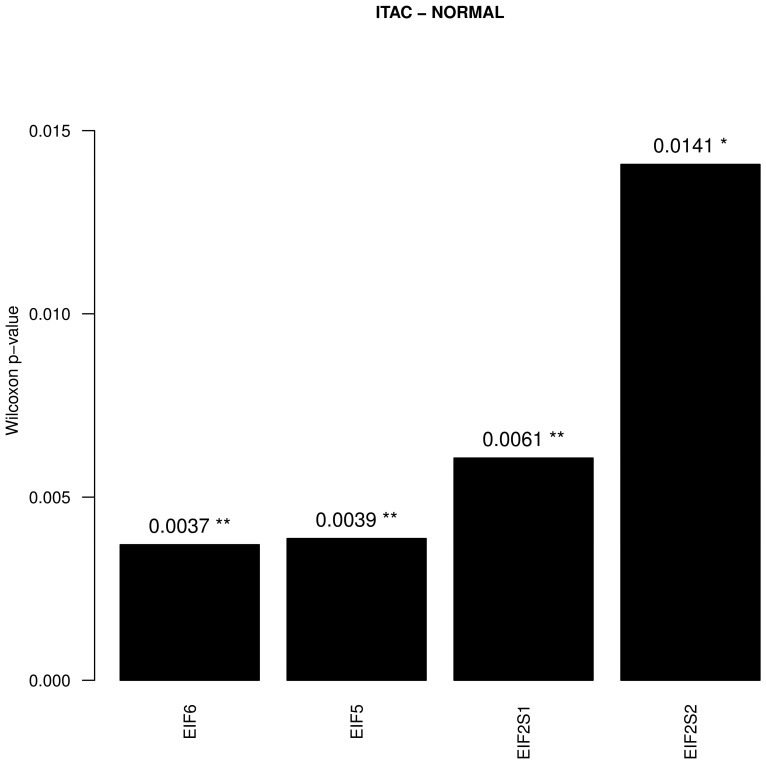
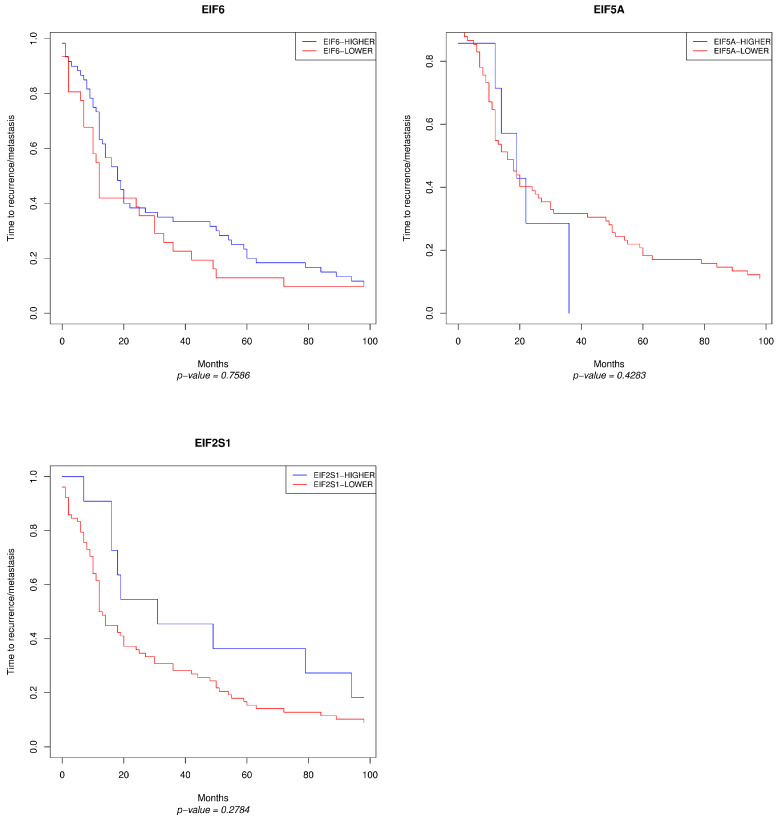
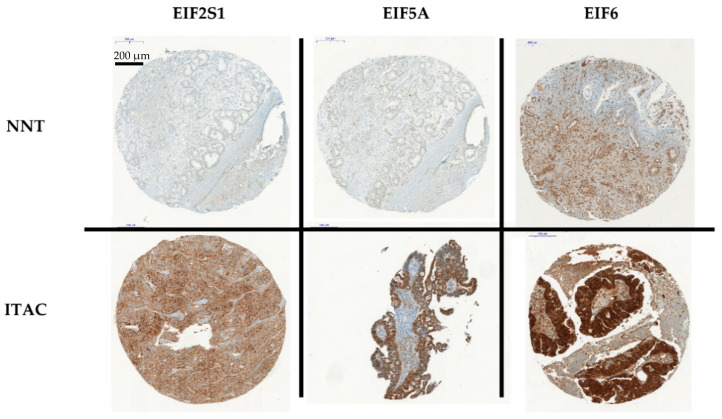
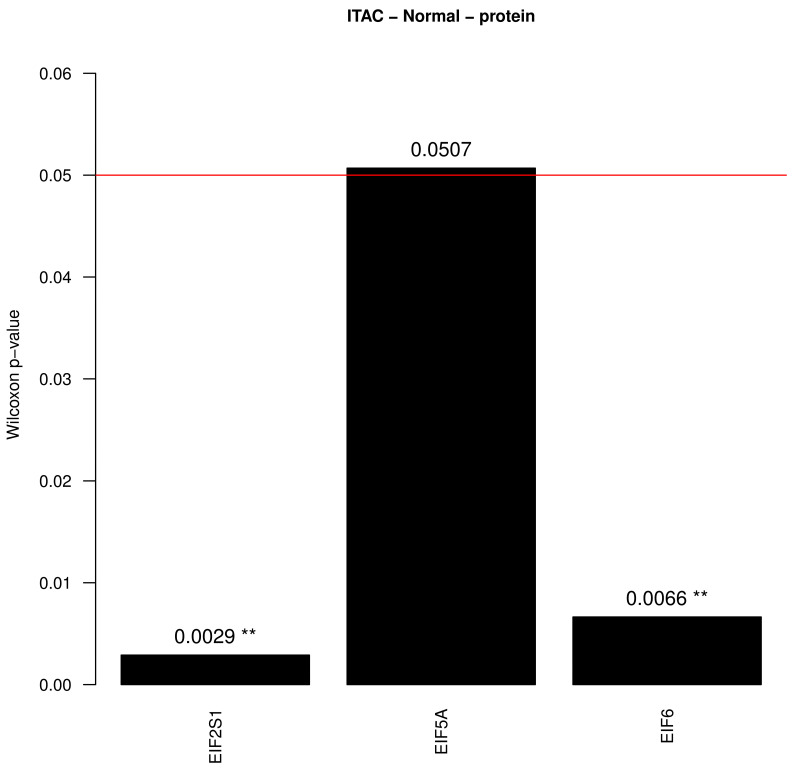
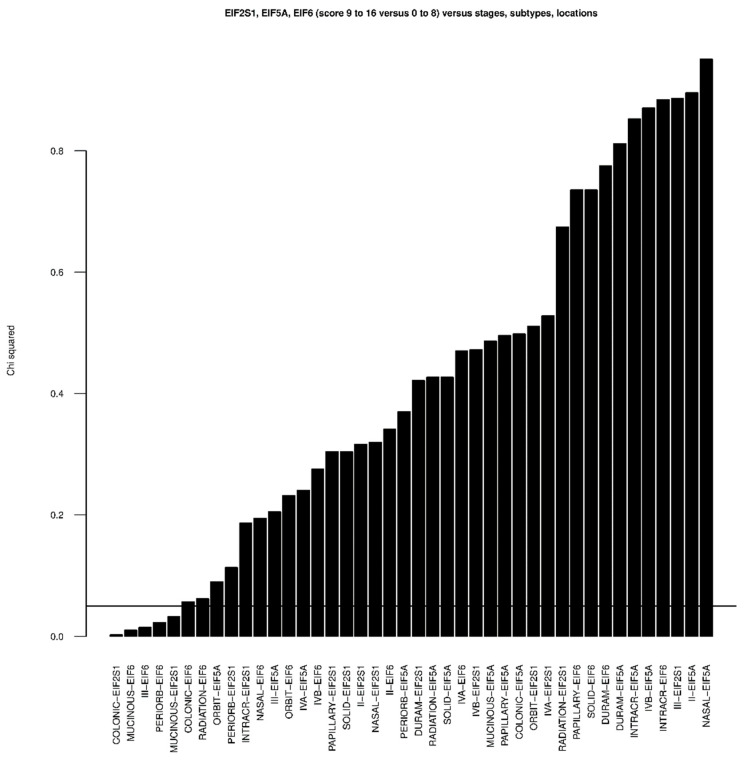
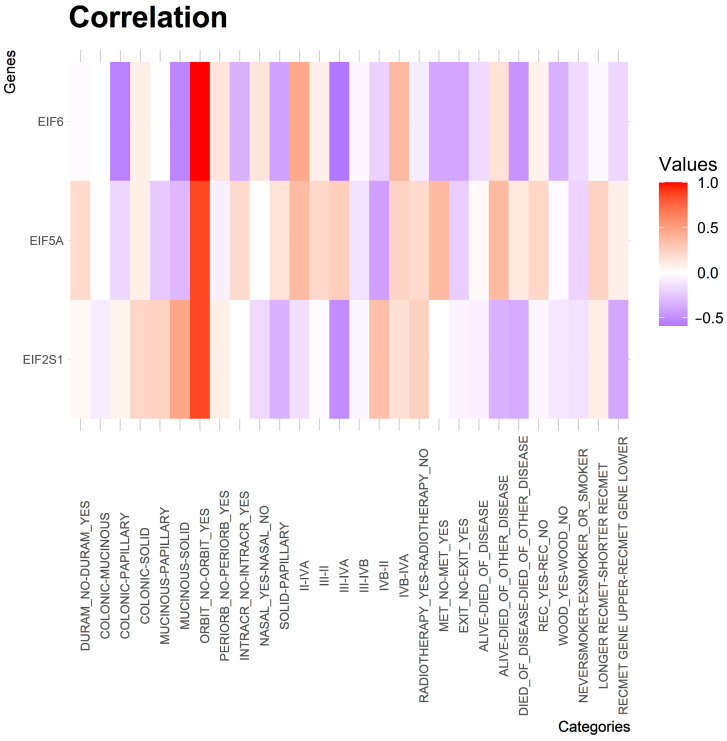
Intestinal-type adenocarcinoma (ITAC) is a rare cancer of the nasal cavity and paranasal sinuses that occurs sporadically or secondary to exposure to occupational hazards, such as wood dust and leather. Eukaryotic translation initiation factors have been described as promising targets for novel cancer treatments in many cancers, but hardly anything is known about these factors in ITAC. Here we performed in silico analyses, evaluated the protein levels of EIF2S1, EIF5A and EIF6 in tumour samples and non-neoplastic tissue controls obtained from 145 patients, and correlated these results with clinical outcome data, including tumour site, stage, adjuvant radiotherapy and survival. In silico analyses revealed significant upregulation of the translation factors EIF6 (ITGB4BP), EIF5, EIF2S1 and EIF2S2 ( < 0.05) with a higher arithmetic mean expression in ITAC compared to non-neoplastic tissue (NNT). Immunohistochemical analyses using antibodies against EIF2S1 and EIF6 confirmed a significantly different expression at the protein level ( < 0.05). In conclusion, this work identifies the eukaryotic translation initiation factors EIF2S1 and EIF6 to be significantly upregulated in ITAC. As these factors have been described as promising therapeutic targets in other cancers, this work identifies candidate therapeutic targets in this rare but often deadly cancer.
肠型腺癌(ITAC)是鼻腔和鼻窦的一种罕见癌症,可散发发生或继发于接触职业危害因素,如木屑和皮革。真核生物翻译起始因子已被描述为许多癌症新型治疗的有前景的靶点,但在ITAC中对这些因子却知之甚少。在此,我们进行了计算机分析,评估了从145例患者获得的肿瘤样本和非肿瘤组织对照中EIF2S1、EIF5A和EIF6的蛋白水平,并将这些结果与临床结局数据相关联,包括肿瘤部位、分期、辅助放疗和生存率。计算机分析显示,与非肿瘤组织(NNT)相比,ITAC中翻译因子EIF6(ITGB4BP)、EIF5、EIF2S1和EIF2S2显著上调(<0.05),算术平均表达更高。使用抗EIF2S1和EIF6抗体的免疫组织化学分析证实,在蛋白水平上表达存在显著差异(<0.05)。总之,这项研究确定真核生物翻译起始因子EIF2S1和EIF6在ITAC中显著上调。由于这些因子在其他癌症中已被描述为有前景的治疗靶点,这项研究确定了这种罕见但往往致命的癌症的候选治疗靶点。