De Winter Fien H R, Hotterbeekx An, Huizing Manon T, Konnova Angelina, Fransen Erik, Jongers Bart's, Jairam Ravi Kumar, Van Averbeke Vincent, Moons Pieter, Roelant Ella, Le Blon Debbie, Vanden Berghe Wim, Janssens Annelies, Lybaert Willem, Croes Lieselot, Vulsteke Christof, Malhotra-Kumar Surbhi, Goossens Herman, Berneman Zwi, Peeters Marc, van Dam Peter A, Kumar-Singh Samir
Molecular Pathology Group, Laboratory of Cell Biology & Histology, Faculty of Medicine and Health Sciences, University of Antwerp, Universiteitsplein 1, 2610 Wilrijk, Belgium.
Multidisciplinary Oncologic Centre Antwerp (MOCA), Antwerp University Hospital, Drie Eikenstraat 655, 2650 Edegem, Belgium.
Cancers (Basel). 2021 Nov 15;13(22):5718. doi: 10.3390/cancers13225718.
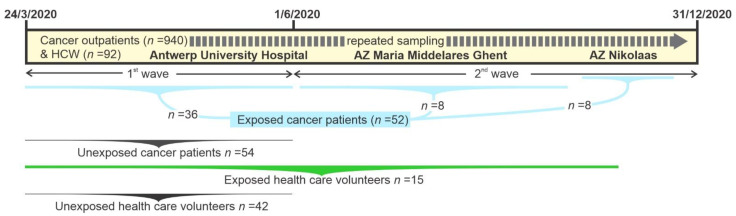
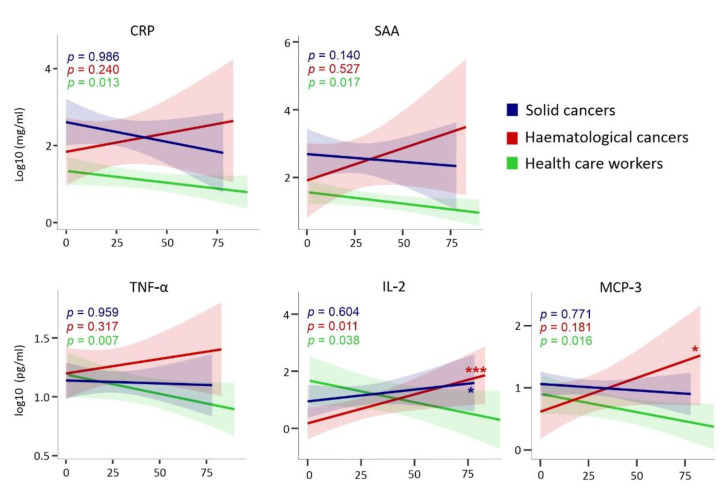
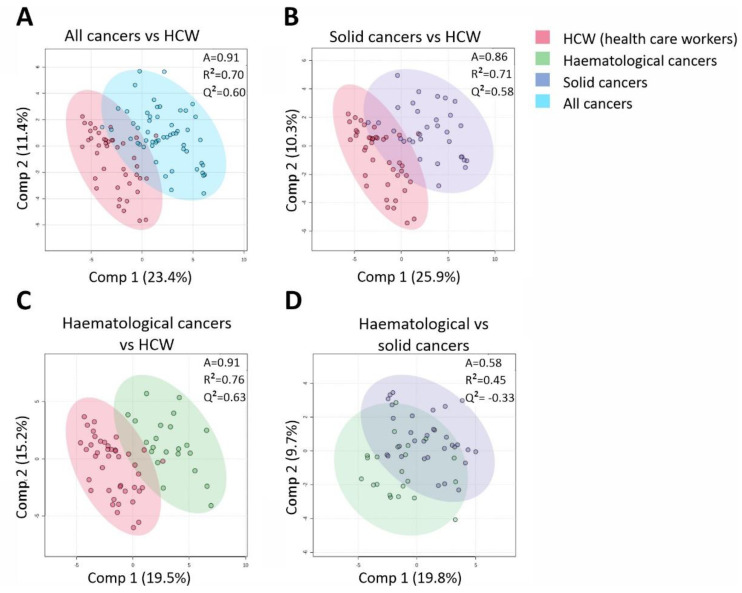
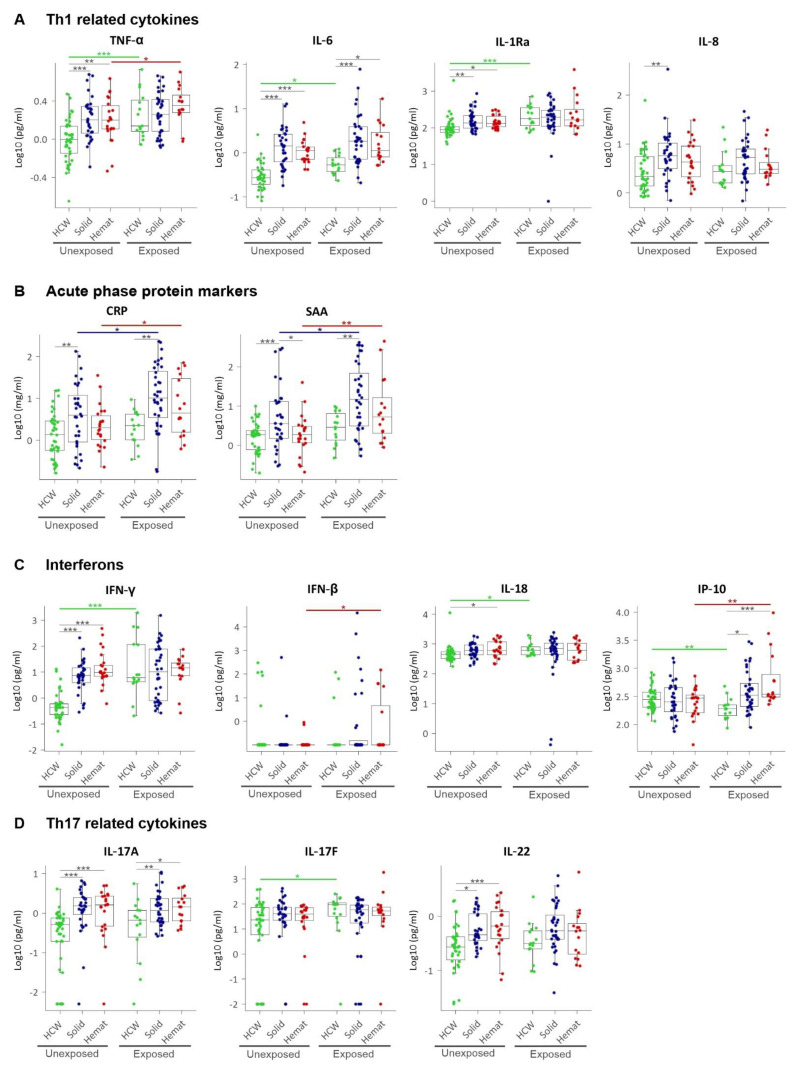
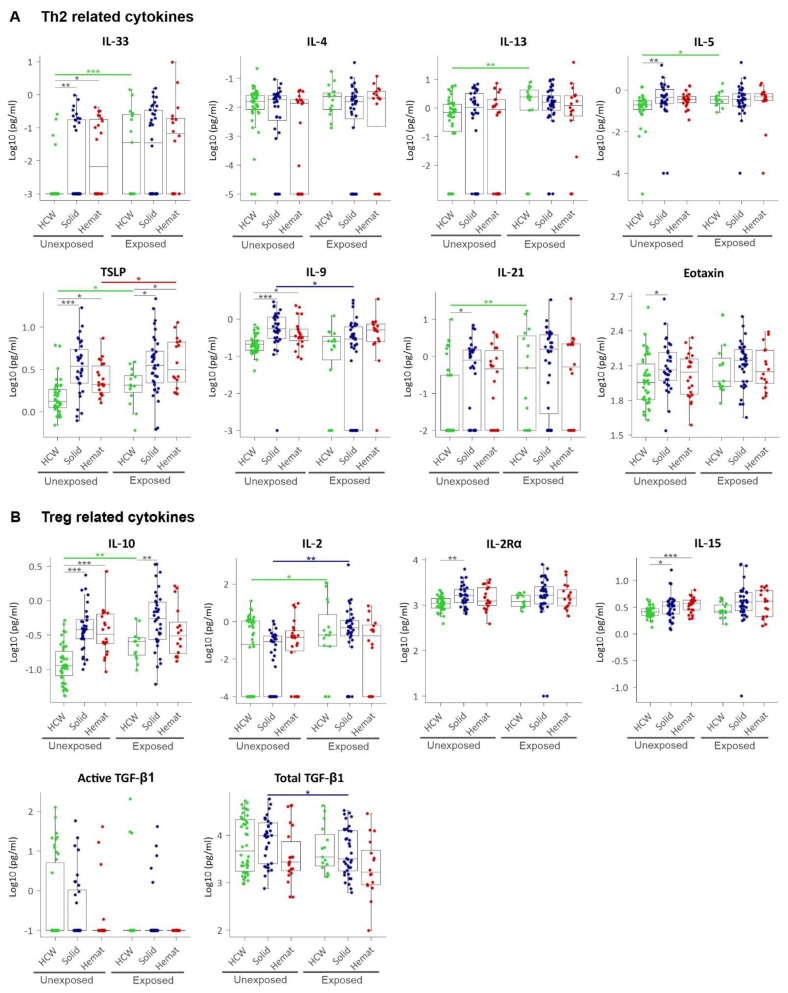
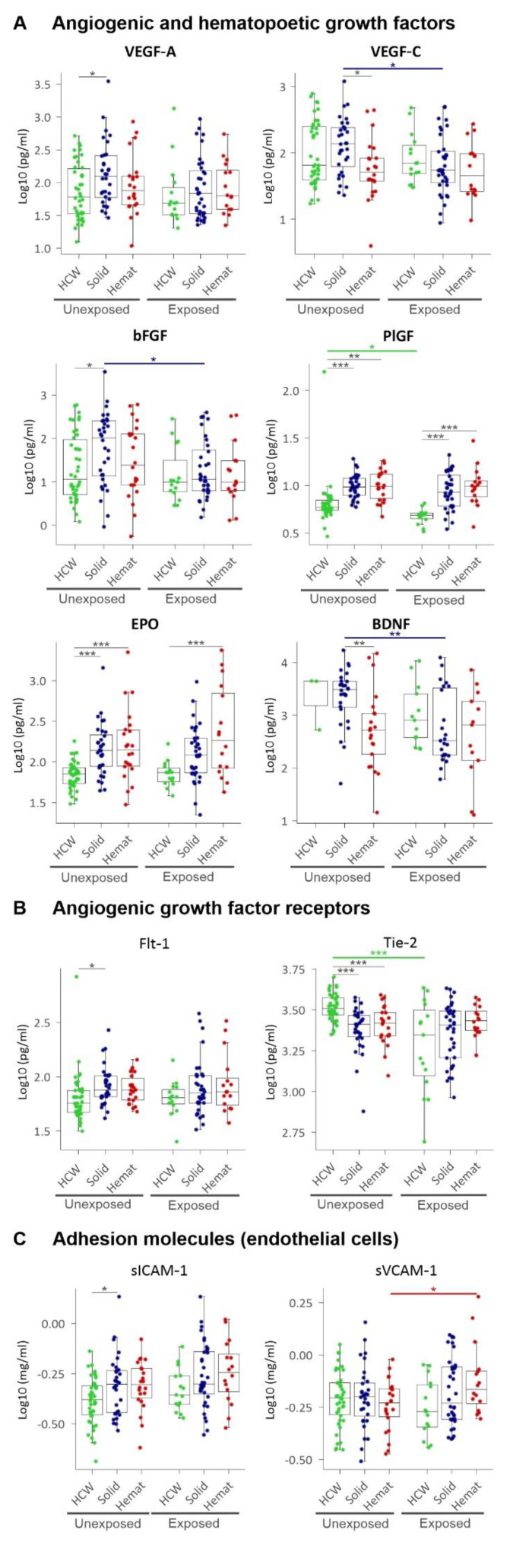
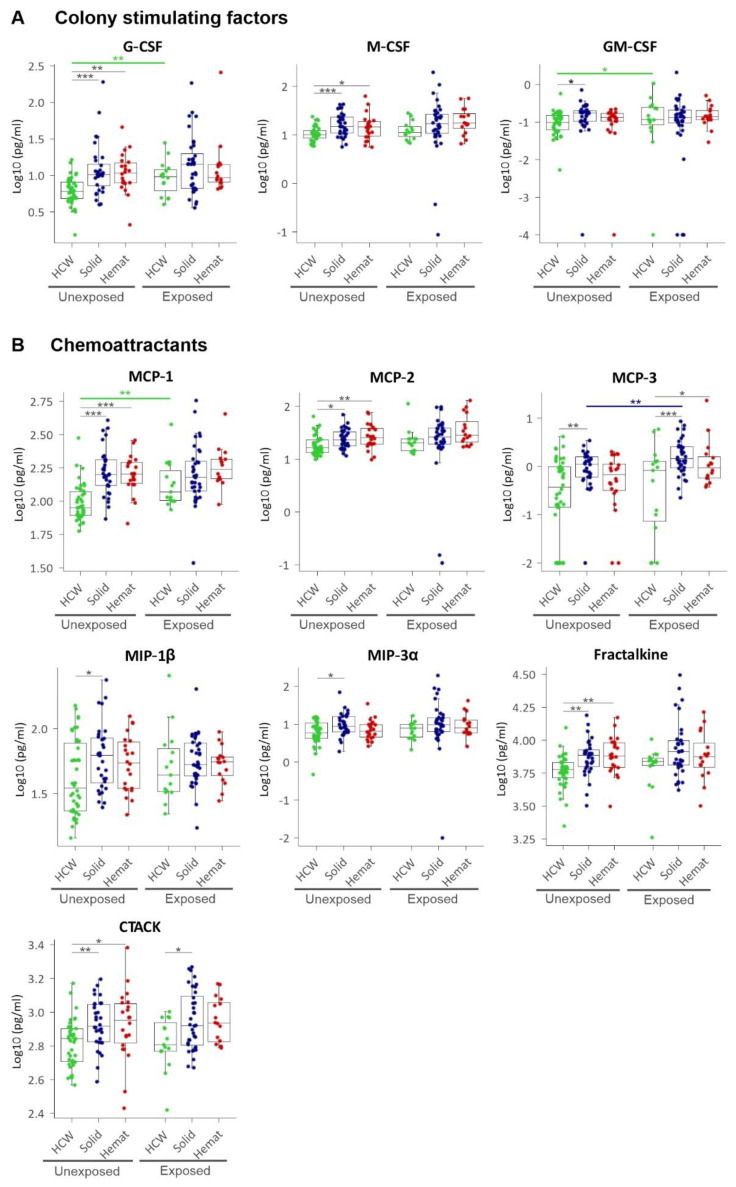
Cytokines, chemokines, and (angiogenic) growth factors (CCGs) have been shown to play an intricate role in the progression of both solid and haematological malignancies. Recent studies have shown that SARS-CoV-2 infection leads to a worse outcome in cancer patients, especially in haematological malignancy patients. Here, we investigated how SARS-CoV-2 infection impacts the already altered CCG levels in solid or haematological malignancies, specifically, whether there is a protective effect or rather a potentially higher risk for major COVID-19 complications in cancer patients due to elevated CCGs linked to cancer progression. Serially analysing immune responses with 55 CCGs in cancer patients under active treatment with or without SARS-CoV-2 infection, we first showed that cancer patients without SARS-CoV-2 infection ( = 54) demonstrate elevated levels of 35 CCGs compared to the non-cancer, non-infected control group of health care workers ( = 42). Of the 35 CCGs, 19 were common to both the solid and haematological malignancy groups and comprised previously described cytokines such as IL-6, TNF-α, IL-1Ra, IL-17A, and VEGF, but also several less well described cytokines/chemokines such as Fractalkine, Tie-2, and T cell chemokine CTACK. Importantly, we show here that 7 CCGs are significantly altered in SARS-CoV-2 exposed cancer patients ( = 52). Of these, TNF-α, IFN-β, TSLP, and sVCAM-1, identified to be elevated in haematological cancers, are also known tumour-promoting factors. Longitudinal analysis conducted over 3 months showed persistence of several tumour-promoting CCGs in SARS-CoV-2 exposed cancer patients. These data demonstrate a need for increased vigilance for haematological malignancy patients as a part of long COVID follow-up.
细胞因子、趋化因子和(血管生成)生长因子(CCGs)已被证明在实体瘤和血液系统恶性肿瘤的进展中发挥着复杂的作用。最近的研究表明,SARS-CoV-2感染会使癌症患者,尤其是血液系统恶性肿瘤患者的预后更差。在此,我们研究了SARS-CoV-2感染如何影响实体瘤或血液系统恶性肿瘤中已经改变的CCG水平,具体而言,由于与癌症进展相关的CCGs升高,癌症患者是否对主要的COVID-19并发症具有保护作用,还是存在潜在的更高风险。通过对接受或未接受SARS-CoV-2感染的积极治疗的癌症患者中的55种CCGs进行连续免疫反应分析,我们首先表明,未感染SARS-CoV-2的癌症患者(n = 54)与未感染病毒的医护人员非癌症对照组(n = 42)相比,35种CCGs水平升高。在这35种CCGs中,19种在实体瘤和血液系统恶性肿瘤组中都有,包括先前描述的细胞因子,如IL-6、TNF-α、IL-1Ra、IL-17A和VEGF,还有一些描述较少的细胞因子/趋化因子,如 fractalkine、Tie-2和T细胞趋化因子CTACK。重要的是,我们在此表明,在接触SARS-CoV-2的癌症患者(n = 52)中,7种CCGs发生了显著变化。其中,在血液系统癌症中被确定升高的TNF-α、IFN-β、TSLP和sVCAM-1,也是已知的肿瘤促进因子。在3个月内进行的纵向分析表明,接触SARS-CoV-2的癌症患者中几种肿瘤促进CCGs持续存在。这些数据表明,作为长期COVID-19随访的一部分,需要对血液系统恶性肿瘤患者提高警惕。