Gebauer Leonie, Moltz Jan H, Mühlberg Alexander, Holch Julian W, Huber Thomas, Enke Johanna, Jäger Nils, Haas Michael, Kruger Stephan, Boeck Stefan, Sühling Michael, Katzmann Alexander, Hahn Horst, Kunz Wolfgang G, Heinemann Volker, Nörenberg Dominik, Maurus Stefan
Department of Medicine III, University Hospital, LMU Munich, Marchioninistr. 15, 81377 Munich, Germany.
Fraunhofer Institute for Digital Medicine MEVIS, Max-von-Laue-Str. 2, 28359 Bremen, Germany.
Cancers (Basel). 2021 Nov 16;13(22):5732. doi: 10.3390/cancers13225732.
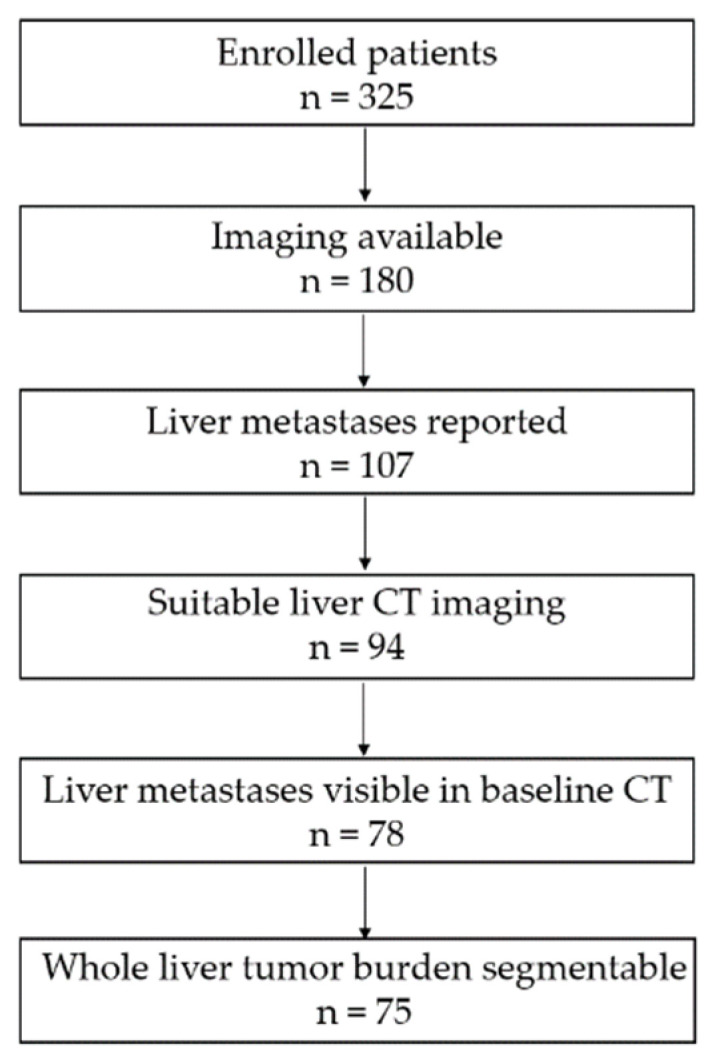
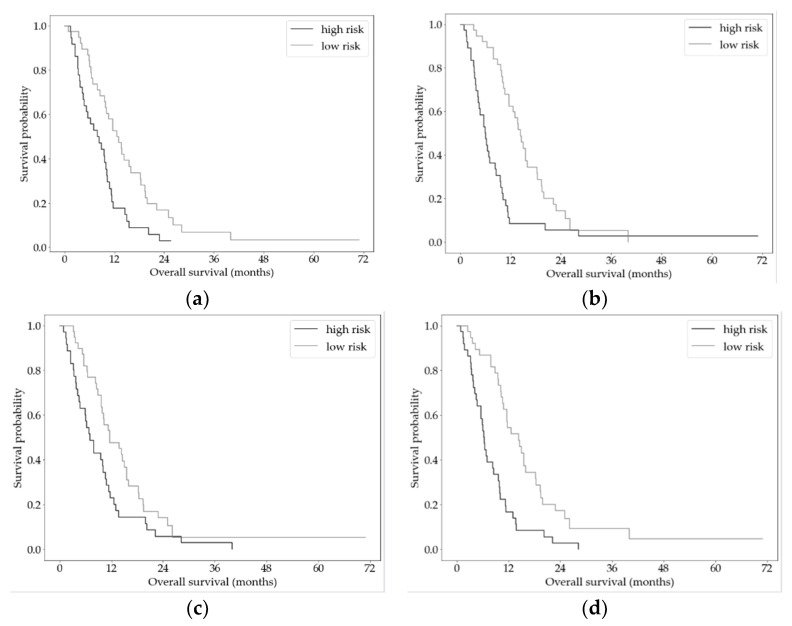
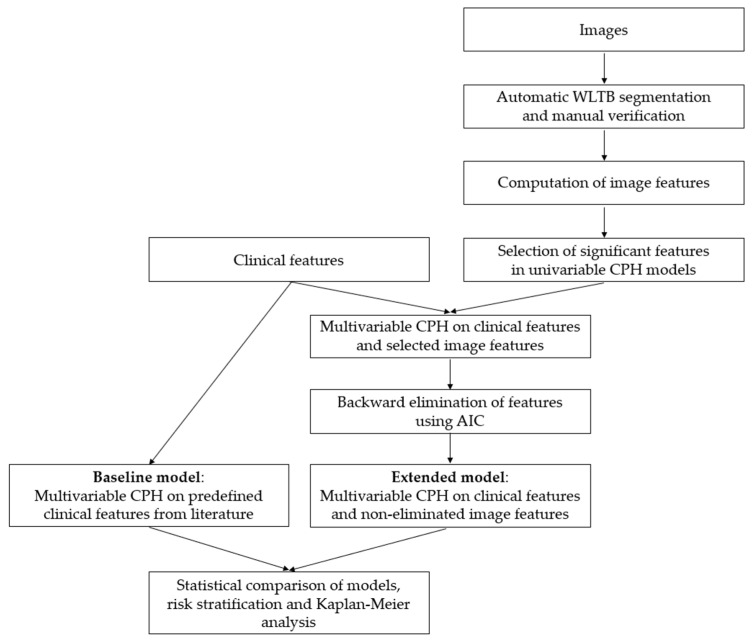
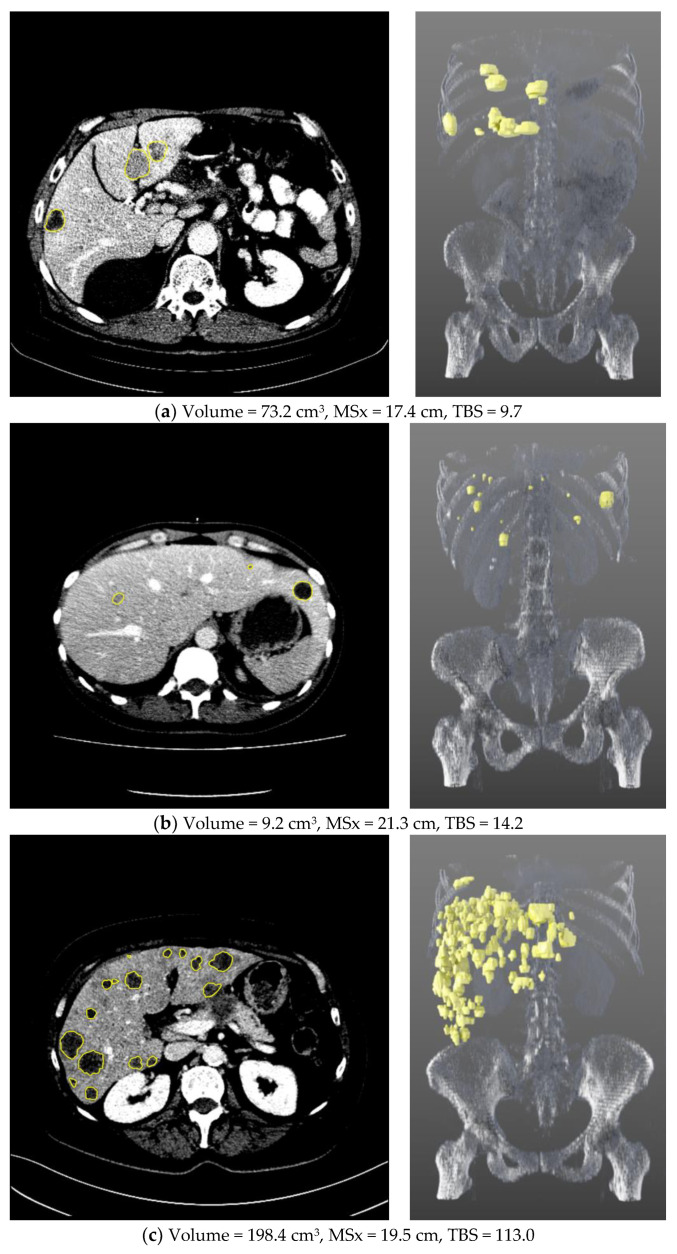
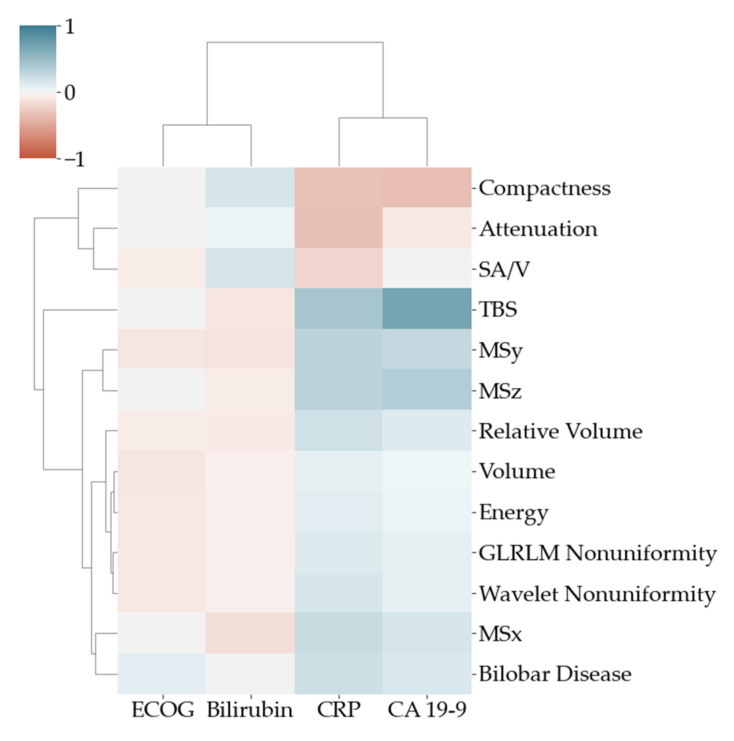
Finding prognostic biomarkers with high accuracy in patients with pancreatic cancer (PC) remains a challenging problem. To improve the prediction of survival and to investigate the relevance of quantitative imaging biomarkers (QIB) we combined QIB with established clinical parameters. In this retrospective study a total of 75 patients with metastatic PC and liver metastases were analyzed. Segmentations of whole liver tumor burden (WLTB) from baseline contrast-enhanced CT images were used to derive QIBs. The benefits of QIBs in multivariable Cox models were analyzed in comparison with two clinical prognostic models from the literature. To discriminate survival, the two clinical models had concordance indices of 0.61 and 0.62 in a statistical setting. Combined clinical and imaging-based models achieved concordance indices of 0.74 and 0.70 with WLTB volume, tumor burden score (TBS), and bilobar disease being the three WLTB parameters that were kept by backward elimination. These combined clinical and imaging-based models have significantly higher predictive performance in discriminating survival than the underlying clinical models alone ( < 0.003). Radiomics and geometric WLTB analysis of patients with metastatic PC with liver metastases enhances the modeling of survival compared with models based on clinical parameters alone.
在胰腺癌(PC)患者中找到高精度的预后生物标志物仍然是一个具有挑战性的问题。为了改善生存预测并研究定量成像生物标志物(QIB)的相关性,我们将QIB与既定的临床参数相结合。在这项回顾性研究中,共分析了75例伴有肝转移的转移性PC患者。利用基线对比增强CT图像对全肝肿瘤负荷(WLTB)进行分割,以得出QIB。与文献中的两种临床预后模型相比,分析了QIB在多变量Cox模型中的益处。为了区分生存情况,在统计学设定中,这两种临床模型的一致性指数分别为0.61和0.62。基于临床和影像学的联合模型在WLTB体积、肿瘤负荷评分(TBS)和双侧病变方面的一致性指数分别为0.74和0.70,这三个WLTB参数是通过向后消除法保留下来的。这些基于临床和影像学的联合模型在区分生存情况方面的预测性能明显高于单纯的基础临床模型(<0.003)。与仅基于临床参数的模型相比,对伴有肝转移的转移性PC患者进行放射组学和几何WLTB分析可增强生存建模。