Guller Meytal, Herberg Matthew, Amin Neha, Alkhatib Hosam, Maroun Christopher, Wu Evan, Allen Hailey, Zheng Ying, Gourin Christine, Vosler Peter, Tan Marietta, Koch Wayne, Eisele David, Seiwert Tanguy, Fakhry Carole, Pardoll Drew, Zhu Gangcai, Mandal Rajarsi
Department of Otolaryngology-Head and Neck Surgery, Johns Hopkins University, Baltimore, MD 21287, USA.
Bloomberg-Kimmel Institute for Cancer Immunotherapy at Johns Hopkins, Baltimore, MD 21287, USA.
Cancers (Basel). 2021 Nov 18;13(22):5772. doi: 10.3390/cancers13225772.
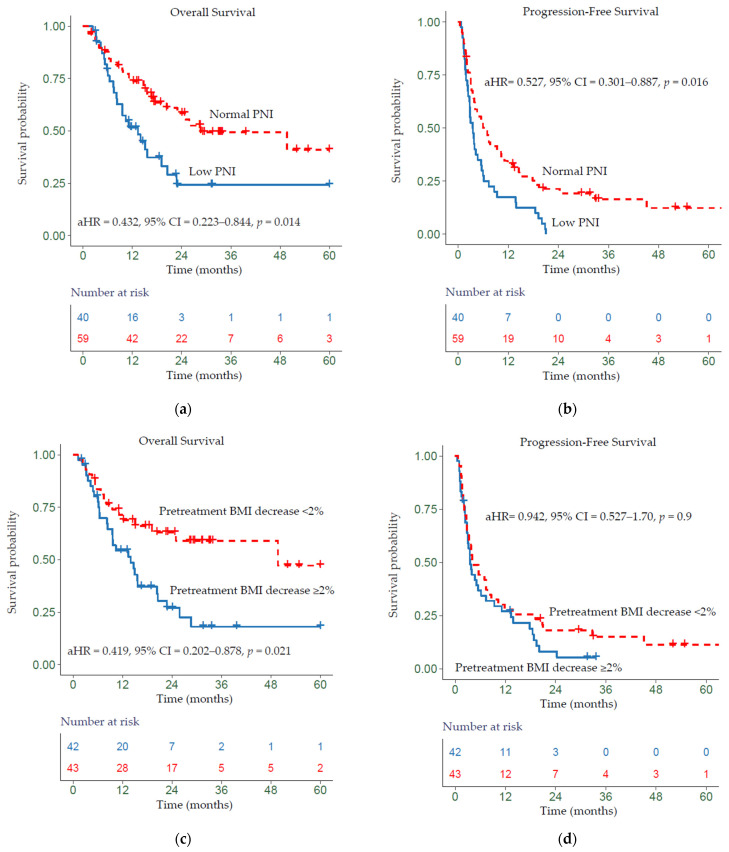
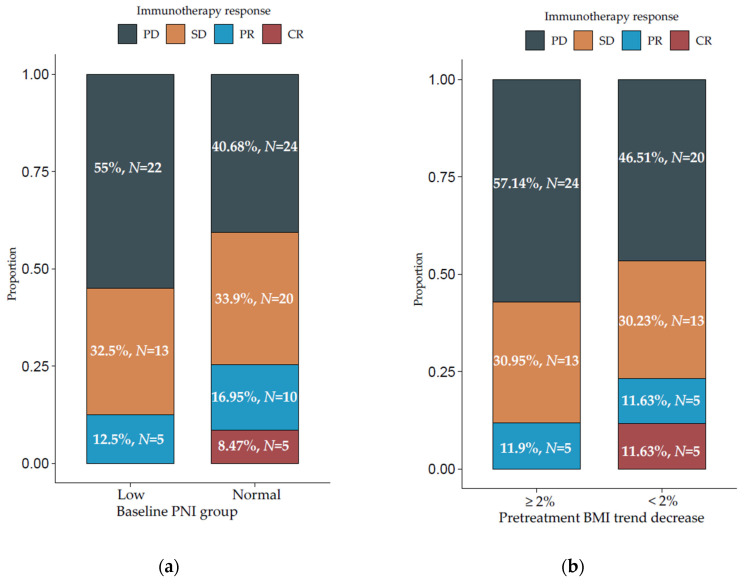
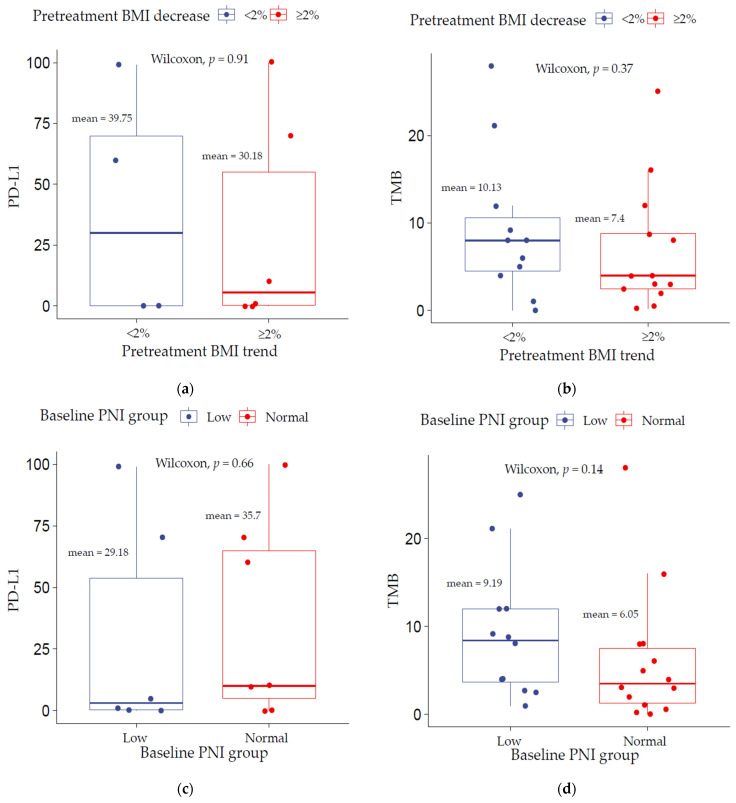
The association between pretreatment nutritional status and immunotherapy response in patients with advanced head and neck cancer is unclear. We retrospectively analyzed a cohort of 99 patients who underwent treatment with anti-PD-1 or anti-CTLA-4 antibodies (or both) for stage IV HNSCC between 2014 and 2020 at the Johns Hopkins Hospital. Patient demographics and clinical characteristics were retrieved from electronic medical records. Baseline prognostic nutritional index (PNI) scores and pretreatment body mass index (BMI) trends were calculated. Associations between PNI and BMI were correlated with overall survival (OS), progression-free survival (PFS), and immunotherapy response. In univariate analysis, there was a significant correlation between OS and PFS with baseline PNI (OS: HR: 0.464; 95% CI: 0.265-0.814; PFS: = 0.007 and HR: 0.525; 95% CI: 0.341-0.808; = 0.003). Poor OS was also associated with a greater decrease in pretreatment BMI trend (HR: 0.42; 95% CI: 0.229-0.77; = 0.005). In multivariate analysis, baseline PNI but not BMI trend was significantly associated with OS and PFS (OS: log (HR) = -0.79, CI: -1.6, -0.03, = 0.041; PFS: log (HR) = -0.78, CI: -1.4, -0.18, = 0.011). In conclusion, poor pretreatment nutritional status is associated with negative post-immunotherapy outcomes.
晚期头颈癌患者治疗前营养状况与免疫治疗反应之间的关联尚不清楚。我们回顾性分析了2014年至2020年在约翰霍普金斯医院接受抗PD-1或抗CTLA-4抗体(或两者)治疗的99例IV期头颈部鳞状细胞癌(HNSCC)患者队列。从电子病历中获取患者的人口统计学和临床特征。计算基线预后营养指数(PNI)评分和治疗前体重指数(BMI)趋势。PNI和BMI与总生存期(OS)、无进展生存期(PFS)和免疫治疗反应之间的关联。单因素分析中,OS和PFS与基线PNI之间存在显著相关性(OS:HR:0.464;95%CI:0.265 - 0.814;P = 0.007;PFS:HR:0.525;95%CI:0.341 - 0.808;P = 0.003)。较差的OS也与治疗前BMI趋势的更大下降相关(HR:0.42;95%CI:0.229 - 0.77;P = 0.005)。多因素分析中,基线PNI而非BMI趋势与OS和PFS显著相关(OS:log(HR)= -0.79,CI:-1.6,-0.03,P = 0.041;PFS:log(HR)= -0.78,CI:-1.4,-0.18,P = 0.011)。总之,治疗前营养状况较差与免疫治疗后不良结局相关。