Division of Nephrology, Department of Medicine, University of Connecticut School of Medicine, Farmington, CT 06030, USA.
Department of Immunology, University of Connecticut School of Medicine, Farmington, CT 06030, USA.
Cells. 2021 Nov 6;10(11):3057. doi: 10.3390/cells10113057.
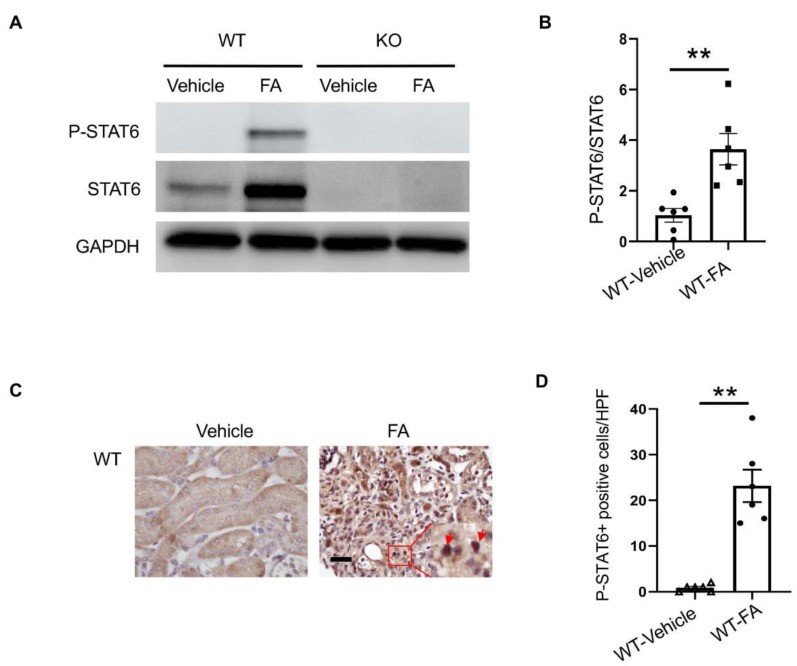
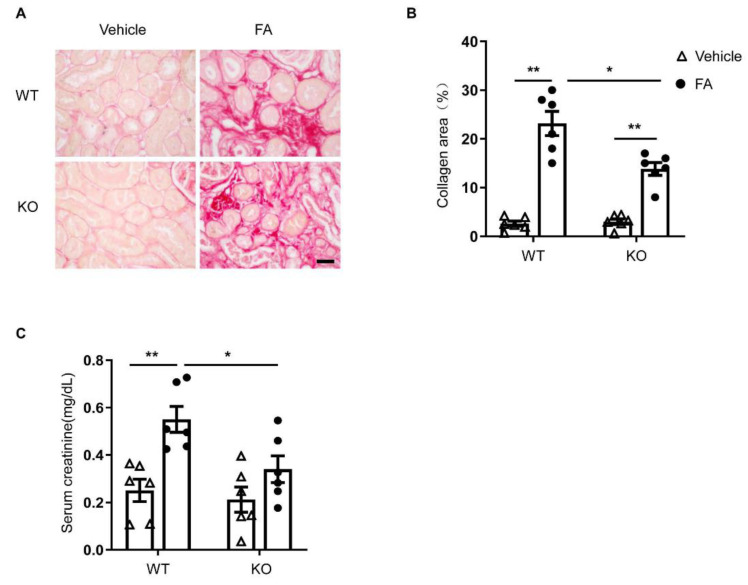
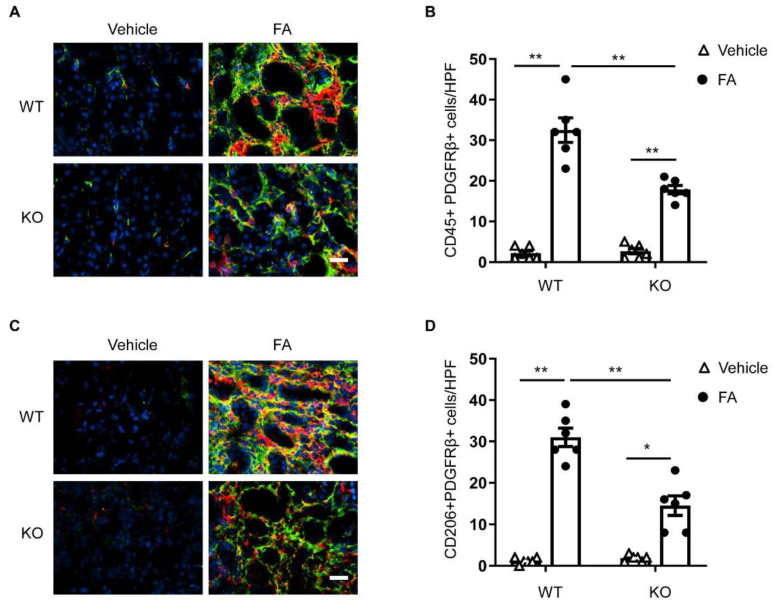
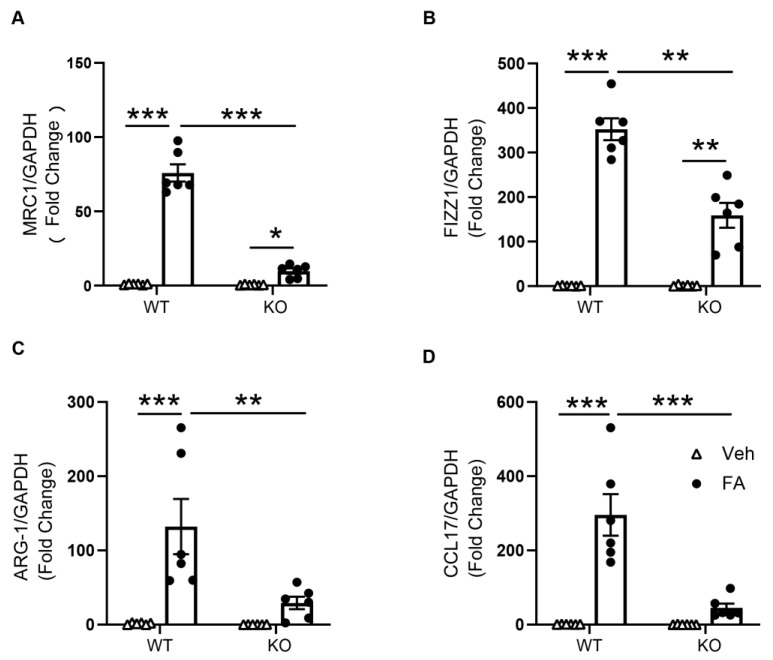
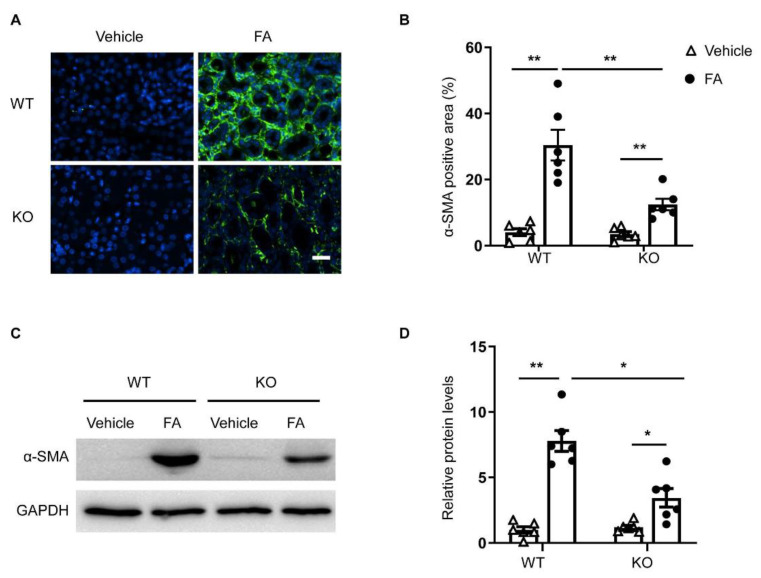
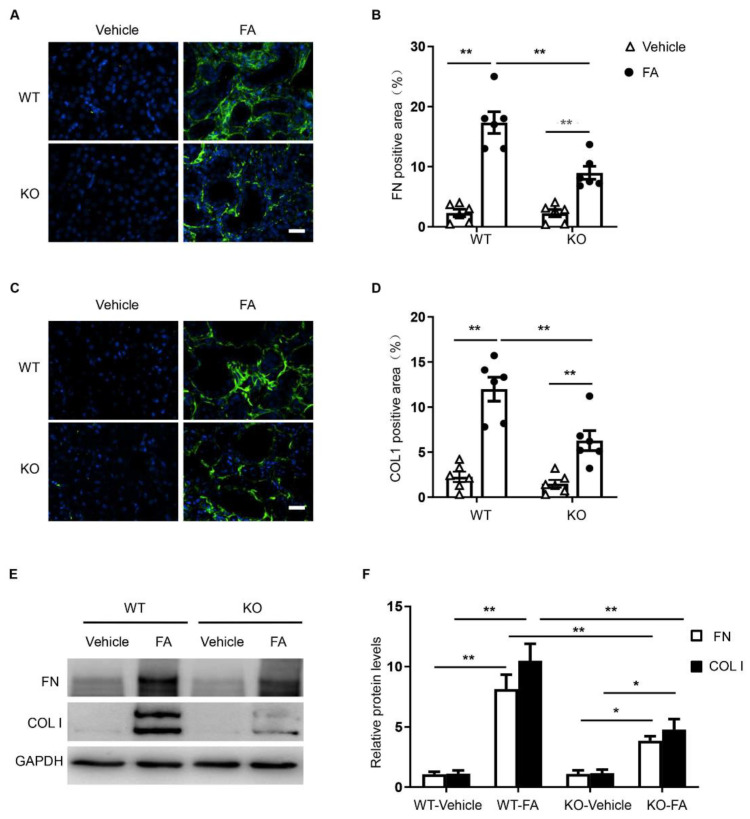
Renal fibrosis is a pathologic feature of chronic kidney disease, which can lead to end-stage kidney disease. Myeloid fibroblasts play a central role in the pathogenesis of renal fibrosis. However, the molecular mechanisms pertaining to myeloid fibroblast activation remain to be elucidated. In the present study, we examine the role of signal transducer and activator of transcription 6 (STAT6) in myeloid fibroblast activation, macrophage polarization, and renal fibrosis development in a mouse model of folic acid nephropathy. STAT6 is activated in the kidney with folic acid nephropathy. Compared with folic-acid-treated wild-type mice, STAT6 knockout mice had markedly reduced myeloid fibroblasts and myofibroblasts in the kidney with folic acid nephropathy. Furthermore, STAT6 knockout mice exhibited significantly less CD206 and PDGFR-β dual-positive fibroblast accumulation and M2 macrophage polarization in the kidney with folic acid nephropathy. Consistent with these findings, STAT6 knockout mice produced less extracellular matrix protein, exhibited less severe interstitial fibrosis, and preserved kidney function in folic acid nephropathy. Taken together, these results have shown that STAT6 plays a critical role in myeloid fibroblasts activation, M2 macrophage polarization, extracellular matrix protein production, and renal fibrosis development in folic acid nephropathy. Therefore, targeting STAT6 may provide a novel therapeutic strategy for fibrotic kidney disease.
肾纤维化是慢性肾脏病的一种病理特征,可导致终末期肾病。髓系成纤维细胞在肾纤维化的发病机制中起核心作用。然而,髓系成纤维细胞激活的分子机制仍有待阐明。在本研究中,我们研究了信号转导子和转录激活子 6(STAT6)在叶酸肾病小鼠模型中髓系成纤维细胞激活、巨噬细胞极化和肾纤维化发展中的作用。在叶酸肾病的肾脏中激活 STAT6。与叶酸处理的野生型小鼠相比,STAT6 敲除小鼠的叶酸肾病肾脏中的髓系成纤维细胞和成肌纤维细胞明显减少。此外,STAT6 敲除小鼠的叶酸肾病肾脏中 CD206 和 PDGFR-β 双阳性成纤维细胞积累和 M2 巨噬细胞极化明显减少。与这些发现一致,STAT6 敲除小鼠在叶酸肾病中产生的细胞外基质蛋白较少,间质纤维化程度较轻,肾功能得到保留。综上所述,这些结果表明 STAT6 在髓系成纤维细胞激活、M2 巨噬细胞极化、细胞外基质蛋白产生和叶酸肾病中的肾纤维化发展中起关键作用。因此,靶向 STAT6 可能为纤维化肾脏疾病提供一种新的治疗策略。