Internal Medicine Department, Instituto de Investigación Biomédica de Málaga (IBIMA), Regional University Hospital of Málaga, University of Málaga, 29010 Málaga, Spain.
Endocrinology and Nutrition Department, Instituto de Investigación Biomédica de Málaga (IBIMA), Virgen de la Victoria University Hospital, 29010 Málaga, Spain.
Int J Environ Res Public Health. 2021 Nov 13;18(22):11926. doi: 10.3390/ijerph182211926.
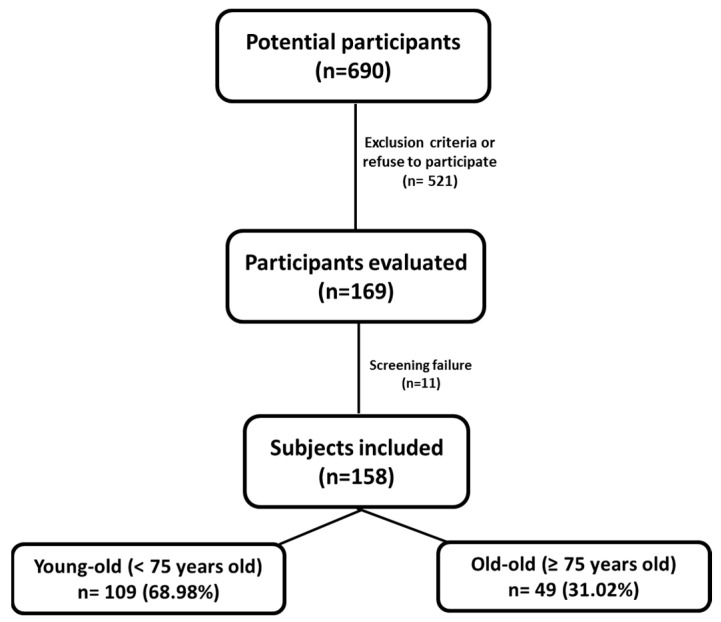
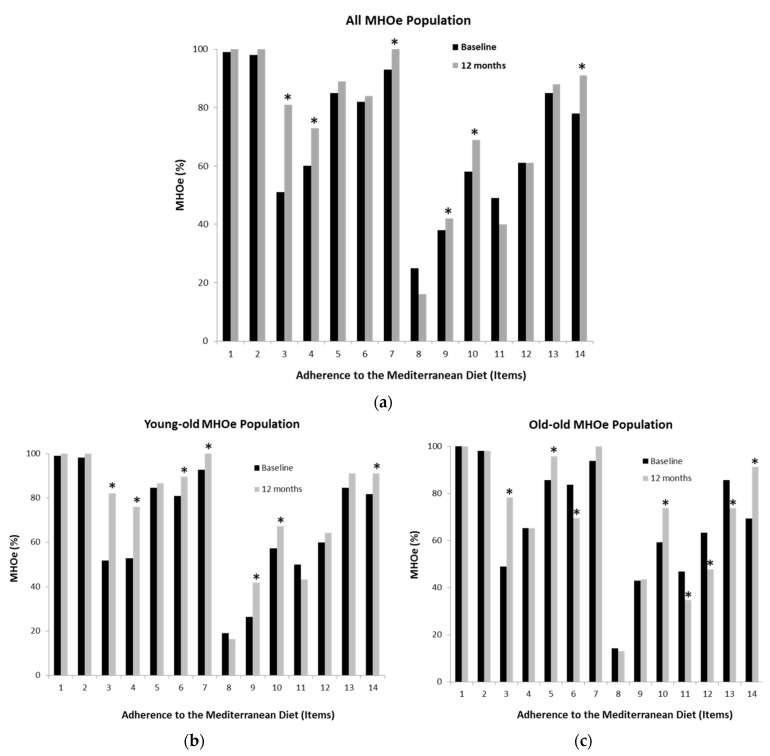
The SARS-CoV-2 pandemic led to lockdowns, which affected the elderly, a high-risk group. Lockdown may lead to weight gain due to increased food intake and reduced physical activity (PA). Our study aimed to analyze the impact of a 12-month lifestyle intervention on a metabolically healthy overweight/obese elderly (MHOe) population and how the lockdown by COVID-19 affected this program. MHOe participants (65-87 years) were recruited to participate in a lifestyle modification intervention based on the Mediterranean diet (MedDiet) and regular PA. Participants were classified into two groups: young-old (<75 years) or old-old (≥75 years). Anthropometric and clinical characteristics, energy intake, and energy expenditure were analyzed at baseline and after 12 months of intervention. The final sample included 158 MHOe participants of both sexes (age: 72.21 ± 5.04 years, BMI: 31.56 ± 3.82 kg/m): 109 young-old (age: 69.26 ± 2.83 years, BMI: 32.0 ± 3.85 kg/m) and 49 old-old (age: 78.06 ± 2.88 years, BMI: 30.67 ± 3.64 kg/m). After 12 months of intervention and despite lockdown, the young-old group increased MedDiet adherence (+1 point), but both groups drastically decreased daily PA, especially old-old participants. Fat mass significantly declined in the total population and the young-old. Depression significantly increased (26.9% vs. 21.0%, < 0.0001), especially in the old-old (36.7% vs. 22.0%, < 0.0001). No significant changes were found in the glycemic or lipid profile. This study indicates that ongoing MedDiet intake and regular PA can be considered preventative treatment for metabolic diseases in MHOe subjects. However, mental health worsened during the study and should be addressed in elderly individuals.
新型冠状病毒肺炎大流行导致了封锁,这对老年人这一高风险群体产生了影响。封锁可能会导致体重增加,因为食物摄入增加而体力活动减少。我们的研究旨在分析为期 12 个月的生活方式干预对代谢健康超重/肥胖老年人(MHOe)人群的影响,以及 COVID-19 封锁如何影响该计划。MHOe 参与者(65-87 岁)被招募参加基于地中海饮食(MedDiet)和定期体力活动的生活方式改变干预。参与者被分为两组:年轻老年人(<75 岁)或年长老年人(≥75 岁)。在基线和干预 12 个月后,分析了人体测量学和临床特征、能量摄入和能量消耗。最终样本包括 158 名 MHOe 参与者,男女皆有(年龄:72.21±5.04 岁,BMI:31.56±3.82kg/m²):109 名年轻老年人(年龄:69.26±2.83 岁,BMI:32.0±3.85kg/m²)和 49 名年长老年人(年龄:78.06±2.88 岁,BMI:30.67±3.64kg/m²)。尽管进行了封锁,但在干预 12 个月后,年轻老年人组地中海饮食依从性增加(+1 分),但两组的日常体力活动均急剧减少,年长老年人组尤为明显。总人群和年轻老年人的脂肪量显著下降。抑郁显著增加(26.9%对 21.0%,<0.0001),尤其是年长老年人(36.7%对 22.0%,<0.0001)。血糖或血脂谱没有明显变化。本研究表明,持续的地中海饮食摄入和规律的体力活动可以被视为 MHOe 人群代谢性疾病的预防治疗方法。然而,在研究期间,心理健康状况恶化,应在老年人中加以解决。