Fung Eric, Johnson Ken I, Li Wenqi, Borges William, Chi Kai, Sharma Sunil K, Madan Yogita, Sharma Priyanka R, Hsiao Benjamin S
Department of Chemistry, Stony Brook University, Stony Brook, New York, NY 11794-3400, USA.
Center for Integrated Electric Energy Systems, Stony Brook University, Stony Brook, New York, NY 11794-6044, USA.
Membranes (Basel). 2021 Nov 11;11(11):868. doi: 10.3390/membranes11110868.
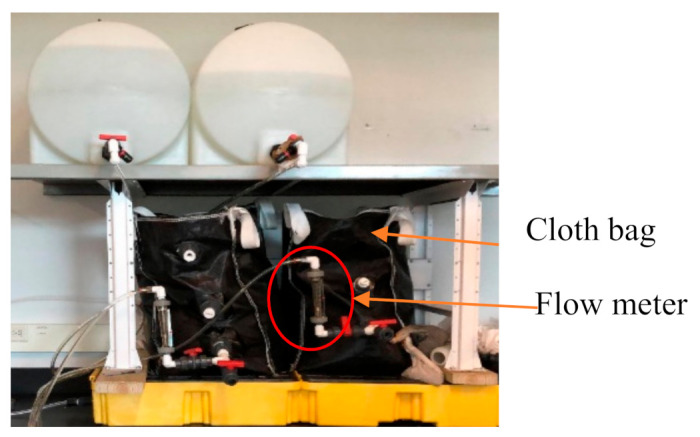
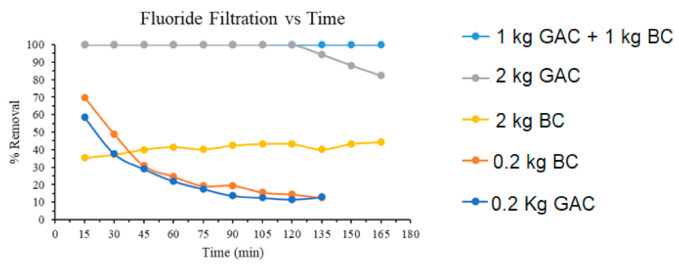
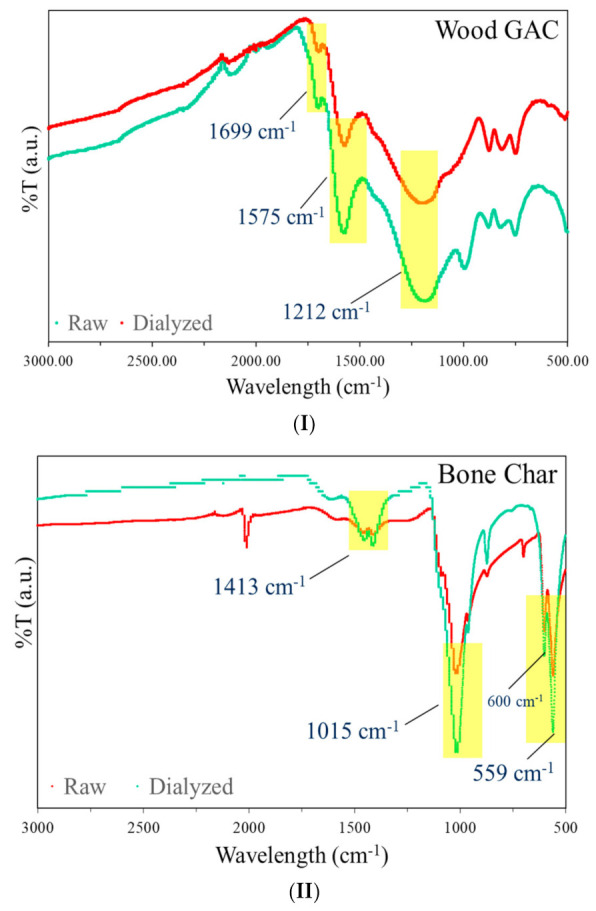
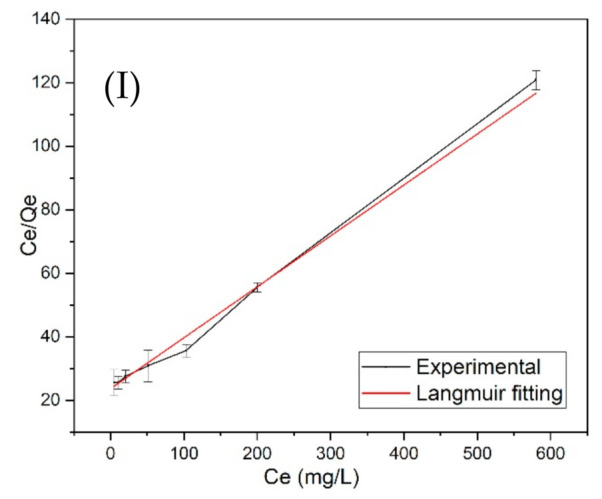
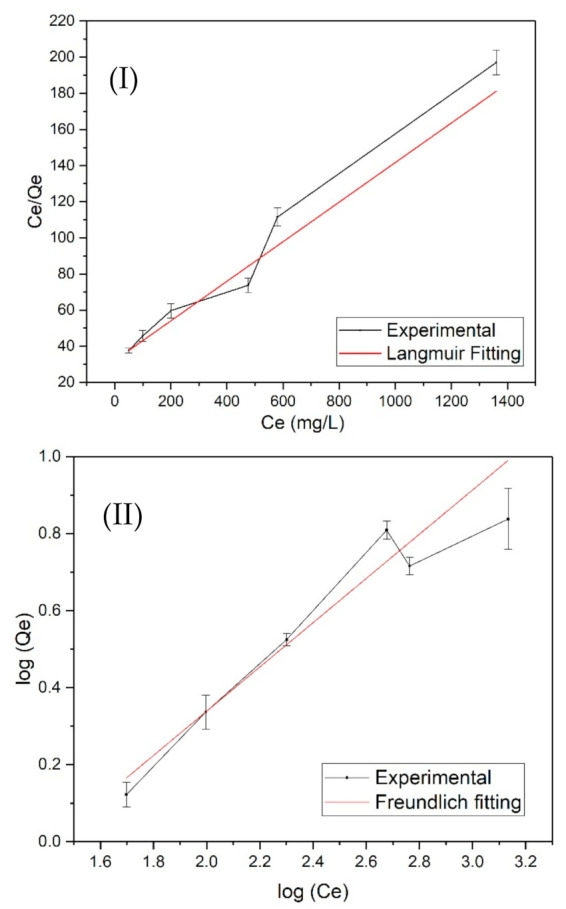
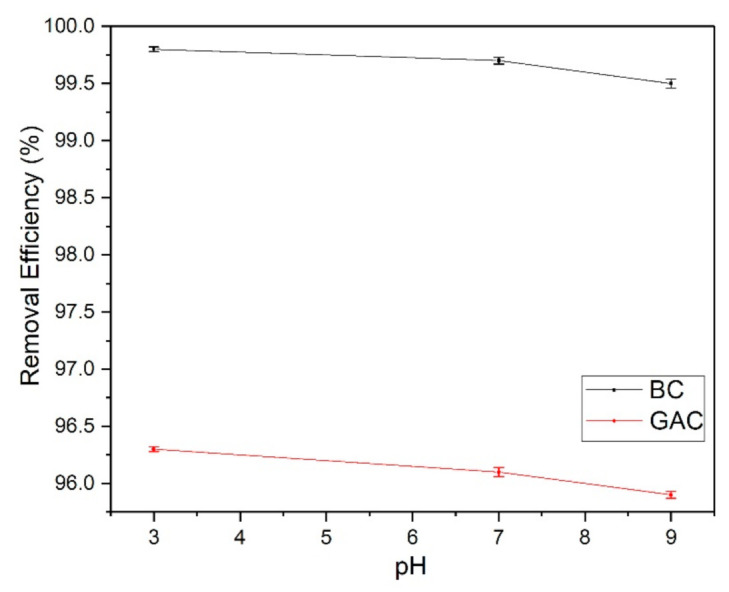
In this study, granulated activated charcoal (GAC) and bio charcoal (BC) is used as a filler in P3 biosand bag filter to study their filtration performance against a range of fluoride impurities from 1-1400 mg/L. A set of experiments are done to analyze the filtration efficiency of the sandbag filter against fluoride impurities after incorporating different amounts (e.g., 0.2, 2 kg) and a combination of GAC and BC. A combination of filler GAC and BC (1 kg each) have exhibited excellent results with 100% fluoride removal efficiency against 5 mg/L fluoride impurities for an entire experimental time of 165 min. It is because of the synergetic effect of adsorption caused by the high surface area (739 m/g) of GAC and hydroxyapatite groups in BC. The data from remediation experiments using individual GAC and BC are fitted into the Langmuir and Freundlich Isotherm Models to check their adsorption mechanism and determine GAC and BC's maximum adsorption capacity (). The remediation data for both GAC and BC have shown the better fitting to the Langmuir Isotherm Model with a high R value of 0.994 and 0.970, respectively, showing the excellent conformity with monolayer adsorption. While the GAC and BC have presented negative Kf values of -1.08 and -0.72, respectively, for Freundlich Model, showing the non-conformity to multilayer adsorption. The values obtained from Langmuir Model for GAC is 6.23 mg/g, and for BC, it is 9.13 mg/g. The pH study on adsorption efficiency of individual GAC and BC against 5 mg/L of fluoride impurities indicates the decrease in removal efficiency with an increase in pH from 3 to 9. For example, BC has shown removal efficiency of 99.8% at pH 3 and 99.5% at pH 9, while GAC has exhibited removal efficiency of 96.1% at pH 3 and 95.9% at pH 9. Importantly, this study presents the significance of the synergetic application of GAC and BC in the filters, where GAC and BC are different in their origin, functionalities, and surface characteristics.
在本研究中,颗粒活性炭(GAC)和生物炭(BC)被用作P3生物砂袋过滤器的填料,以研究它们对1至1400毫克/升范围内一系列氟化物杂质的过滤性能。进行了一组实验,以分析在加入不同量(例如0.2、2千克)以及GAC和BC的组合后,沙袋过滤器对氟化物杂质的过滤效率。填料GAC和BC(各1千克)的组合在165分钟的整个实验时间内,对5毫克/升氟化物杂质的氟去除效率达到100%,显示出优异的效果。这是由于GAC的高比表面积(739平方米/克)和BC中的羟基磷灰石基团所引起的吸附协同效应。将使用单独的GAC和BC进行修复实验的数据拟合到朗缪尔等温线模型和弗伦德里希等温线模型中,以检查它们的吸附机制并确定GAC和BC的最大吸附容量()。GAC和BC的修复数据分别以0.994和0.970的高R值更好地拟合了朗缪尔等温线模型,表明与单层吸附具有优异的一致性。而对于弗伦德里希模型,GAC和BC的Kf值分别为-1.08和-0.72,表明不符合多层吸附。从朗缪尔模型获得的GAC的值为6.23毫克/克,BC的值为9.13毫克/克。对单独的GAC和BC对5毫克/升氟化物杂质的吸附效率进行的pH研究表明随着pH从3增加到9,去除效率降低。例如,BC在pH 3时的去除效率为99.8%,在pH 9时为99.5%,而GAC在pH 3时的去除效率为96.1%,在pH 9时为95.9%。重要的是,本研究展示了GAC和BC在过滤器中协同应用的重要性,其中GAC和BC在来源、功能和表面特性方面存在差异。