Zhan Chengbo, Li Yanxiang, Sharma Priyanka R, He Hongrui, Sharma Sunil K, Wang Ruifu, Hsiao Benjamin S
Department of Chemistry, Stony Brook University, Stony Brook, NY 11794-3400, USA. Email:
CAS Key Laboratory of Green Process and Engineering, Institute of Process Engineering, Chinese Academy of Sciences, Beijing 100190, China.
RSC Adv. 2019 Dec 8;9(69):40565-40576. doi: 10.1039/c9ra08861j. Epub 2019 Dec 6.
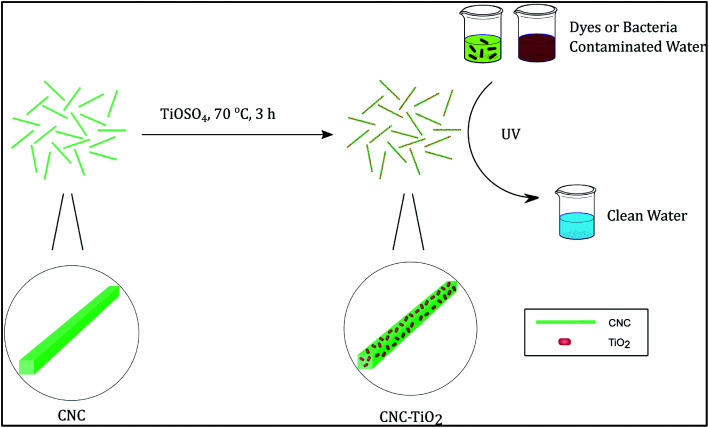
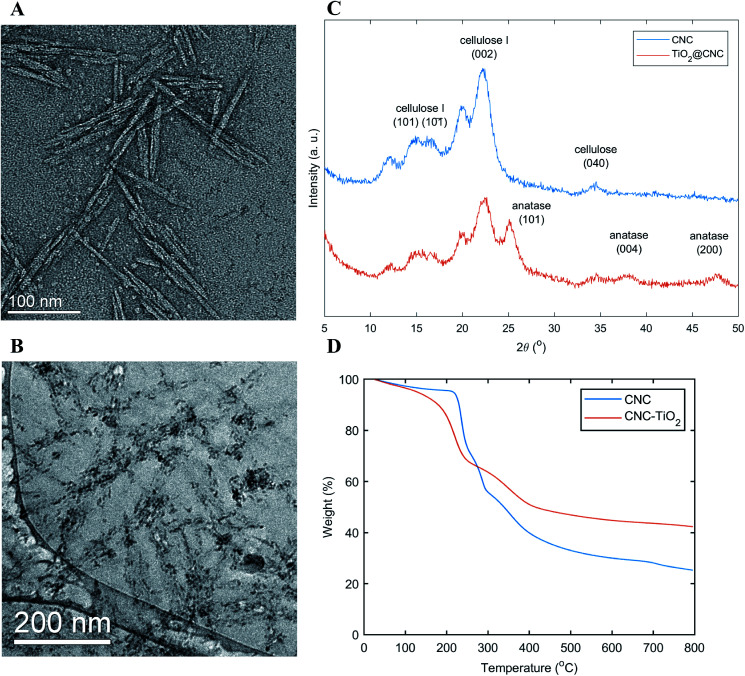
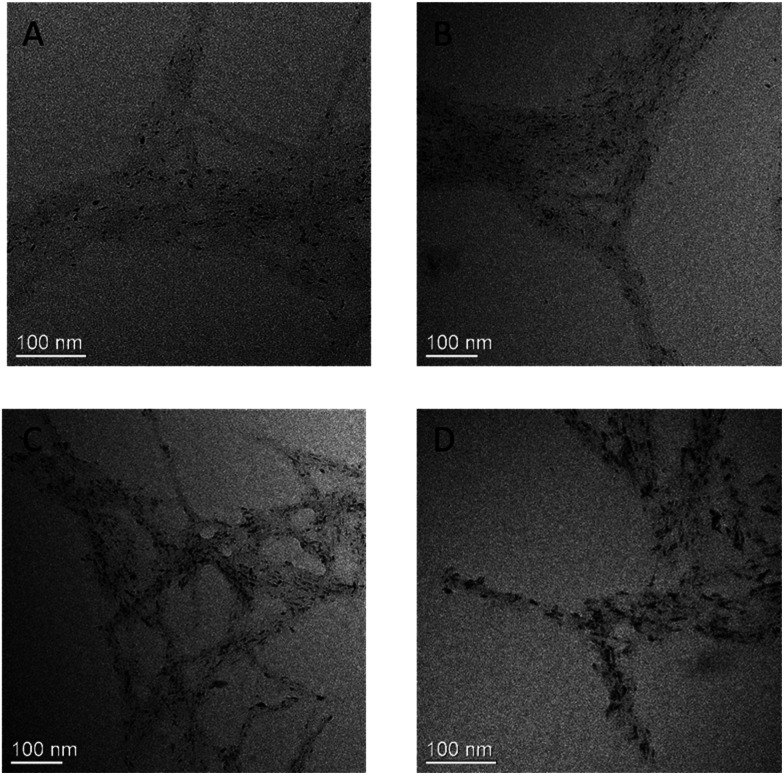
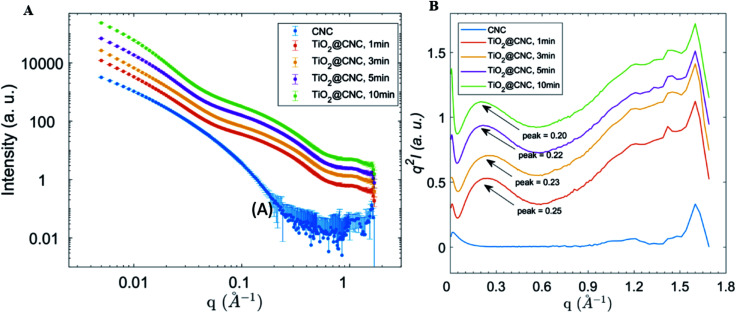
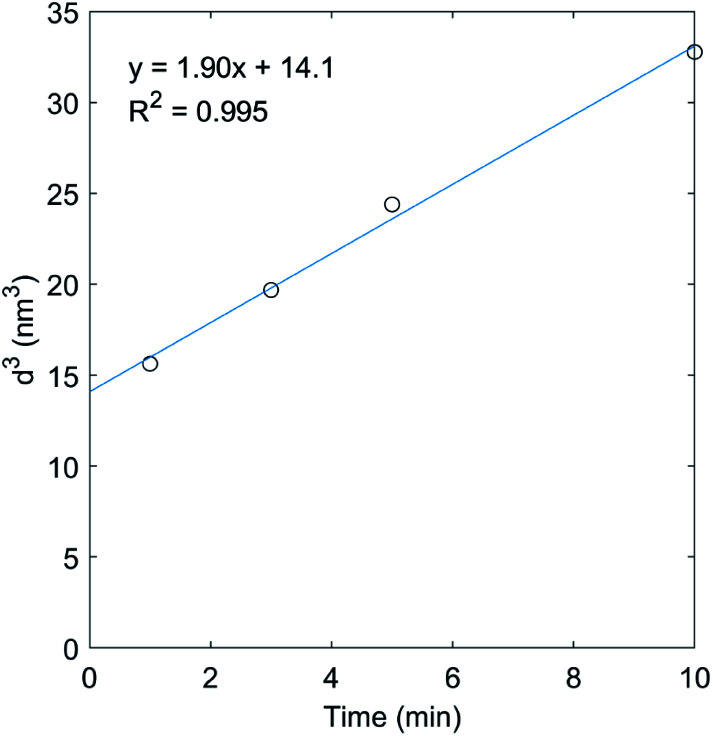
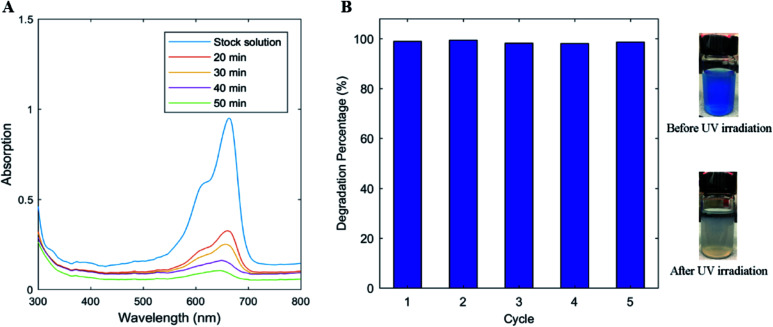
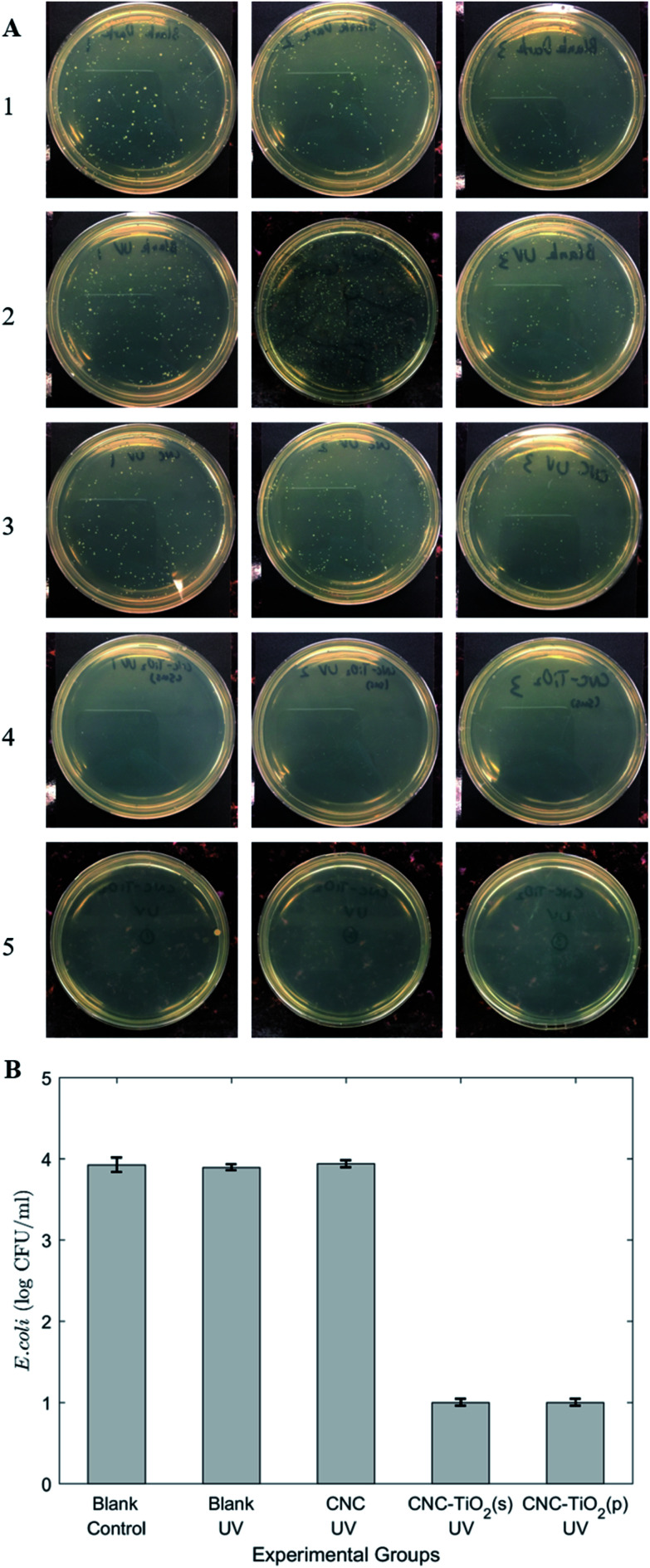
Nanocellulose, which can be derived from any cellulosic biomass, has emerged as an appealing nanoscale scaffold to develop inorganic-organic nanocomposites for a wide range of applications. In this study, titanium dioxide (TiO) nanocrystals were synthesized in the cellulose nanocrystal (CNC) scaffold using a simple approach, , hydrolysis of a titanium oxysulfate precursor in a CNC suspension at low temperature. The resulting TiO nanoparticles exhibited a narrow size range between 3 and 5 nm, uniformly distributed on and strongly adhered to the CNC surface. The structure of the resulting nanocomposite was evaluated by transmission electron microscopy (TEM) and X-ray diffraction (XRD) methods. The growth mechanism of TiO nanocrystals in the CNC scaffold was also investigated by solution small-angle X-ray scattering (SAXS), where the results suggested the mineralization process could be described by the Lifshitz-Slyozov-Wagner theory for Ostwald ripening. The demonstrated TiO/CNC nanocomposite system exhibited excellent performance in dye degradation and antibacterial activity, suitable for a wide range of environmental remediation applications.
纳米纤维素可从任何纤维素生物质中提取,已成为一种有吸引力的纳米级支架,用于开发适用于广泛应用的无机-有机纳米复合材料。在本研究中,采用一种简单的方法,即在低温下于纤维素纳米晶体(CNC)悬浮液中水解硫酸氧钛前驱体,在纤维素纳米晶体(CNC)支架中合成了二氧化钛(TiO₂)纳米晶体。所得的TiO₂纳米颗粒尺寸范围狭窄,在3至5纳米之间,均匀分布在CNC表面并与之牢固结合。通过透射电子显微镜(TEM)和X射线衍射(XRD)方法对所得纳米复合材料的结构进行了评估。还通过溶液小角X射线散射(SAXS)研究了TiO₂纳米晶体在CNC支架中的生长机制,结果表明矿化过程可用奥斯特瓦尔德熟化的利夫希茨-斯廖佐夫-瓦格纳理论来描述。所展示的TiO₂/CNC纳米复合材料系统在染料降解和抗菌活性方面表现出优异性能,适用于广泛的环境修复应用。