Donkor Peter, Obonyo Esther, Ferraro Christopher
M.E. Rinker School of Construction Management, University of Florida, Gainesville, FL 32611, USA.
School of Engineering Design, Pennsylvania State University, State College, University Park, PA 16802, USA.
Materials (Basel). 2021 Nov 16;14(22):6906. doi: 10.3390/ma14226906.
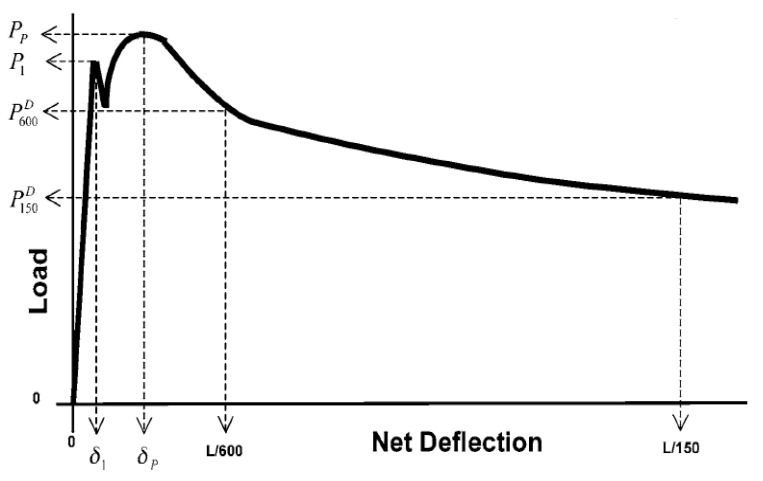
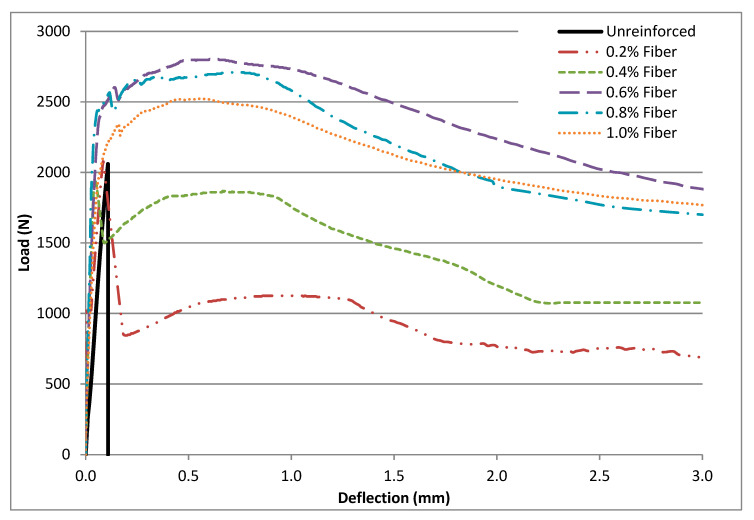
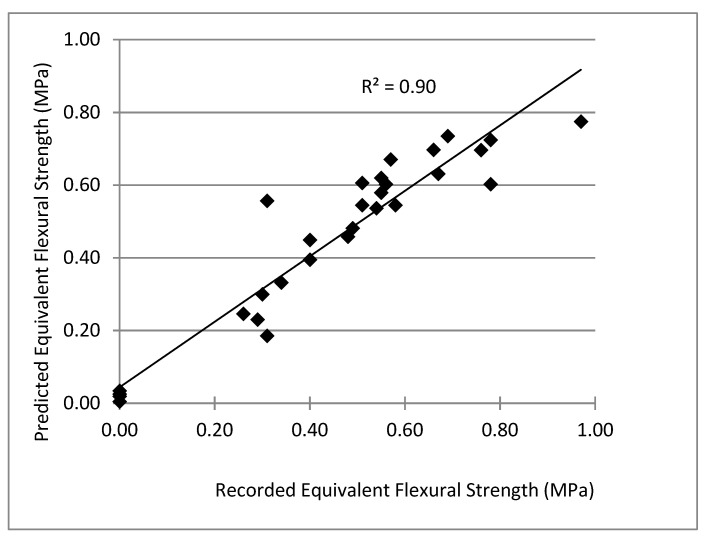
There are ongoing research efforts directed at addressing strength limitations of compressed earth blocks (CEB) that inhibit their deployment for structural applications, particularly in areas where masonry systems are regularly subjected to lateral loads from high winds. In this paper, the authors focus specifically on the extent to which polypropylene (PP) fibers can be used to enhance the flexural performance of CEB. Cementitious matrices used for CEB production exhibit low tensile and flexural strength (brittle) properties. This work investigates plain (unreinforced) and fiber-reinforced specimens (short flexural beams) with fiber mass content of 0.2, 0.4, 0.6, 0.8, and 1.0% and ordinary Portland cement (OPC) content of 8%. The influence of the inclusion of fiber was based on tests conducted using the Standard Test Method for Flexural Performance of Fiber-Reinforced Concrete (ASTM C1609). Material properties that were quantified included first-peak strength, peak strength, equivalent flexural strength, residual strength, and flexural toughness. There was an observed improvement in the performance of the soil-fiber matrixes based on these results of these tests. It was also observed that when the fiber content exceeded 0.6% and above, specimens exhibited a deflection- hardening behavior; an indication of improvement in ductility. An equivalent flexural strength predictive model is proposed.
目前正在进行相关研究,旨在解决压制土坯(CEB)的强度限制问题,这些限制阻碍了其在结构应用中的部署,特别是在砖石结构系统经常受到强风横向荷载作用的地区。在本文中,作者特别关注聚丙烯(PP)纤维可用于增强CEB弯曲性能的程度。用于生产CEB的水泥基材料表现出低拉伸强度和弯曲强度(脆性)特性。这项工作研究了纤维质量含量分别为0.2%、0.4%、0.6%、0.8%和1.0%以及普通硅酸盐水泥(OPC)含量为8%的素(无筋)和纤维增强试件(短弯曲梁)。纤维掺入的影响基于使用纤维增强混凝土弯曲性能标准试验方法(ASTM C1609)进行的试验。量化的材料性能包括第一峰值强度、峰值强度、等效弯曲强度、残余强度和弯曲韧性。基于这些试验结果,观察到土-纤维基体的性能有所改善。还观察到,当纤维含量超过0.6%及以上时,试件表现出挠曲硬化行为;这表明延性有所改善。提出了一个等效弯曲强度预测模型。