Rocha Sandra M, Sousa Inês, Gomes Inês M, Arinto Patrícia, Costa-Pinheiro Pedro, Coutinho Eduarda, Santos Cecília R, Jerónimo Carmen, Lemos Manuel C, Passarinha Luís A, Socorro Sílvia, Maia Cláudio J
CICS-UBI-Health Sciences Research Center, Universidade da Beira Interior, 6201-506 Covilhã, Portugal.
Department of Medical Sciences, Institute of Biomedicine-iBiMED, Universidade de Aveiro, 3810-193 Aveiro, Portugal.
Life (Basel). 2021 Nov 17;11(11):1251. doi: 10.3390/life11111251.
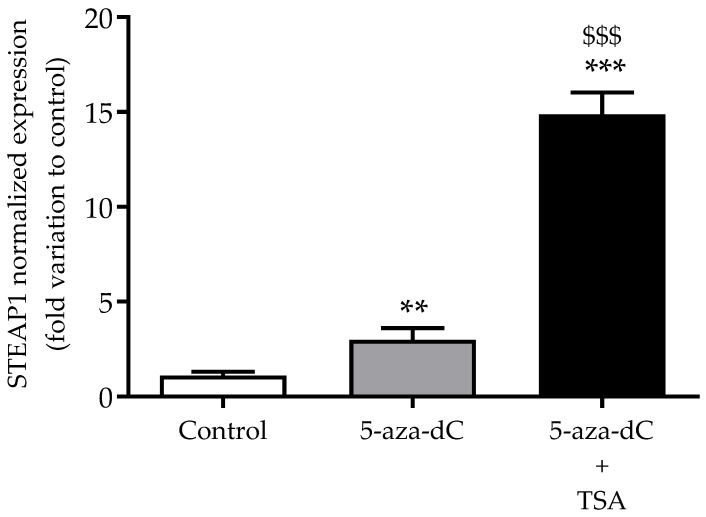
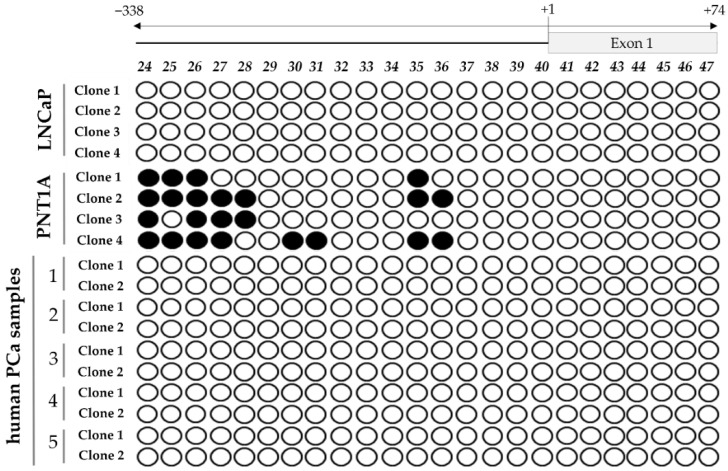
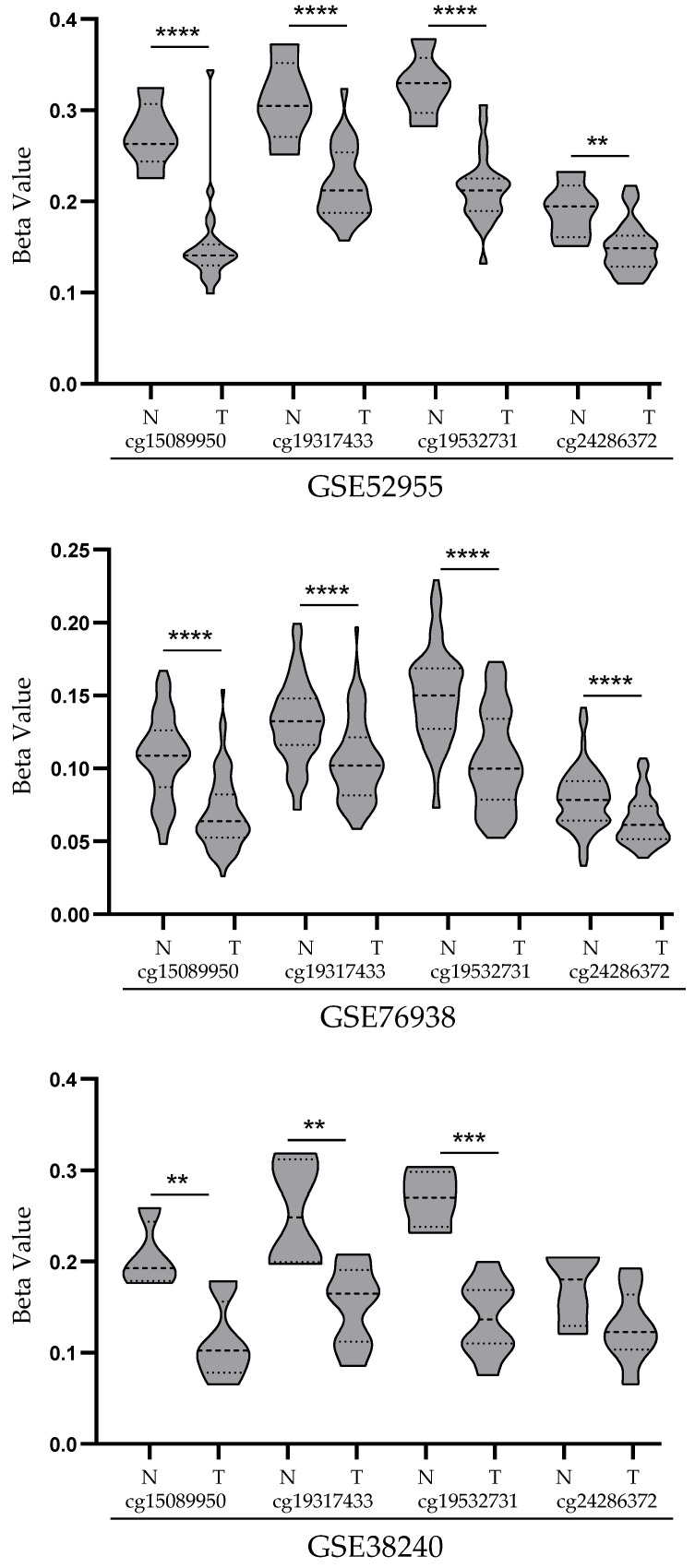
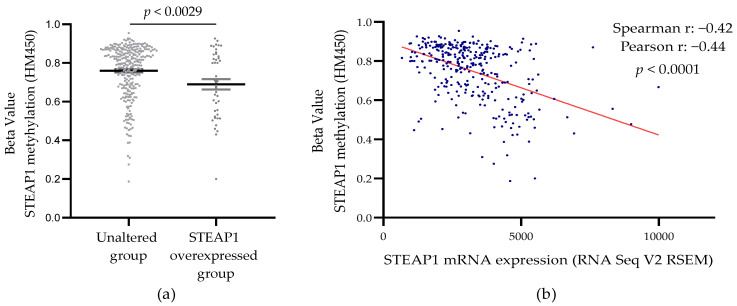
The Six Transmembrane Epithelial Antigen of the Prostate () is an oncogene overexpressed in several human tumors, particularly in prostate cancer (PCa). However, the mechanisms involved in its overexpression remain unknown. It is well known that epigenetic modifications may result in abnormal gene expression patterns, contributing to tumor initiation and progression. Therefore, this study aimed to analyze the methylation pattern of the gene in PCa versus non-neoplastic cells. Bisulfite amplicon sequencing of the CpG island at the gene promoter showed a higher methylation level in non-neoplastic PNT1A prostate cells than in human PCa samples. Bioinformatic analysis of the GEO datasets also showed the gene promoter as being demethylated in human PCa, and a negative association with mRNA expression was observed. These results are supported by the treatment of non-neoplastic PNT1A cells with DNMT and HDAC inhibitors, which induced a significant increase in mRNA expression. In addition, the involvement of HDAC in the regulation of mRNA expression was corroborated by a negative association between mRNA expression and and in human PCa. In conclusion, our work indicates that overexpression in PCa can be driven by the hypomethylation of gene promoter.
前列腺六次跨膜上皮抗原(STEAP)是一种在多种人类肿瘤中过度表达的癌基因,尤其是在前列腺癌(PCa)中。然而,其过度表达所涉及的机制仍不清楚。众所周知,表观遗传修饰可能导致异常的基因表达模式,促进肿瘤的发生和发展。因此,本研究旨在分析PCa与非肿瘤细胞中STEAP基因的甲基化模式。STEAP基因启动子处CpG岛的亚硫酸氢盐扩增子测序显示,非肿瘤性PNT1A前列腺细胞中的甲基化水平高于人类PCa样本。对GEO数据集的生物信息学分析也显示,人类PCa中STEAP基因启动子去甲基化,并且观察到与STEAP mRNA表达呈负相关。用DNA甲基转移酶(DNMT)和组蛋白去乙酰化酶(HDAC)抑制剂处理非肿瘤性PNT1A细胞可诱导STEAP mRNA表达显著增加,这支持了上述结果。此外,人类PCa中STEAP mRNA表达与HDAC1和HDAC2呈负相关,证实了HDAC参与STEAP mRNA表达的调控。总之,我们的研究表明,PCa中STEAP的过度表达可能是由STEAP基因启动子的低甲基化驱动的。