Shalygina Taisiya A, Rudenko Mikhail S, Nemtsev Ivan V, Parfenov Vladimir A, Voronina Svetlana Y, Simonov-Emelyanov Igor D, Borisova Polina E
Smart Materials and Structures Lab., Department of Aircraft, Reshetnev Siberian State University of Science and Technology, 31 KrasnoyarskyRabochy Av., Krasnoyarsk 660037, Russia.
L.V. Kirensky Institute of Physics SB RAS, Institute of Chemistry and Chemical Technology, Federal Research Center "Krasnoyarsk Science Center of the Siberian Branch of the Russian Academy of Sciences", 50 Akademgorodok, Krasnoyarsk 660036, Russia.
Polymers (Basel). 2021 Nov 9;13(22):3864. doi: 10.3390/polym13223864.
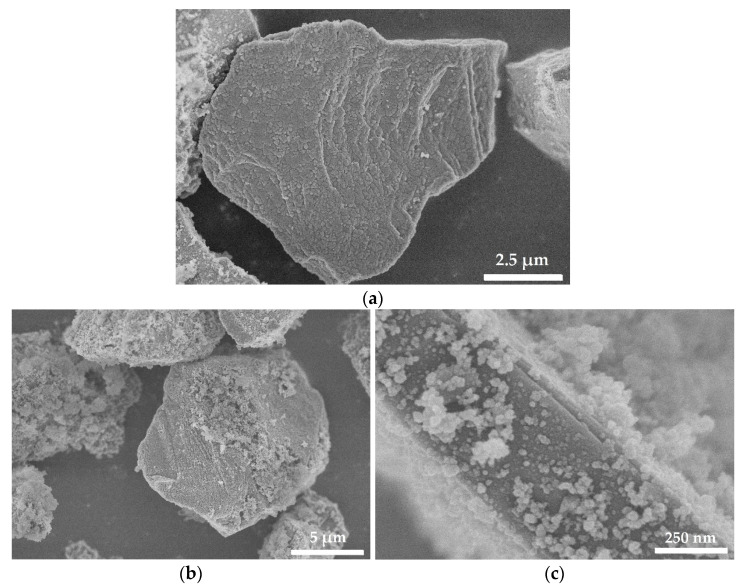
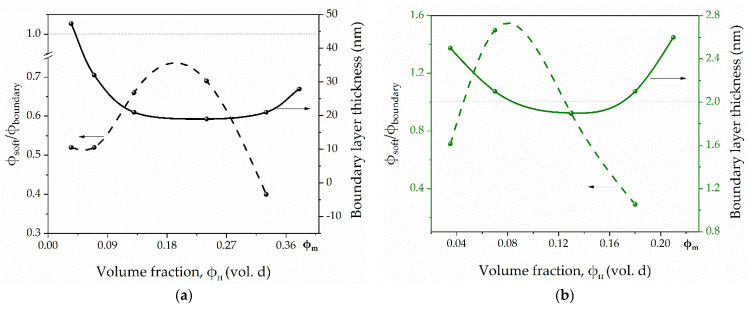
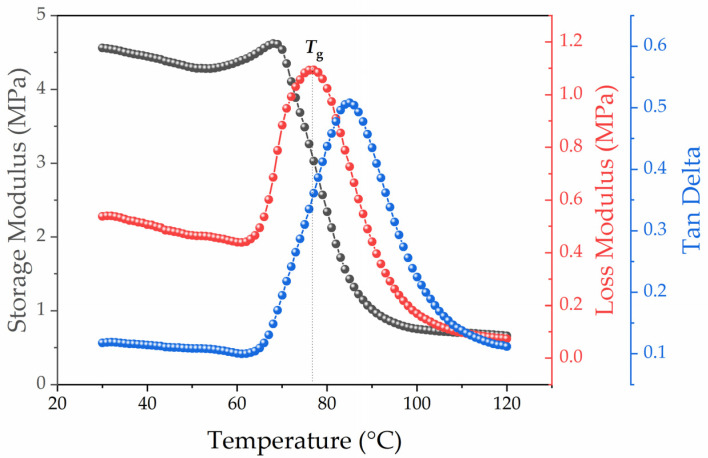
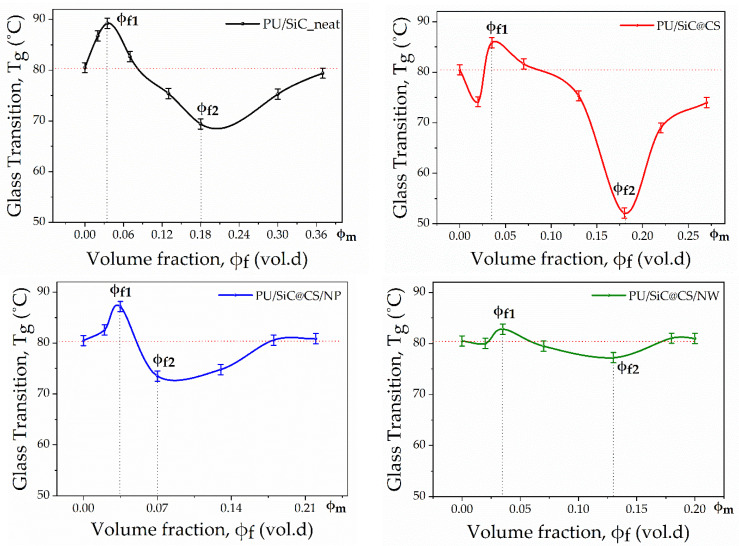
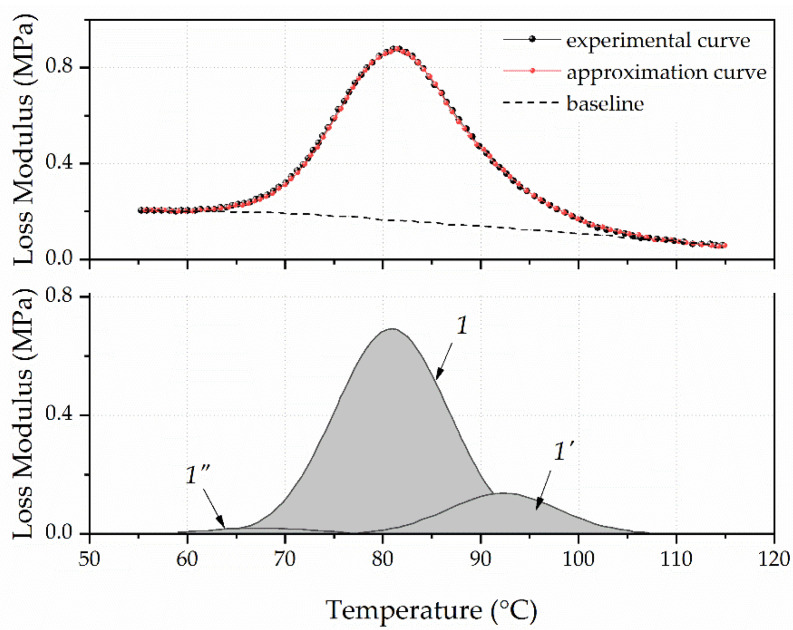
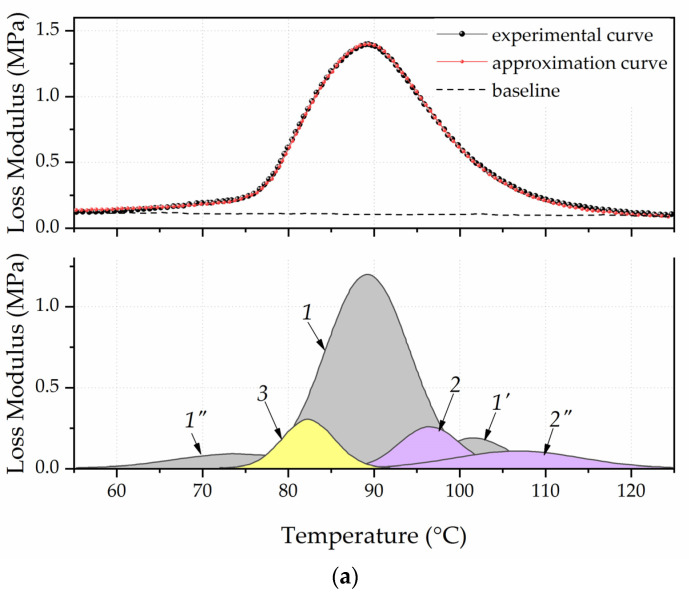
This article presents the surface morphology effect of silicon carbide (SiC) particles on the polyurethane binder's structure formation in a dispersed-filled composite. The difference in the morphology and surface relief of filler particles was ensured by the implementation of plasma chemical modification. As a result of this modification, the filler consisted of core-shell particles characterized by a SiC core and a carbon shell (SiC@C), as well as a carbon shell decorated with silicon nanoparticles (SiC@C/SiNP) or nanos (SiC@C/SiNW). The study of the relaxation properties of polyurethane composites has shown that the strongest limiting effect on the molecular mobility of boundary layer's chain segments is exerted by a highly developed surface with a complex relief of SiC@C/SiNP and SiC@C/SiNW particles. An empirical method was proposed to find the polymer fractions spent on the formation of the boundary, transition and bulk layers of the polymer matrix in the composite. It was shown that the morphology of the filler particles' surface does not affect the dependence of the boundary layer thickness on the filler's volume fraction. However, with an increase in the degree of surface development, the boundary layer thickness decreases.
本文介绍了碳化硅(SiC)颗粒对分散填充复合材料中聚氨酯粘合剂结构形成的表面形态效应。通过等离子体化学改性实现了填料颗粒形态和表面形貌的差异。经过这种改性后,填料由具有SiC核和碳壳的核壳颗粒(SiC@C)、以及装饰有硅纳米颗粒(SiC@C/SiNP)或纳米线(SiC@C/SiNW)的碳壳组成。对聚氨酯复合材料松弛性能的研究表明,具有复杂形貌的高度发达表面的SiC@C/SiNP和SiC@C/SiNW颗粒对边界层链段的分子迁移率具有最强的限制作用。提出了一种经验方法来确定复合材料中聚合物基体边界层、过渡层和本体层形成所消耗的聚合物分数。结果表明,填料颗粒表面的形态不影响边界层厚度与填料体积分数的关系。然而,随着表面发达程度的增加,边界层厚度减小。