Department of Agricultural Chemistry and Soil Science, Faculty of Agriculture, Bidhan Chandra Krishi Viswavidyalaya, Mohanpur, Nadia 741252, India.
M.S. Swaminathan School of Agriculture, Centurion University of Technology and Management, Odisha 761211, India.
Molecules. 2021 Nov 20;26(22):7019. doi: 10.3390/molecules26227019.
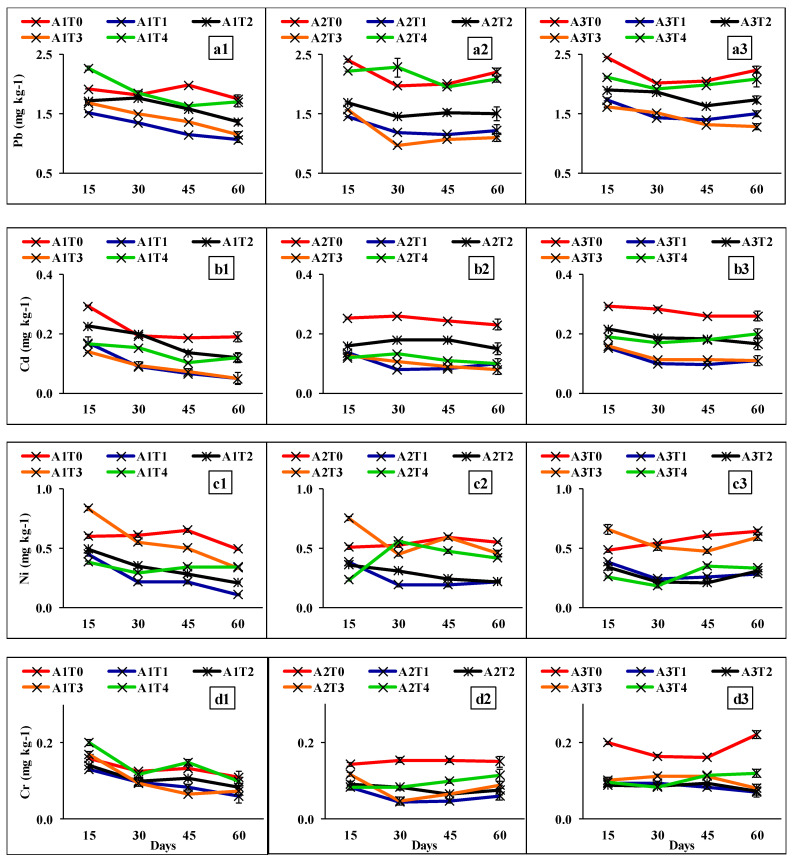
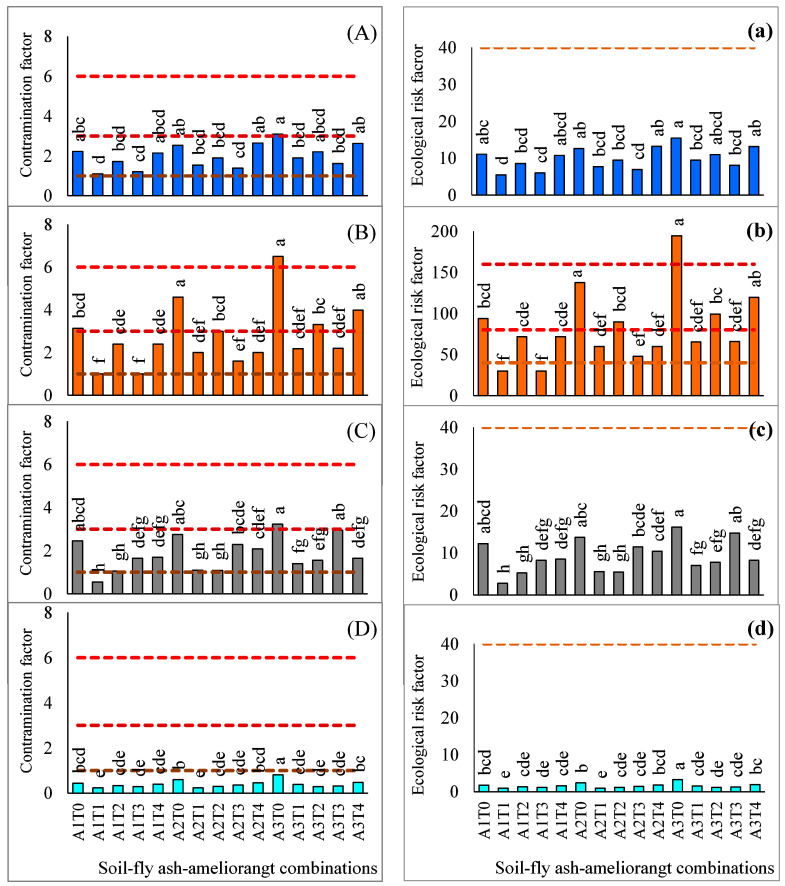
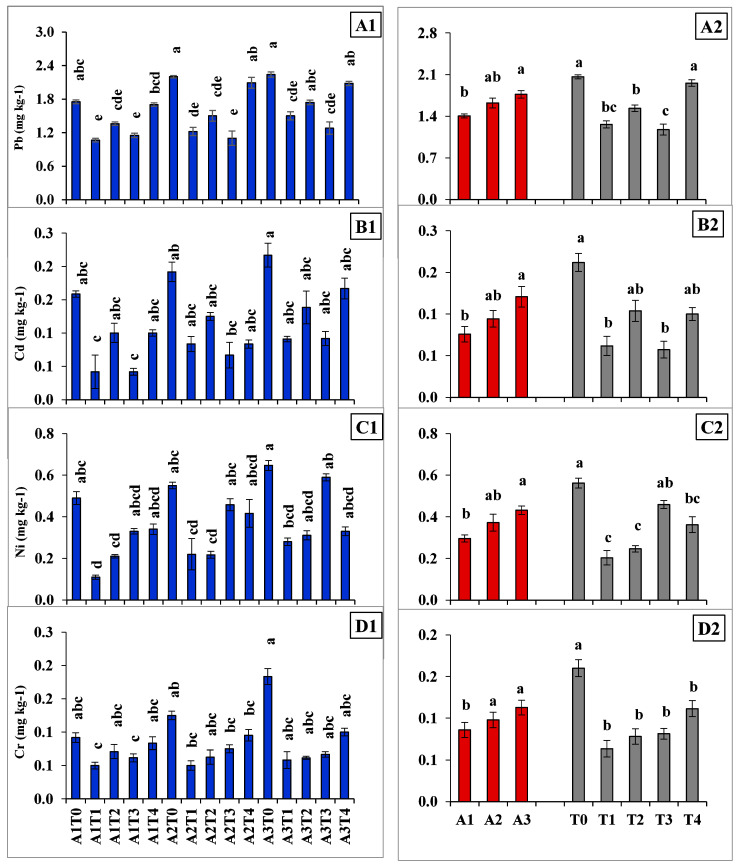
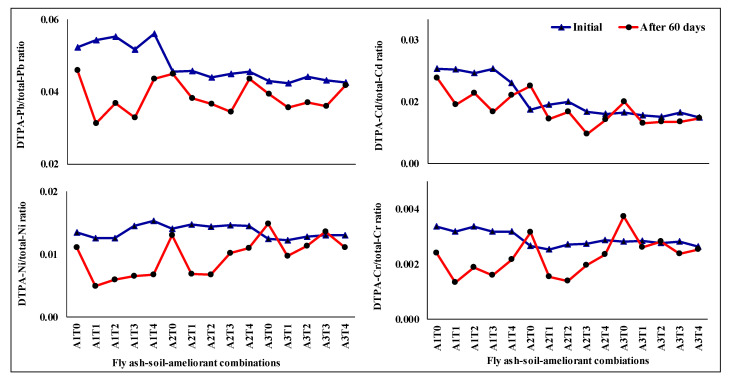
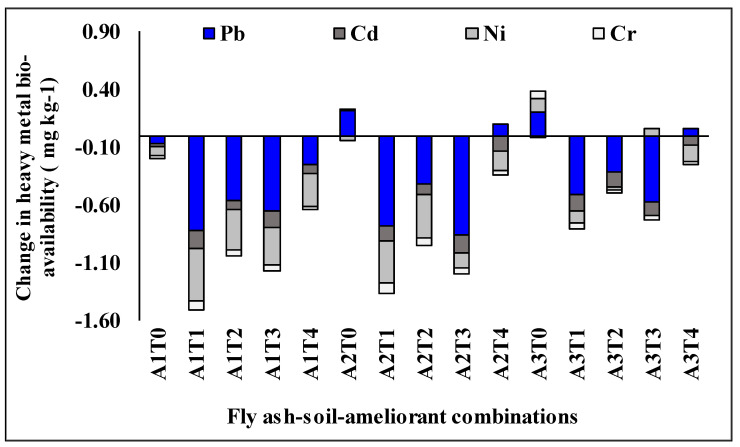
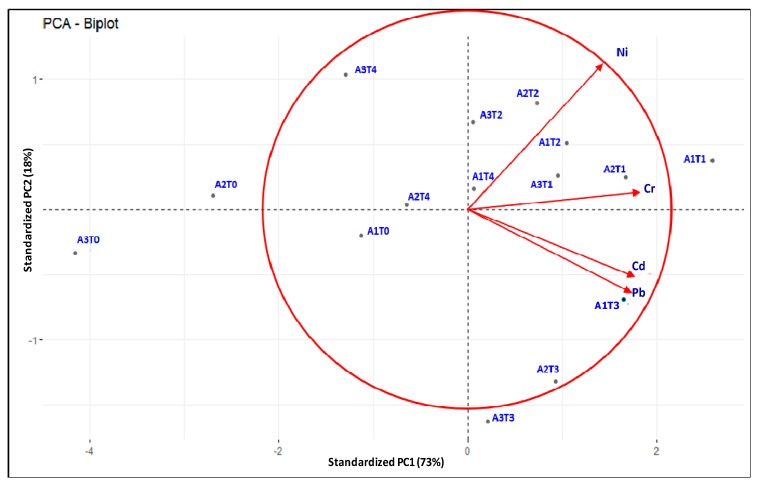
In-situ rehabilitation of fly ash at dumping sites has rarely been addressed for crop production due to growth-related constraints, largely of heavy metal (HM) contamination in soils and crops. Current communication deals with a novel approach to identify a suitable management option for rejuvenating the contaminated soils. In this background, a 60-days incubation experiment was conducted with different fly ash-soil mixtures (50 + 50%, A1; 75 + 25%, A2; 100 + 0%, A3) along with four ameliorants, namely, lime (T1), sodium sulphide (T2), di-ammonium phosphate (T3), and humic acid (T4) at 30 ± 2 °C to assess the ability of different fly ash-soil-ameliorant mixtures in reducing bio-availability of HMs. Diethylenetriaminepentaacetic acid (DTPA)-extractable bio-available HM contents for lead (Pb), cadmium (Cd), nickel (Ni), and chromium (Cr) and their respective ratios to total HM contents under the influence of different treatments were estimated at 0, 15, 30, 45, and 60 days of incubation. Further, the eco-toxicological impact of different treatments on soil microbial properties was studied after 60 days of experimentation. A1T1 significantly recorded the lowest bio-availability of HMs (49-233% lower) followed by A2T1 (35-133%) among the treatments. The principal component analysis also confirmed the superiority of A1T1 and A2T1 in this regard. Further, A1T1 achieved low contamination factor and ecological risk with substantial microbial biomass carbon load and dehydrogenase activity. Thus, liming to fly ash-soil mixture at 50:50 may be considered as the best management option for ameliorating metal toxicity. This technology may guide thermal power plants to provide the necessary package of practices for the stakeholders to revive their contaminated lands for better environmental sustainability.
在原位修复粉煤灰时,由于与生长相关的限制,尤其是土壤和作物中的重金属(HM)污染,很少涉及到作物生产。目前的研究涉及一种新方法,用于确定一种合适的管理选择来恢复受污染的土壤。在此背景下,进行了一项为期 60 天的不同粉煤灰-土壤混合物(50+50%,A1;75+25%,A2;100+0%,A3)与四种改良剂(石灰(T1)、硫化钠(T2)、磷酸二铵(T3)和腐殖酸(T4)在 30±2°C 的不同混合处理的孵育实验,以评估不同粉煤灰-土壤-改良剂混合物降低重金属生物可利用性的能力。在不同处理的影响下,在 0、15、30、45 和 60 天的孵育期内,估计了二乙基三胺五乙酸(DTPA)可提取的生物有效 HM 含量,用于铅(Pb)、镉(Cd)、镍(Ni)和铬(Cr),以及它们各自与总 HM 含量的比值。进一步,在 60 天的实验后,研究了不同处理对土壤微生物特性的生态毒性影响。在处理中,A1T1 显著记录了最低的 HM 生物可利用性(49-233%降低),其次是 A2T1(35-133%降低)。主成分分析也证实了 A1T1 和 A2T1 在这方面的优越性。此外,A1T1 实现了低污染因子和生态风险,同时具有大量的微生物生物量碳负荷和脱氢酶活性。因此,在粉煤灰-土壤混合物中添加石灰至 50:50 可被视为改良金属毒性的最佳管理选择。这项技术可以指导火力发电厂为利益相关者提供必要的一揽子实践,以恢复他们受污染的土地,实现更好的环境可持续性。