Oshchepkova Anastasiya, Markov Oleg, Evtushenko Evgeniy, Chernonosov Alexander, Kiseleva Elena, Morozova Ksenia, Matveeva Vera, Artemyeva Lyudmila, Vlassov Valentin, Zenkova Marina
Institute of Chemical Biology and Fundamental Medicine SB RAS, 630090 Novosibirsk, Russia.
Faculty of Chemistry, Lomonosov Moscow State University, 119234 Moscow, Russia.
Pharmaceutics. 2021 Nov 11;13(11):1911. doi: 10.3390/pharmaceutics13111911.
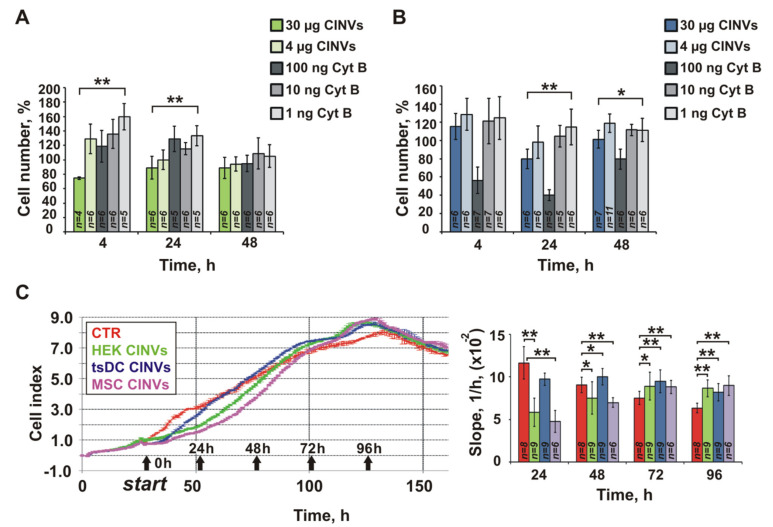
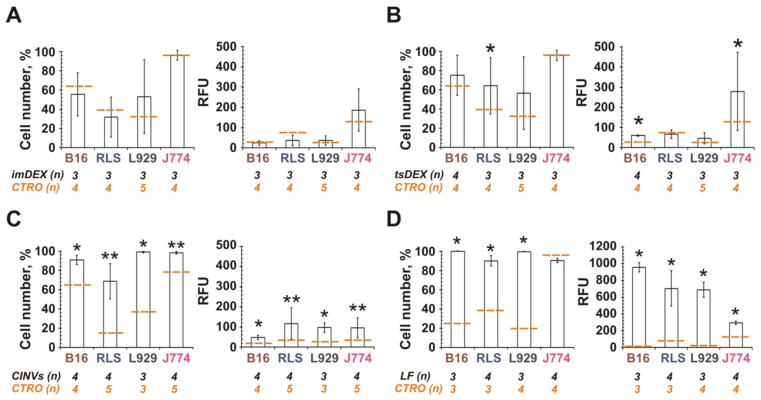
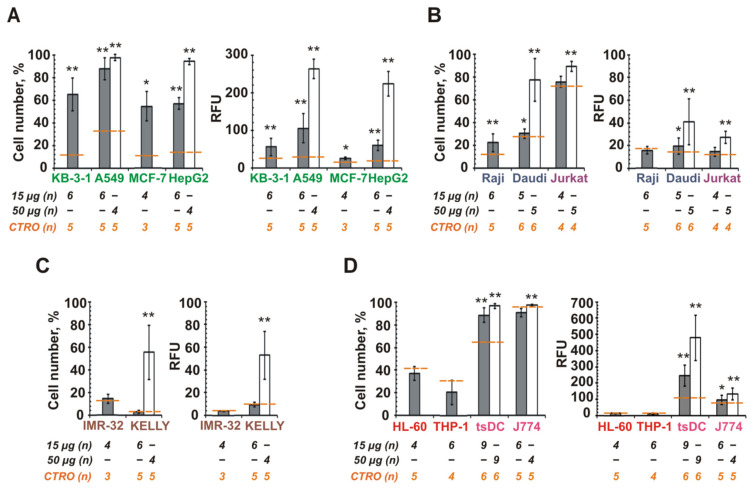
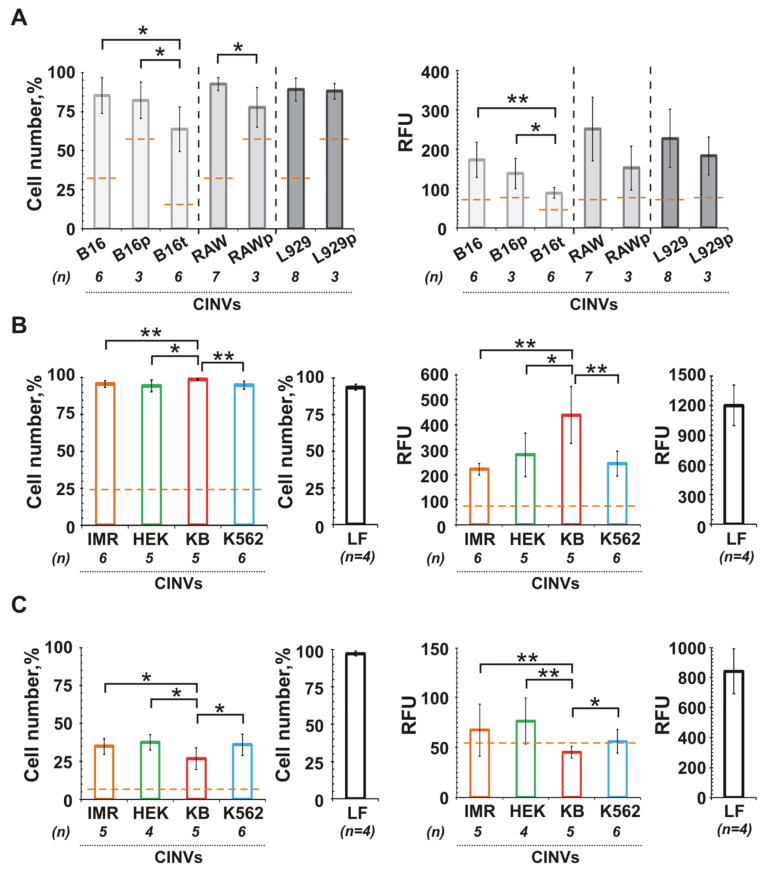
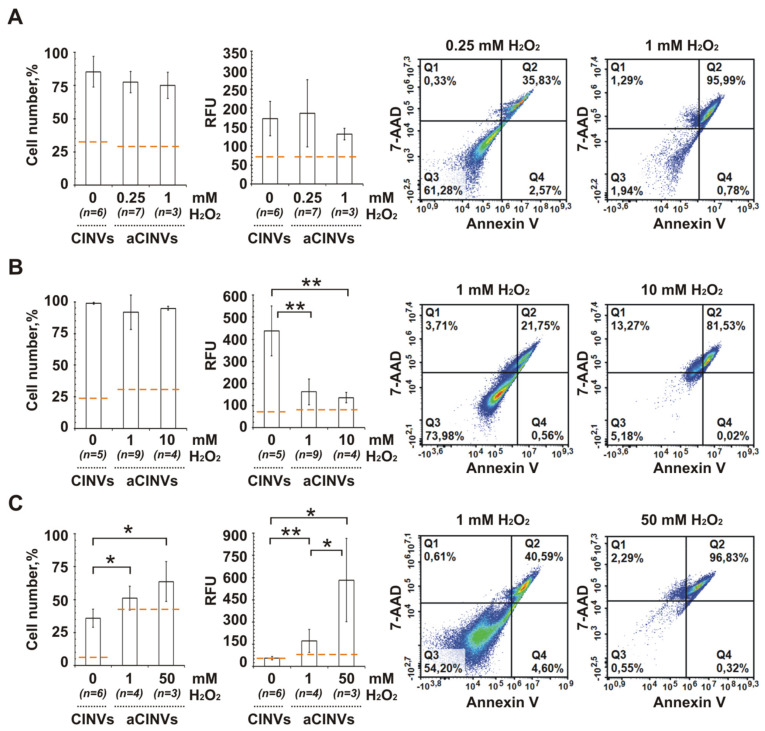
The main advantage of extracellular vesicles (EVs) as a drug carrier system is their low immunogenicity and internalization by mammalian cells. EVs are often considered a cell-specific delivery system, but the production of preparative amounts of EVs for therapeutic applications is challenging due to their laborious isolation and purification procedures. Alternatively, mimetic vesicles prepared from the cellular plasma membrane can be used in the same way as natural EVs. For example, a cytoskeleton-destabilizing agent, such as cytochalasin B, allows the preparation of membrane vesicles by a series of centrifugations. Here, we prepared cytochalasin-B-inducible nanovesicles (CINVs) of various cellular origins and studied their tropism in different mammalian cells. We observed that CINVs derived from human endometrial mesenchymal stem cells exhibited an enhanced affinity to epithelial cancer cells compared to myeloid, lymphoid or neuroblastoma cancer cells. The dendritic cell-derived CINVs were taken up by all studied cell lines with a similar efficiency that differed from the behavior of DC-derived EVs. The ability of cancer cells to internalize CINVs was mainly determined by the properties of recipient cells, and the cellular origin of CINVs was less important. In addition, receptor-mediated interactions were shown to be necessary for the efficient uptake of CINVs. We found that CINVs, derived from late apoptotic/necrotic cells (aCINVs) are internalized by in myelogenous (K562) 10-fold more efficiently than CINVs, and interact much less efficiently with melanocytic (B16) or epithelial (KB-3-1) cancer cells. Finally, we found that CINVs caused a temporal and reversible drop of the rate of cell division, which restored to the level of control cells with a 24 h delay.
细胞外囊泡(EVs)作为药物载体系统的主要优势在于其低免疫原性以及能被哺乳动物细胞内化。EVs通常被视为一种细胞特异性递送系统,但由于其繁琐的分离和纯化程序,制备用于治疗应用的大量EVs具有挑战性。另外,由细胞质膜制备的模拟囊泡可与天然EVs以相同方式使用。例如,细胞松弛素B等细胞骨架破坏剂可通过一系列离心制备膜囊泡。在此,我们制备了多种细胞来源的细胞松弛素B诱导纳米囊泡(CINVs),并研究了它们在不同哺乳动物细胞中的趋向性。我们观察到,与髓样、淋巴样或神经母细胞瘤癌细胞相比,源自人子宫内膜间充质干细胞的CINVs对上皮癌细胞表现出更高的亲和力。树突状细胞来源的CINVs被所有研究的细胞系摄取的效率相似,这与树突状细胞来源的EVs的行为不同。癌细胞内化CINVs的能力主要由受体细胞的特性决定,而CINVs的细胞来源则不太重要。此外,受体介导的相互作用被证明是CINVs有效摄取所必需的。我们发现,源自晚期凋亡/坏死细胞的CINVs(aCINVs)被髓源性(K562)细胞内化的效率比CINVs高10倍,而与黑素细胞(B16)或上皮(KB - 3 - 1)癌细胞的相互作用效率则低得多。最后,我们发现CINVs导致细胞分裂速率出现暂时且可逆的下降,并在延迟24小时后恢复到对照细胞的水平。