Department of Bioengineering, University of Pennsylvania, Philadelphia, PA, USA.
Abramson Cancer Center, Perelman School of Medicine, University of Pennsylvania, Philadelphia, PA, USA.
Nat Rev Drug Discov. 2021 Feb;20(2):101-124. doi: 10.1038/s41573-020-0090-8. Epub 2020 Dec 4.
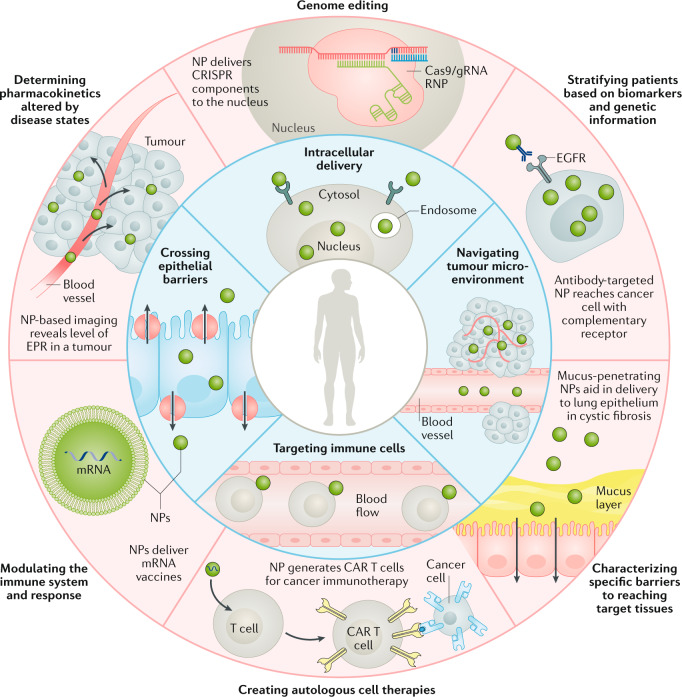
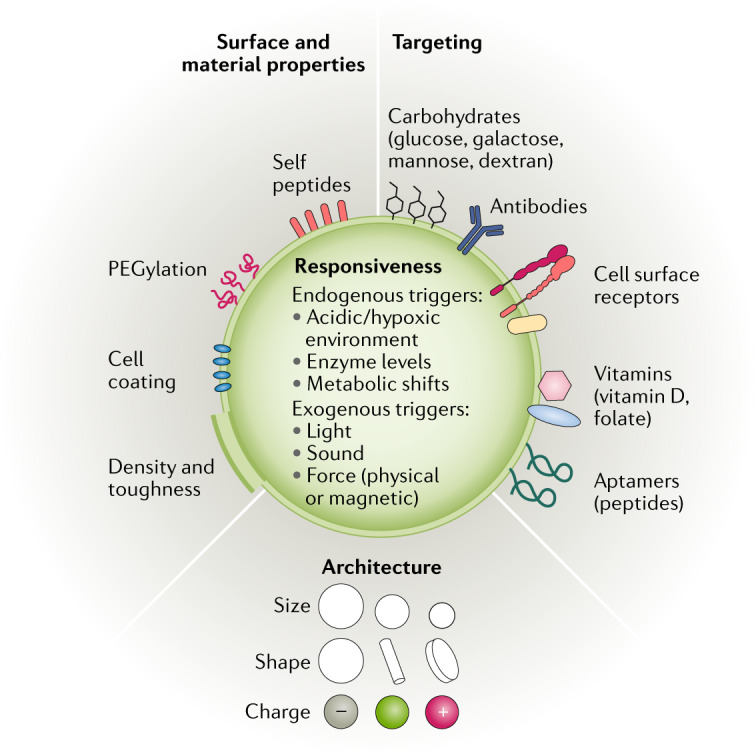
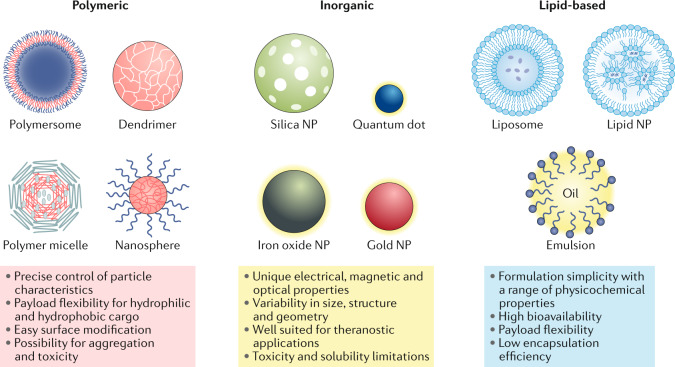
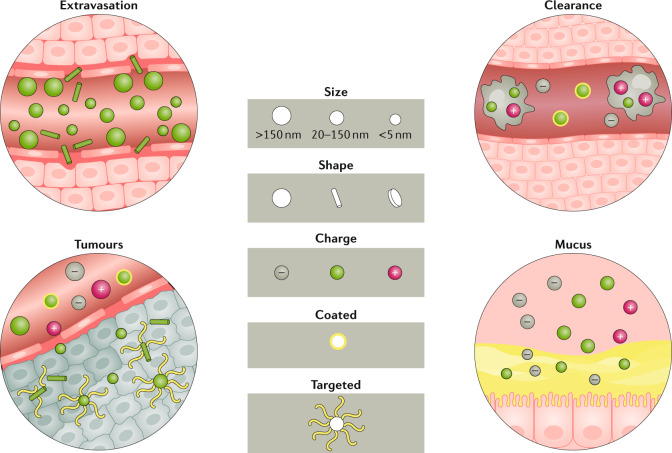
In recent years, the development of nanoparticles has expanded into a broad range of clinical applications. Nanoparticles have been developed to overcome the limitations of free therapeutics and navigate biological barriers - systemic, microenvironmental and cellular - that are heterogeneous across patient populations and diseases. Overcoming this patient heterogeneity has also been accomplished through precision therapeutics, in which personalized interventions have enhanced therapeutic efficacy. However, nanoparticle development continues to focus on optimizing delivery platforms with a one-size-fits-all solution. As lipid-based, polymeric and inorganic nanoparticles are engineered in increasingly specified ways, they can begin to be optimized for drug delivery in a more personalized manner, entering the era of precision medicine. In this Review, we discuss advanced nanoparticle designs utilized in both non-personalized and precision applications that could be applied to improve precision therapies. We focus on advances in nanoparticle design that overcome heterogeneous barriers to delivery, arguing that intelligent nanoparticle design can improve efficacy in general delivery applications while enabling tailored designs for precision applications, thereby ultimately improving patient outcome overall.
近年来,纳米颗粒的发展已经扩展到广泛的临床应用中。纳米颗粒的开发旨在克服游离治疗的局限性,并克服生物屏障 - 包括系统性、微环境和细胞性 - 这些屏障在患者群体和疾病之间存在异质性。通过精准治疗也可以克服这种患者异质性,其中个性化干预措施增强了治疗效果。然而,纳米颗粒的开发仍然专注于优化具有一刀切解决方案的输送平台。随着脂质、聚合物和无机纳米颗粒以越来越精确的方式设计,它们可以开始以更个性化的方式优化药物输送,进入精准医学时代。在这篇综述中,我们讨论了在非个性化和精准应用中使用的先进纳米颗粒设计,这些设计可以应用于改善精准治疗。我们专注于克服递药异质性障碍的纳米颗粒设计方面的进展,认为智能纳米颗粒设计可以提高一般递药应用的疗效,同时为精准应用提供定制设计,从而最终整体改善患者的结果。