Ferreira Marianna Araújo, de Almeida Júnior Renato Ferreira, Onofre Thiago Souza, Casadei Bruna Renata, Farias Kleber Juvenal Silva, Severino Patricia, de Oliveira Franco Camilo Flamarion, Raffin Fernanda Nervo, de Lima E Moura Túlio Flávio Accioly, de Melo Barbosa Raquel
Laboratory of Drug Development, Department of Pharmacy, Federal University of Rio Grande do Norte, Natal 59012-570, Brazil.
Department of Clinical and Toxicological Analysis, Federal University of Rio Grande do Norte, Natal 59012-570, Brazil.
Pharmaceutics. 2021 Nov 11;13(11):1912. doi: 10.3390/pharmaceutics13111912.
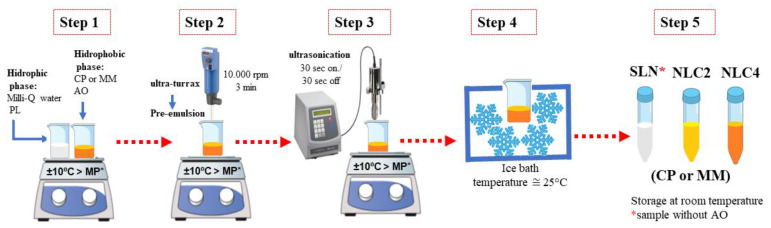
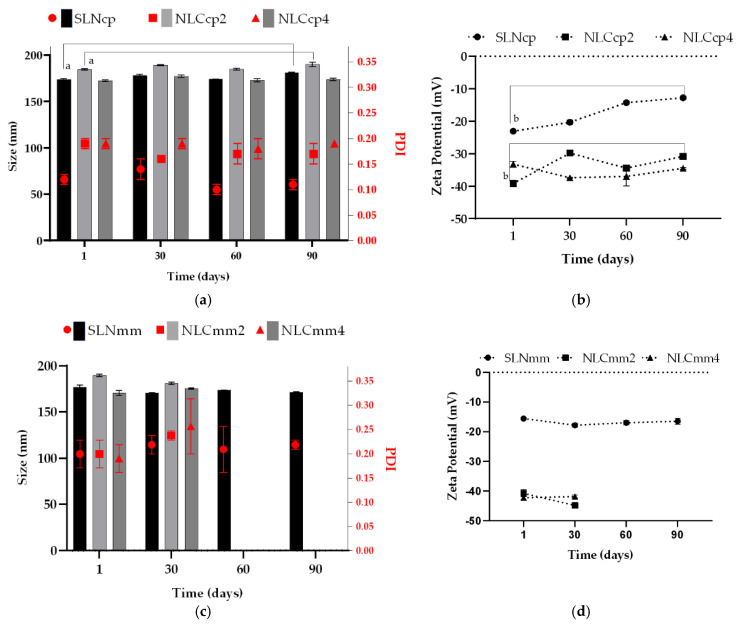
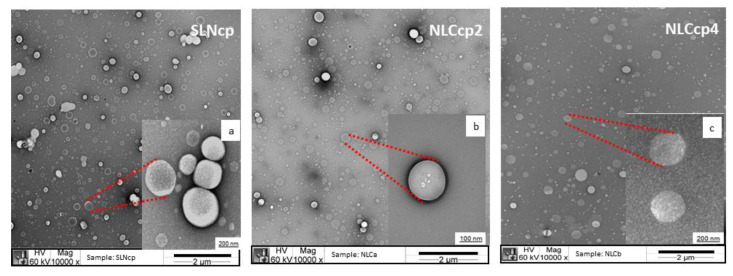
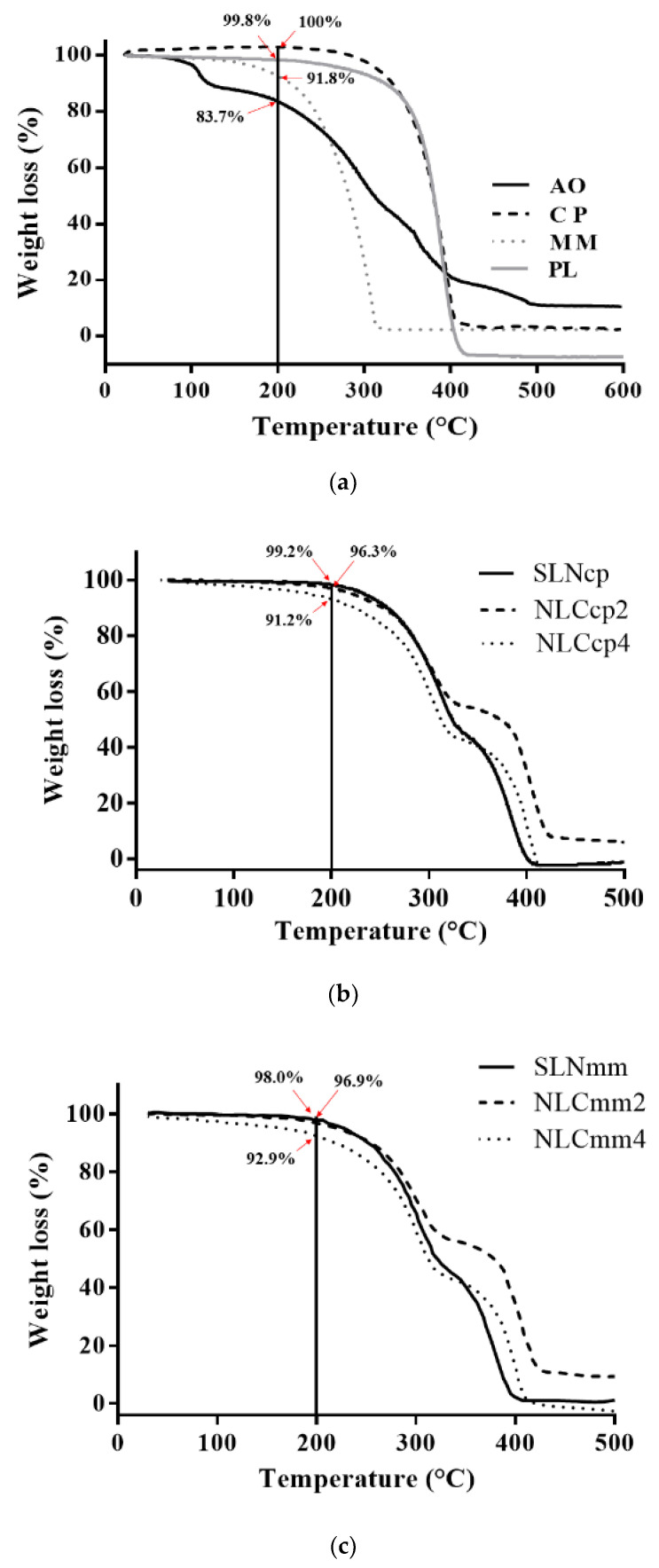
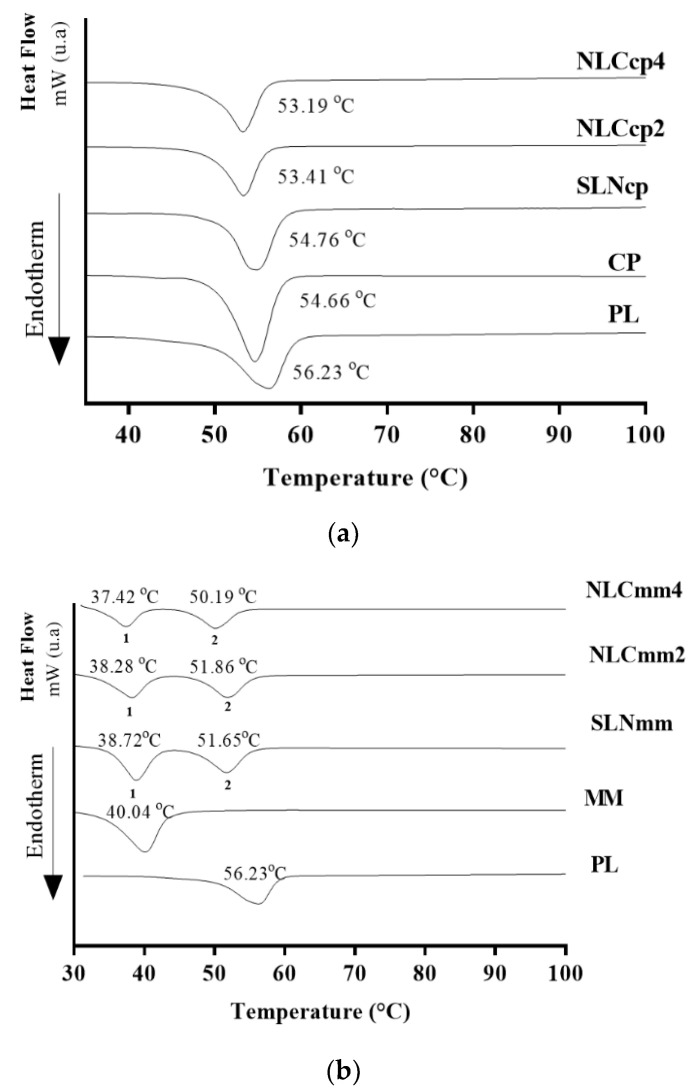
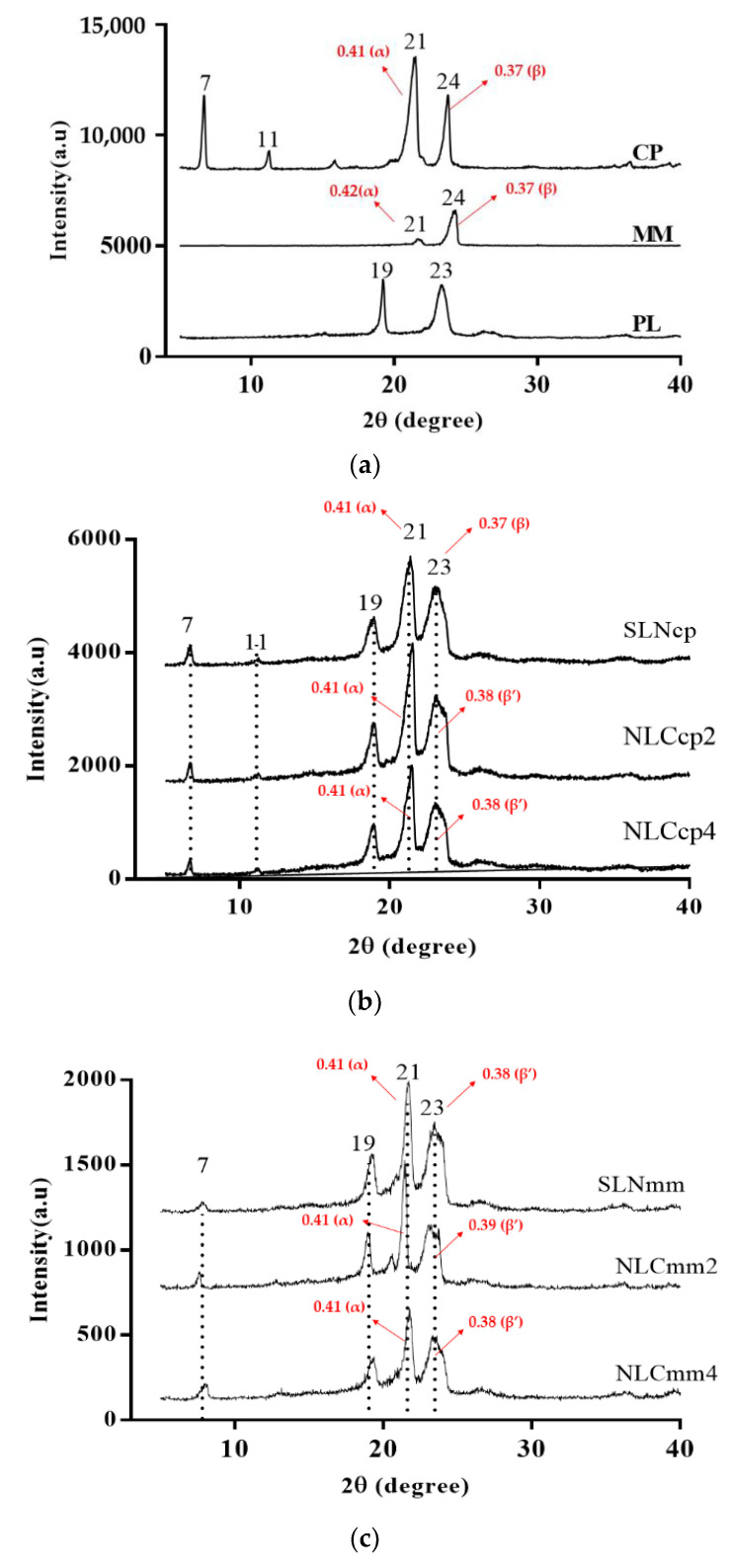
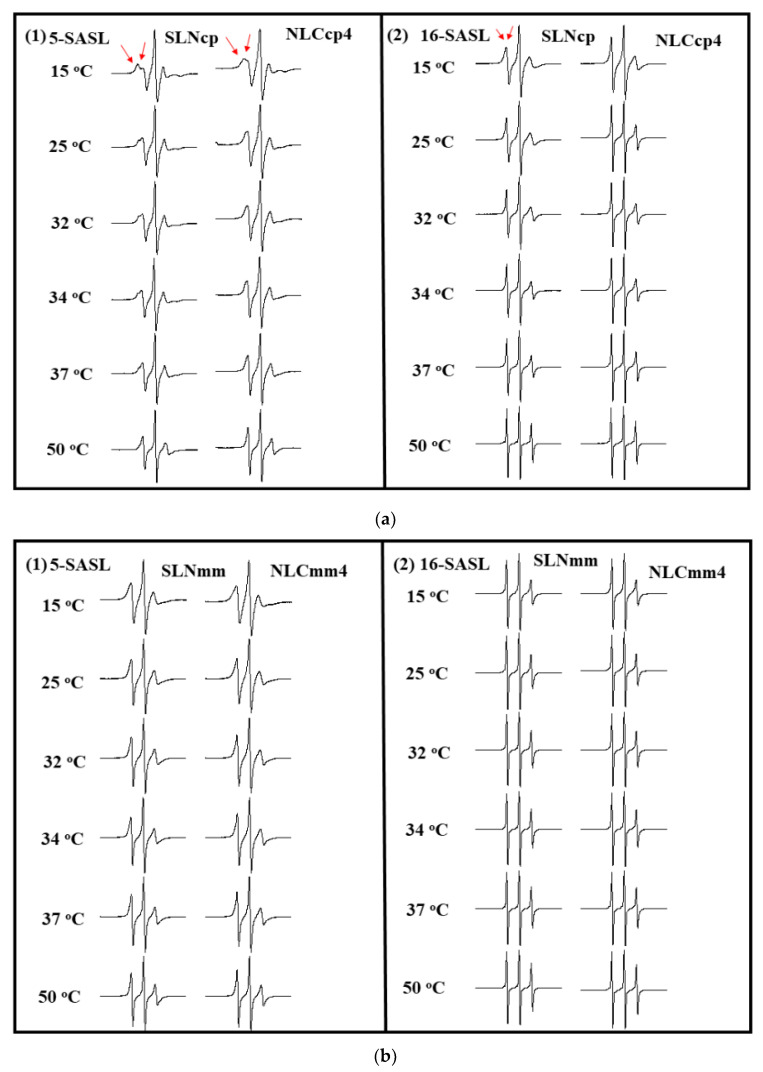
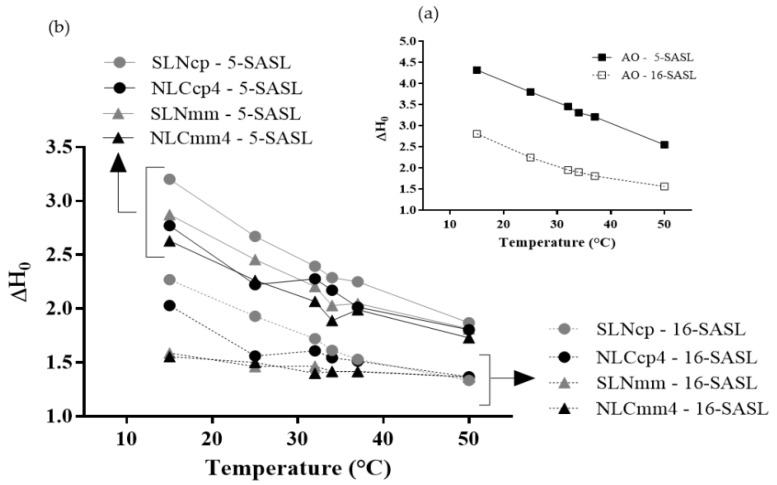
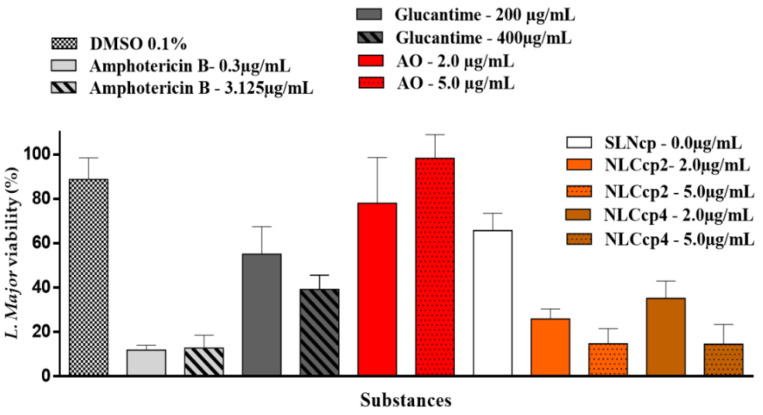
Annatto ( L.) is extensively used as food pigment worldwide. Recently, several studies have found it to have healing and antioxidant properties, as well as effective action against leishmaniasis. Therefore, the purpose of this study was to incorporate the oil obtained from annatto seeds into a nanostructured lipid carrier (NLC) and evaluate its physicochemical properties and biological activity against . Nanoparticles were prepared by the fusion-emulsification and ultrasonication method, with the components Synperonic™ PE (PL) as the surfactant, cetyl palmitate (CP) or myristyl myristate (MM) as solid lipids, annatto oil (AO) (2% and 4%, /) as liquid lipid and active ingredient, and ultra-pure water. Physicochemical and biological characterizations were carried out to describe the NLCs, including particle size, polydispersity index (PDI), and zeta potential (ZP) by dynamic light scattering (DLS), encapsulation efficiency (EE%), thermal behavior, X-ray diffraction (XRD), transmission electron microscopy (TEM), Electron Paramagnetic Resonance (EPR), cytotoxicity on BALB/c 3T3 fibroblasts and immortalized human keratinocyte cells, and anti-leishmaniasis activity in vitro. Nanoparticles presented an average diameter of ~200 nm (confirmed by TEM results), a PDI of less than 0.30, ZP between -12.6 and -31.2 mV, and more than 50% of AO encapsulated in NLCs. Thermal analyses demonstrated that the systems were stable at high temperatures with a decrease in crystalline structure due to the presence of AOs (confirmed by XRD). In vitro, the anti-leishmania test displayed good activity in encapsulating AO against . The results indicate that the oily fraction of L. in NLC systems should be evaluated as a potential therapeutic agent against leishmaniasis.
胭脂树(Bixa orellana L.)在全球范围内被广泛用作食品色素。最近,多项研究发现它具有愈合和抗氧化特性,以及对利什曼病的有效作用。因此,本研究的目的是将从胭脂树种子中提取的油纳入纳米结构脂质载体(NLC),并评估其物理化学性质和对……的生物活性。纳米颗粒通过融合乳化和超声处理方法制备,其成分包括作为表面活性剂的Synperonic™ PE(PL)、作为固体脂质的十六烷基棕榈酸酯(CP)或肉豆蔻酸肉豆蔻酯(MM)、作为液体脂质和活性成分的胭脂树油(AO)(2%和4%,w/v)以及超纯水。对NLC进行了物理化学和生物学表征,包括通过动态光散射(DLS)测定粒径、多分散指数(PDI)和zeta电位(ZP),通过包封率(EE%)、热行为、X射线衍射(XRD)、透射电子显微镜(TEM)、电子顺磁共振(EPR)评估,对BALB/c 3T3成纤维细胞和永生化人角质形成细胞进行细胞毒性测试,以及体外抗利什曼病活性测试。纳米颗粒的平均直径约为200 nm(经TEM结果证实),PDI小于0.30,ZP在-12.6至-31.2 mV之间,且超过50%的AO被包封在NLC中。热分析表明,由于AO的存在,该系统在高温下稳定,晶体结构减少(经XRD证实)。在体外,抗利什曼原虫测试显示包封AO对……具有良好活性。结果表明,NLC系统中的胭脂树油性部分应作为抗利什曼病的潜在治疗剂进行评估。