Chang Pei-Hung, Wang Hung-Ming, Kuo Yung-Chia, Lee Li-Yu, Liao Chia-Jung, Kuo Hsuan-Chih, Hsu Cheng-Lung, Liao Chun-Ta, Lin Sanger Hung-Chi, Huang Pei-Wei, Wu Tyler Min-Hsien, Hsieh Jason Chia-Hsun
College of Medicine, Chang Gung University, Taoyuan 33382, Taiwan.
Division of Hematology-Oncology, Department of Internal Medicine, Chang Gung Memorial Hospital at Keelung, Keelung 20448, Taiwan.
J Pers Med. 2021 Nov 7;11(11):1156. doi: 10.3390/jpm11111156.
Decisions regarding the staging, prognosis, and treatment of patients with head and neck squamous cell carcinomas (HNSCCs) are made after determining their p16 expression levels and human papillomavirus (HPV) infection status.
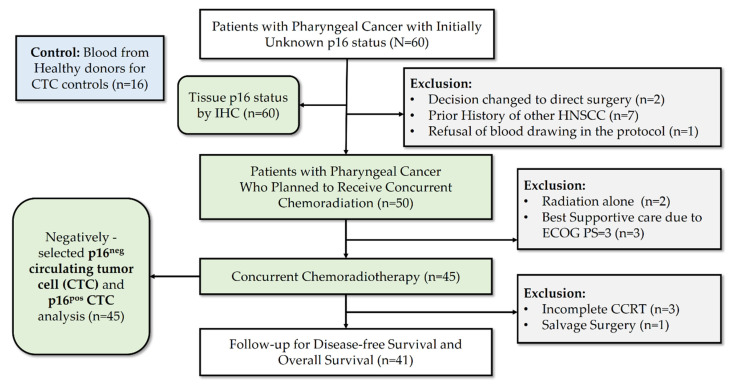
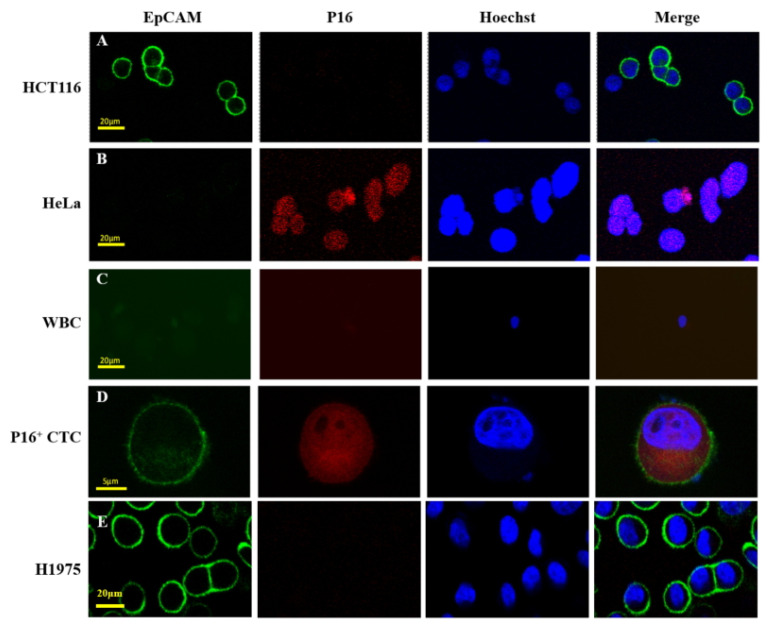
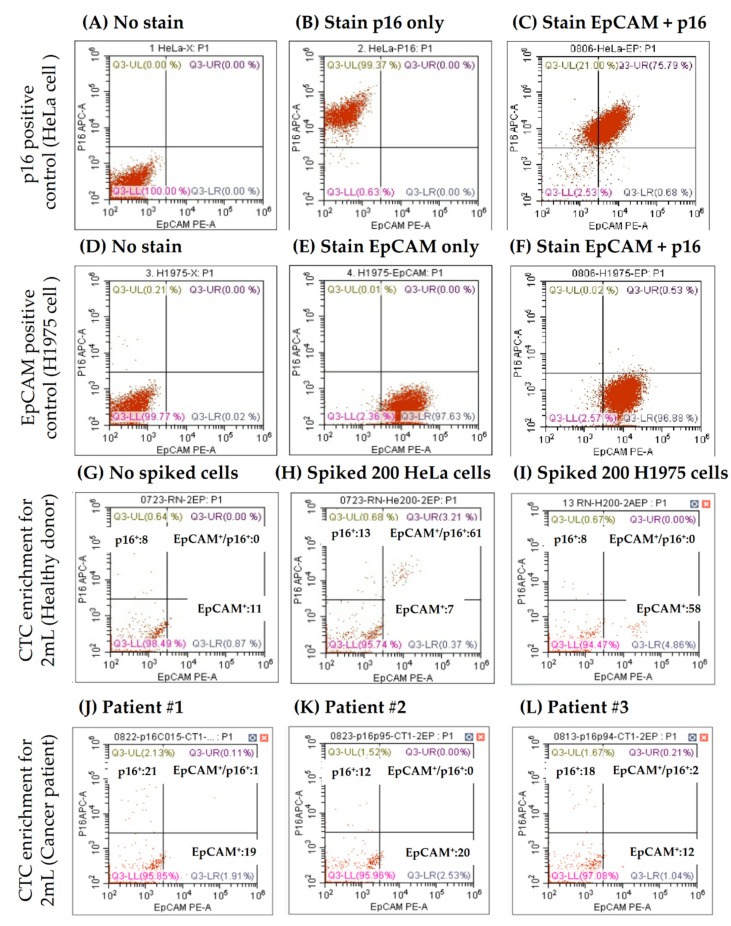
We investigated the prognostic roles of p16-positive and p16-negative circulating tumor cells (CTCs) and their cell counts in HNSCC patients. We enrolled patients with locally advanced HNSCCs who received definitive concurrent chemoradiotherapy for final analysis. We performed CTC testing and p16 expression analysis before chemoradiotherapy. We analyzed the correlation between p16-positive and p16-negative CTCs and HPV genotyping, tissue p16 expression status, response to chemoradiotherapy, disease-free survival, and overall survival.
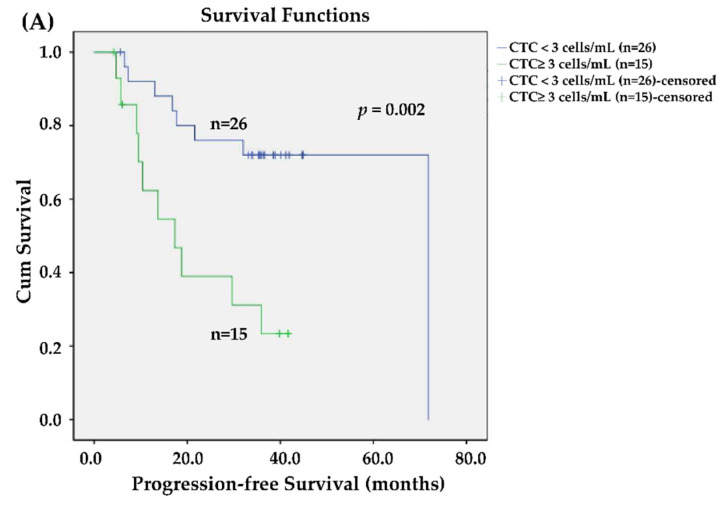
Forty-one patients who fulfilled the study criteria were prospectively enrolled for final analysis. The detection rates of p16-positive (>0 cells/mL blood) and p16-negative (≥3 cells/mL blood) CTCs were 51.2% ( = 21/41) and 70.7%, respectively. The best responses of chemoradiotherapy and the p16 positivity of CTCs are independent prognostic factors of disease progression, with hazard ratios of 1.738 (95% confidence interval (CI): 1.031-2.927), 5.497 (95% CI: 1.818-16.615), and 0.176 (95% CI: 0.056-0.554), respectively. The p16 positivity of CTCs was a prognostic factor for cancer death, with a hazard ratio of 0.294 (95% CI: 0.102-0.852).
The p16-positive and p16-negative CTCs could predict outcomes in HNSCC patients receiving definitive chemoradiotherapy. This non-invasive CTC test could help stratify the risk and prognosis before chemoradiotherapy in clinical practice and enable us to perform de-intensifying therapies.
在确定头颈部鳞状细胞癌(HNSCC)患者的p16表达水平和人乳头瘤病毒(HPV)感染状态后,再做出关于其分期、预后和治疗的决策。
我们研究了p16阳性和p16阴性循环肿瘤细胞(CTC)及其细胞计数在HNSCC患者中的预后作用。我们纳入了接受根治性同步放化疗的局部晚期HNSCC患者进行最终分析。在放化疗前进行CTC检测和p16表达分析。我们分析了p16阳性和p16阴性CTC与HPV基因分型、组织p16表达状态、放化疗反应、无病生存期和总生存期之间的相关性。
41例符合研究标准的患者被前瞻性纳入最终分析。p16阳性(>0个细胞/毫升血液)和p16阴性(≥3个细胞/毫升血液)CTC的检出率分别为51.2%(=21/41)和70.7%。放化疗的最佳反应和CTC的p16阳性是疾病进展的独立预后因素,风险比分别为1.738(95%置信区间(CI):1.031 - 2.927)、5.497(95%CI:1.818 - 16.615)和0.176(95%CI:0.056 - 0.554)。CTC的p16阳性是癌症死亡的预后因素,风险比为0.294(95%CI:0.102 - 0.852)。
p16阳性和p16阴性CTC可预测接受根治性放化疗的HNSCC患者的预后。这种非侵入性的CTC检测有助于在临床实践中对放化疗前的风险和预后进行分层,并使我们能够实施降阶梯治疗。