Pulavarty Anusha, Egan Aoife, Karpinska Anna, Horgan Karina, Kakouli-Duarte Thomais
Molecular Ecology and Nematode Research Group, enviroCORE, Department of Science and Health, Institute of Technology Carlow, Kilkenny Road, R93 V960 Carlow, Ireland.
Alltech Bioscience Centre, A86 X006 Dunboyne, County Meath, Ireland.
Plants (Basel). 2021 Oct 30;10(11):2352. doi: 10.3390/plants10112352.
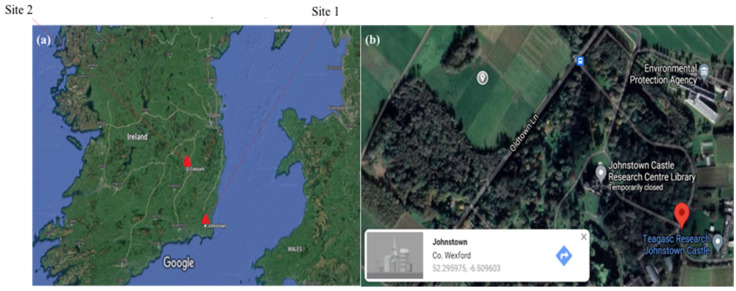
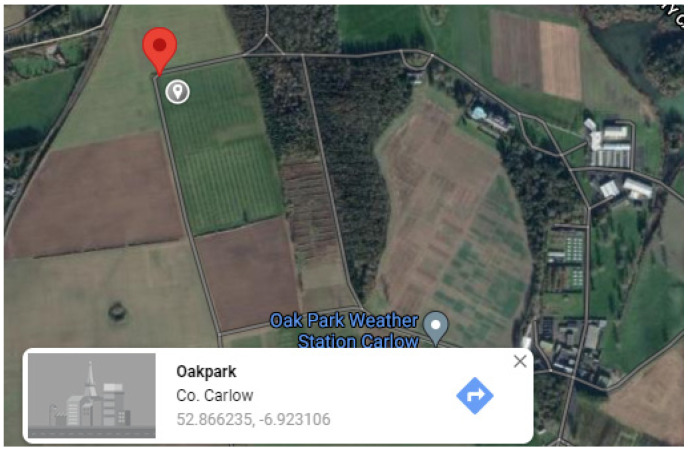
Plant parasitic nematodes are a major problem for growers worldwide, causing severe crop losses. Several conventional strategies, such as chemical nematicides and biofumigation, have been employed in the past to manage their infection in plants and spread in soils. However, the search for the most sustainable and environmentally safe practices is still ongoing. This review summarises information on plant parasitic nematodes, their distribution, and their interaction with their host plants, along with various approaches to manage their infestations. It also focuses on the application of microbial and fermentation-based bionematicides that have not only been successful in controlling nematode infection but have also led to plant growth promotion and proven to be environmentally safe. Studies with new information on the relative abundance of plant parasitic nematodes in two agricultural sites in the Republic of Ireland are also reported. This review, with the information it provides, will help to generate an up-to-date knowledge base on plant parasitic nematodes and their management practices.
植物寄生线虫是全球种植者面临的一个主要问题,会造成严重的作物损失。过去曾采用多种传统策略,如化学杀线虫剂和生物熏蒸,来控制它们在植物中的感染以及在土壤中的传播。然而,寻找最可持续和环境安全的做法仍在继续。本综述总结了关于植物寄生线虫的信息、它们的分布、它们与寄主植物的相互作用,以及各种防治其侵染的方法。它还重点介绍了基于微生物和发酵的生物杀线虫剂的应用,这些生物杀线虫剂不仅成功地控制了线虫感染,还促进了植物生长,并且已被证明对环境安全。本文还报道了关于爱尔兰共和国两个农业地点植物寄生线虫相对丰度的新信息的研究。这篇综述及其提供的信息将有助于建立一个关于植物寄生线虫及其管理实践的最新知识库。