El-Zohri Manal, Al-Wadaani Naseem A, Bafeel Sameera O
Department of Biological Sciences, Faculty of Science, King Abdulaziz University, Jeddah 21488, Saudi Arabia.
Department of Botany and Microbiology, Faculty of Science, Assiut University, Assiut 71516, Egypt.
Plants (Basel). 2021 Nov 7;10(11):2400. doi: 10.3390/plants10112400.
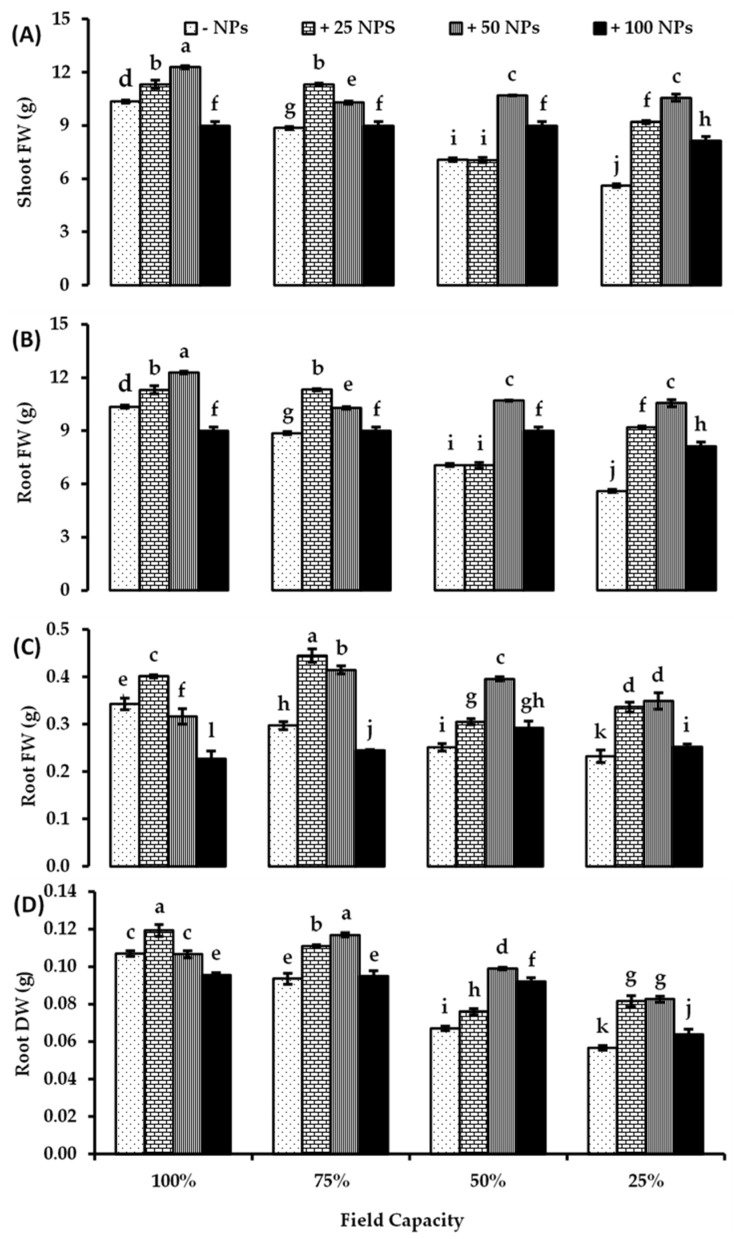
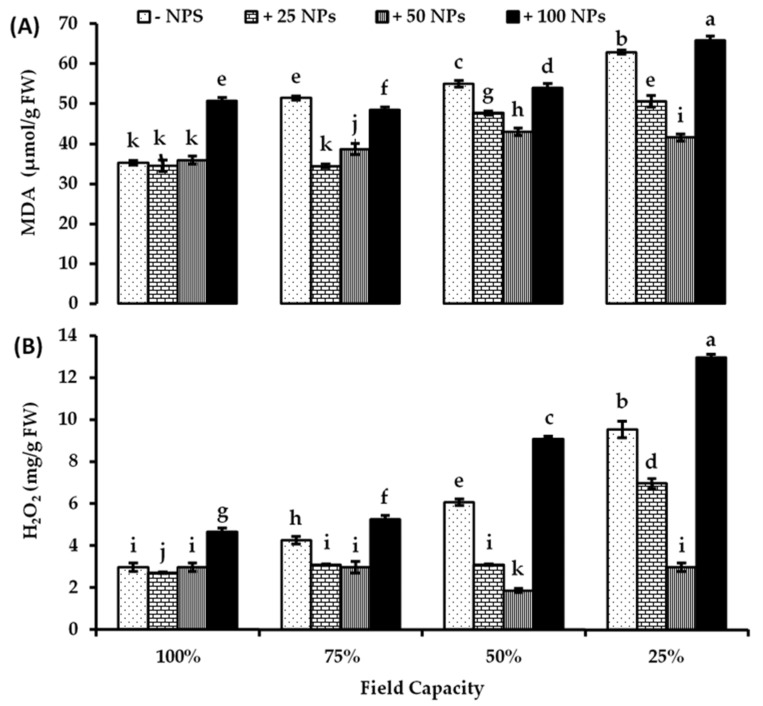
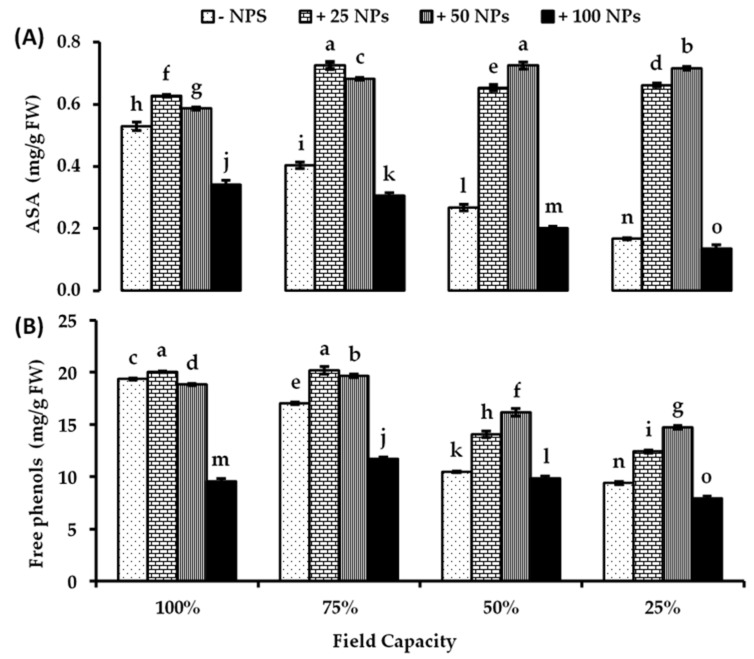
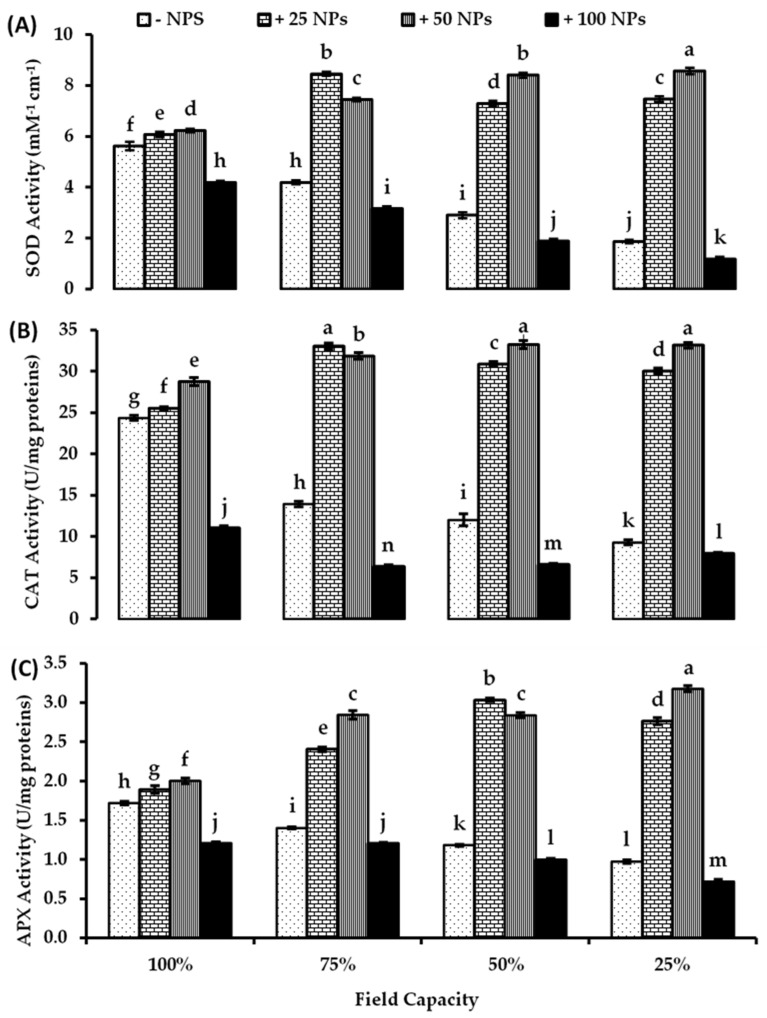
This study explored the effectiveness of green zinc oxide nanoparticles (ZnO-NPs) foliar spray on tomato growth and oxidative stress relief under drought conditions. Tomato plant subjected to four water regimes (100, 75, 50, and 25% FC), and in the same while seedlings were sprayed with 25, 50, and 100 mg/L green ZnO-NPs. The results showed that tomato growth parameters reduced significantly by increasing drought stress levels, while ZnO-NPs enhanced plant growth under all studied drought levels. Out of three ZnO-NPs concentrations tested, 25 and 50 mg/L ZnO-NPs proved to be the optimum treatments for alleviating drought stress. They increased shoot and root biomass compared to untreated controls. Application of 25 and 50 mg/L ZnO-NPs enhanced shoot dry weight by about 2-2.5-fold, respectively, under severe drought conditions (25%) compared to ZnO-NPs untreated plants. The application of 25 and 50 mg/L green ZnO-NPs decreased the drought-induced oxidative stress as indicated by the reduction in malondialdehyde and hydrogen peroxide concentrations compared to untreated controls. While 100 mg/L ZnO-NPs further increased oxidative stress. The beneficial effects of ZnO-NPs were evident in the plants' defensive state, in which the concentration of ascorbic acid, free phenols, and the activity of superoxide dismutase, catalase, and ascorbate peroxidase were maintained at higher levels compared to NPs-untreated plants. At severe drought conditions, 25 mg/L ZnO-NPs induced SOD, CAT, and APX activity by about 3.99-, 3.23-, and 2.82-fold of their corresponding controls, respectively. Likewise, at 25% FC, SOD, CAT, and APX activity increased with 50 mg/L ZnO-NPs by about 4.58-, 3.57-, and 3.25-fold consecutively compared with their respective controls. Therefore, foliar use of green ZnO-NPs at lower concentrations might be suggested as an efficient way for enhancing tomato tolerance to drought stress.
本研究探讨了绿色氧化锌纳米颗粒(ZnO-NPs)叶面喷施对干旱条件下番茄生长及氧化应激缓解的有效性。番茄植株经受四种水分处理(100%、75%、50%和25%田间持水量),同时幼苗喷施25、50和100 mg/L的绿色ZnO-NPs。结果表明,随着干旱胁迫水平的增加,番茄生长参数显著降低,而ZnO-NPs在所有研究的干旱水平下均促进了植株生长。在所测试的三种ZnO-NPs浓度中,25和50 mg/L的ZnO-NPs被证明是缓解干旱胁迫的最佳处理。与未处理的对照相比,它们增加了地上部和根部生物量。在严重干旱条件(25%田间持水量)下,与未喷施ZnO-NPs的植株相比,喷施25和50 mg/L的ZnO-NPs分别使地上部干重提高了约2至2.5倍。与未处理的对照相比,喷施25和50 mg/L的绿色ZnO-NPs降低了干旱诱导的氧化应激,表现为丙二醛和过氧化氢浓度的降低。而100 mg/L的ZnO-NPs进一步增加了氧化应激。ZnO-NPs的有益作用在植株的防御状态中很明显,与未喷施NPs的植株相比,抗坏血酸、游离酚的浓度以及超氧化物歧化酶、过氧化氢酶和抗坏血酸过氧化物酶的活性维持在较高水平。在严重干旱条件下,25 mg/L的ZnO-NPs分别使超氧化物歧化酶、过氧化氢酶和抗坏血酸过氧化物酶的活性比相应对照提高了约3.99倍、3.23倍和2.82倍。同样,在25%田间持水量时,与各自对照相比,50 mg/L的ZnO-NPs使超氧化物歧化酶、过氧化氢酶和抗坏血酸过氧化物酶的活性依次提高了约4.58倍、3.57倍和3.25倍。因此,建议低浓度叶面喷施绿色ZnO-NPs作为提高番茄耐旱性的有效方法。