Popa Cristina Laura, Lupitu Andreea, Mot Maria Daniela, Copolovici Lucian, Moisa Cristian, Copolovici Dana Maria
Biomedical Sciences Doctoral School, University of Oradea, 1 University St., 410087 Oradea, Romania.
Faculty of Food Engineering, Tourism and Environmental Protection, Institute for Research, Development and Innovation in Technical and Natural Sciences, Aurel Vlaicu University, Elena Dragoi St. No. 2, 310330 Arad, Romania.
Plants (Basel). 2021 Nov 17;10(11):2489. doi: 10.3390/plants10112489.
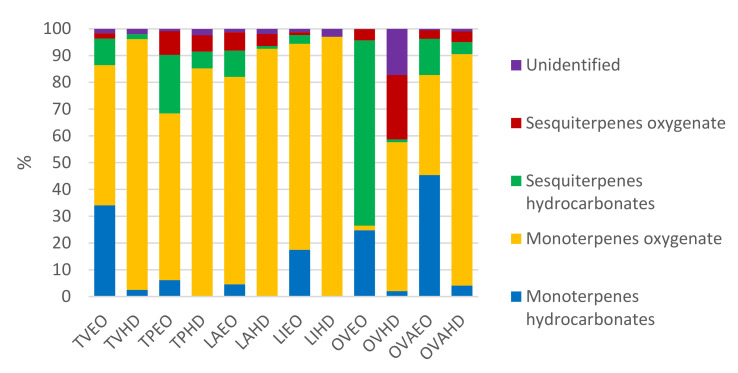
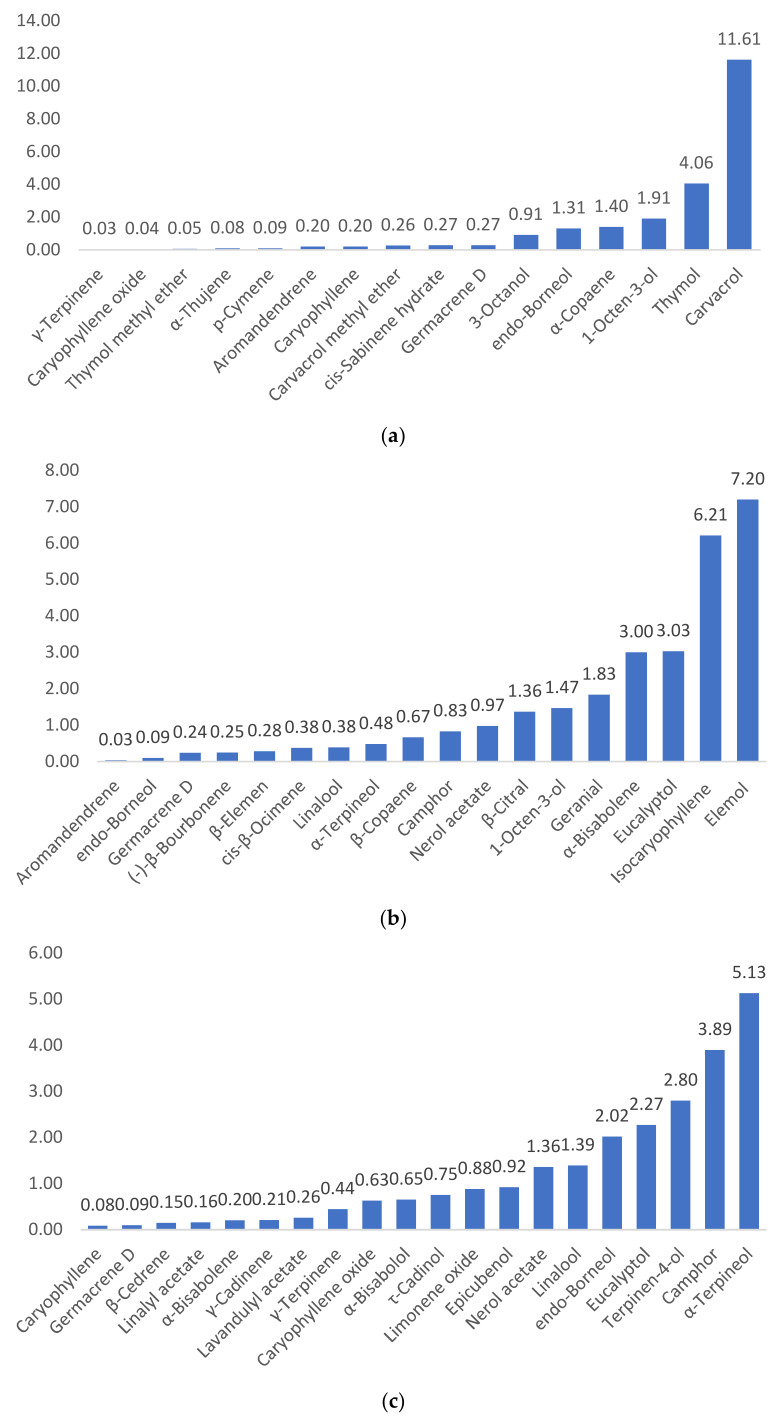
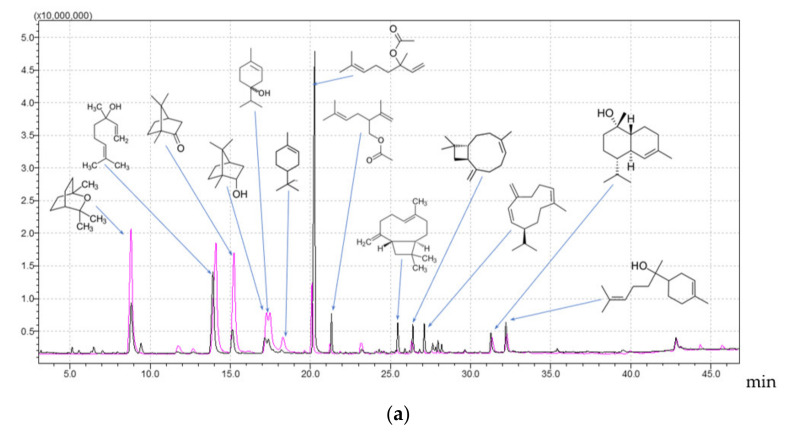
Many plants belonging to the family are rich in essential oils (EOs) which are intensively used for aromatherapy, food and beverage flavoring, alternative medicine, cosmetics, and perfumery. Aerial parts of L., All., L., , L., and var. L. were subjected to hydrodistillation, and both resulting fractions were analyzed. The purpose of this study was to determine the chemical composition, antioxidant activity, and total phenolic content of six essential oils and their corresponding hydrolats (HDs) through GC-MS and spectrophotometric analyses. Overall, 161 compounds were identified, some found exclusively in essential oils and others in hydrolats, making them individual products with specific end purposes. The total phenolic content was the highest for the L. EOs (3022 ± mg GAE L), because of its high phenolic oxygenated monoterpenes content (thymol and carvacrol) and the smallest for the L. EOs (258.31 ± 44.29 mg GAE L), while hydrolats varied from 183.85 ± 0.22 mg GAE L for L. HD and 7.73 mg GAE L for All. HD. Significant antioxidant effects determined through DPPH and ABTS assays were also observed in samples with higher hydrophilic compounds. The highest antioxidant activity was determined for L. EO and its corresponding HD. Although EOs are the principal traded economic product, HDs represent a valuable by-product that could still present intense antiseptic activities, similar to their corresponding EOs (thyme and oregano), or have multiple aromatherapy, cosmetics, and household applications (lavender and lavandin).
许多属于该科的植物富含精油(EOs),这些精油被广泛用于芳香疗法、食品和饮料调味、替代医学、化妆品和香水制造。对罗勒属、牛至属、百里香属、迷迭香属、薰衣草属以及醒目薰衣草的地上部分进行了水蒸馏,并对所得的两个馏分进行了分析。本研究的目的是通过气相色谱 - 质谱联用(GC - MS)和分光光度分析来确定六种精油及其相应纯露(HDs)的化学成分、抗氧化活性和总酚含量。总体而言,共鉴定出161种化合物,其中一些仅存在于精油中,另一些存在于纯露中,这使得它们成为具有特定最终用途的独特产品。百里香属精油的总酚含量最高(3022±毫克没食子酸当量/升),这是因为其酚类氧化单萜含量高(百里香酚和香芹酚),而迷迭香属精油的总酚含量最低(258.31±44.29毫克没食子酸当量/升),而纯露的总酚含量则从罗勒属纯露的183.85±0.22毫克没食子酸当量/升变化到牛至属纯露的7.73毫克没食子酸当量/升。在含有较高亲水性化合物的样品中也观察到通过DPPH和ABTS测定法确定的显著抗氧化作用。百里香属精油及其相应纯露的抗氧化活性最高。尽管精油是主要的贸易经济产品,但纯露是一种有价值的副产品,它们仍可能具有强烈的抗菌活性,类似于其相应的精油(百里香和牛至),或者具有多种芳香疗法、化妆品和家庭应用(薰衣草和醒目薰衣草)。