Department of Veterinary Population Medicine, College of Veterinary Medicine, University of Minnesota, Minneapolis, MN 55108, USA.
Department of Agricultural Economics, Ferguson College of Agriculture, Oklahoma State University, Stillwater, OK 74078, USA.
Viruses. 2021 Oct 20;13(11):2112. doi: 10.3390/v13112112.
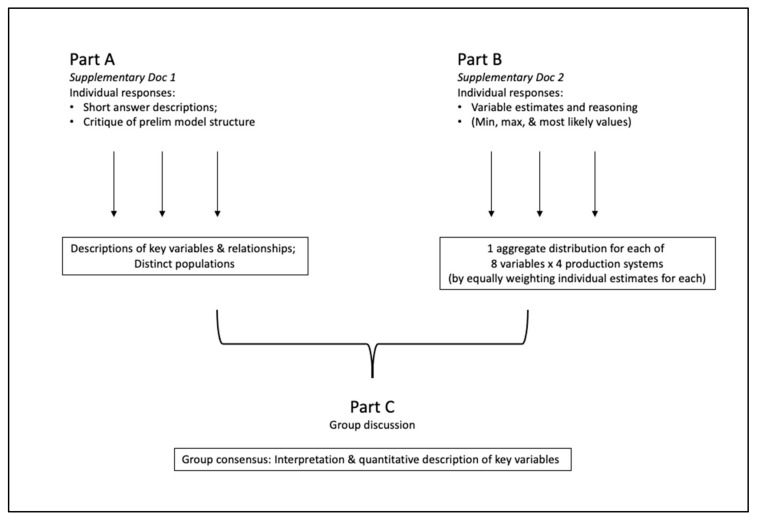
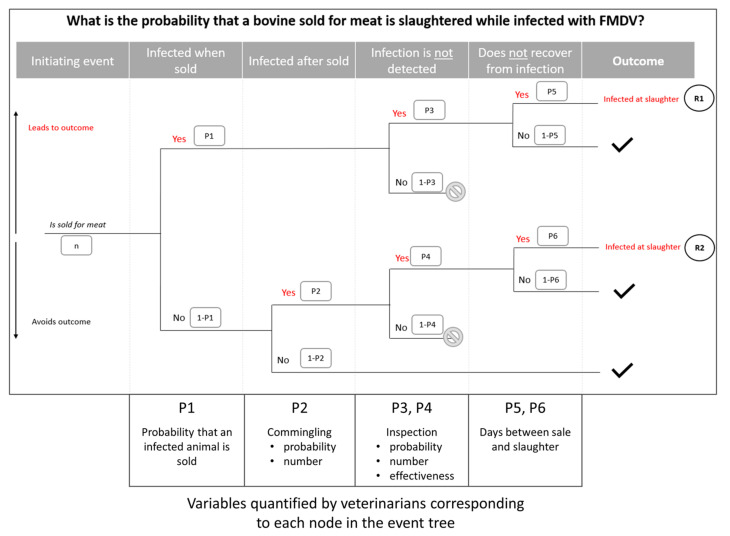
Countries in which foot-and-mouth disease (FMD) is endemic may face bans on the export of FMD-susceptible livestock and products because of the associated risk for transmission of FMD virus. Risk assessment is an essential tool for demonstrating the fitness of one's goods for the international marketplace and for improving animal health. However, it is difficult to obtain the necessary data for such risk assessments in many countries where FMD is present. This study bridged the gaps of traditional participatory and expert elicitation approaches by partnering with veterinarians from the National Veterinary Services of Kenya ( = 13) and Uganda ( = 10) enrolled in an extended capacity-building program to systematically collect rich, local knowledge in a format appropriate for formal quantitative analysis. Participants mapped risk pathways and quantified variables that determine the risk of infection among cattle at slaughter originating from each of four beef production systems in each country. Findings highlighted that risk processes differ between management systems, that disease and sale are not always independent events, and that events on the risk pathway are influenced by the actions and motivations of value chain actors. The results provide necessary information for evaluating the risk of FMD among cattle pre-harvest in Kenya and Uganda and provide a framework for similar evaluation in other endemic settings.
由于口蹄疫病毒传播的相关风险,口蹄疫流行的国家可能会禁止出口易感牲畜及其产品。风险评估是展示商品适合国际市场以及改善动物健康的重要工具。然而,在许多存在口蹄疫的国家,很难获得此类风险评估所需的数据。本研究通过与肯尼亚(n = 13)和乌干达(n = 10)的国家兽医服务机构的兽医合作,弥合了传统参与式和专家 elicitation 方法的差距,这些兽医参加了一个扩展的能力建设计划,以系统地收集适合正式定量分析的丰富的本地知识。参与者绘制了风险途径,并量化了在每个国家的四个牛肉生产系统中,源自屠宰牛的感染风险的决定因素。研究结果强调了风险过程在管理系统之间存在差异,疾病和销售并不总是独立事件,并且风险途径上的事件受到价值链参与者的行为和动机的影响。这些结果为评估肯尼亚和乌干达屠宰前牛的口蹄疫风险提供了必要的信息,并为其他流行地区的类似评估提供了框架。