Department of Nursing II, Faculty of Medicine and Nursing, University of the Basque Country, Paseo Doctor Begiristain 107, 20014 Donostia-San Sebastián, Spain.
Osakidetza Basque Health Service, General Surgery Service, Donostia University Hospital, Paseo Doctor Beguiristain, 20014 Donostia-San Sebastian, Spain.
Nutrients. 2021 Oct 22;13(11):3716. doi: 10.3390/nu13113716.
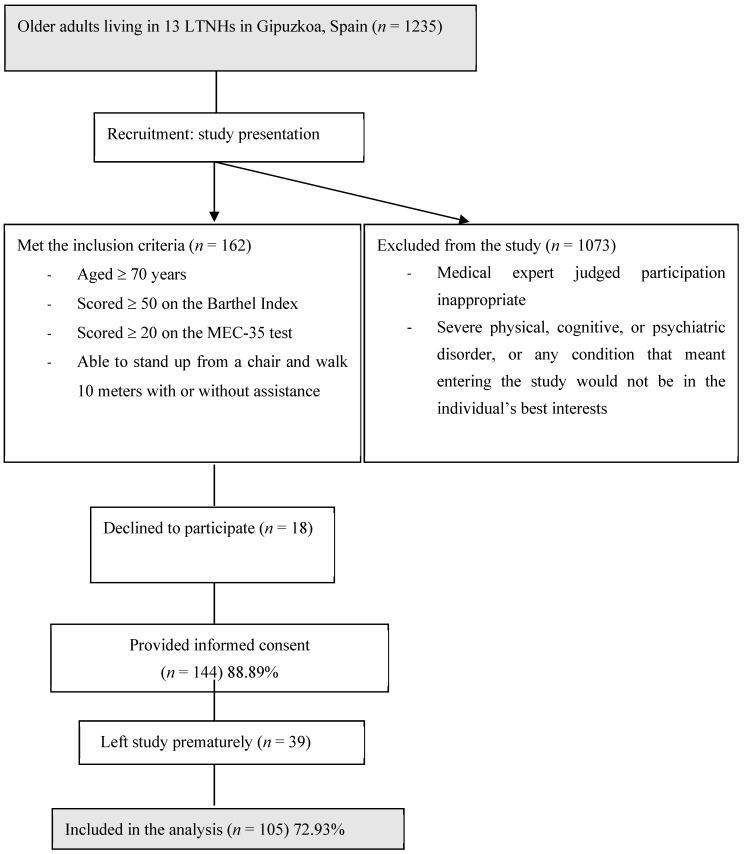
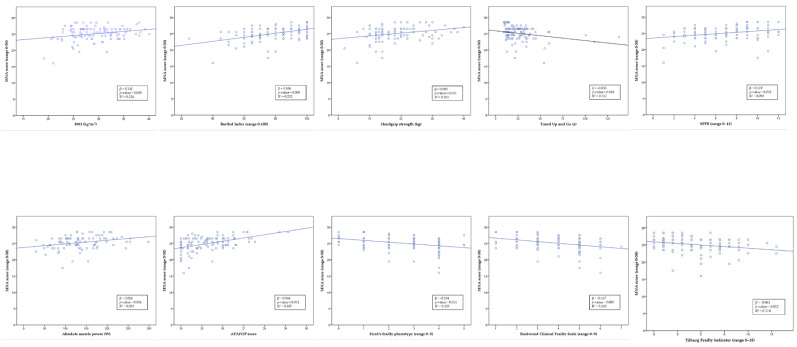
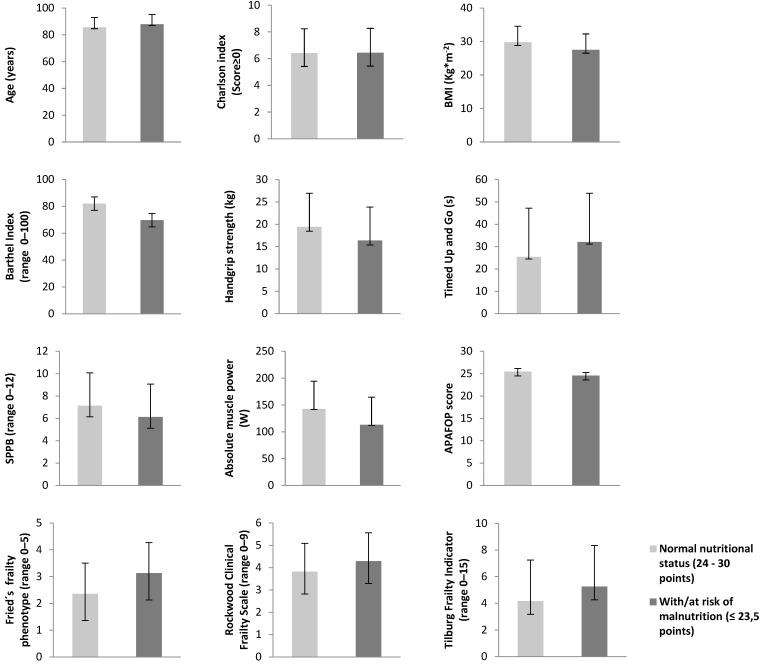
Among older adults living in long-term nursing homes (LTNHs), maintaining an adequate functional status and independence is a challenge. Whilst a poor nutritional status is a potential risk factor for a decreased function in this population, its role is not fully understood. Here, using a transversal multicenter study of 105 older adults living in 13 LTNHs, we analyzed the associations between nutritional status, as measured by the Mini Nutritional Assessment (MNA), and the parameters of functional status, physical performance, physical activity, and frailty as well as comorbidity and body composition. The MNA scores were positively correlated with the Barthel Index, handgrip strength, Short Physical Performance Battery (SPPB) scores, absolute muscle power, and Assessment of Physical Activity in Frail Older People (APAFOP) scores and were negatively correlated with dynamic balance and frailty. In a multiple linear regression model controlling for gender and age, the APAFOP score (β = 0.386), BMI (β = 0.301), and Barthel Index (β = 0.220) explained 31% of the variance in the MNA score. Given the observed close relationship between the MNA score and functional status, physical performance and activity, and frailty, interventions should jointly target improvements in both the nutritional status and functional status of LTNH residents. Strategies designed and implemented by interdisciplinary professional teams may be the most successful in improving these parameters to lead to better health and quality of life.
在长期居住在长期护理院(LTNH)的老年人中,保持足够的功能状态和独立性是一项挑战。虽然营养状况不佳是该人群功能下降的潜在危险因素,但它的作用尚不完全清楚。在这里,我们使用了一项针对 13 家 LTNH 中 105 名老年人的横断面多中心研究,分析了营养状况(通过 Mini Nutritional Assessment [MNA] 测量)与功能状态、身体表现、身体活动和虚弱以及合并症和身体成分的参数之间的关联。MNA 评分与巴氏量表、握力、短体物理性能电池(SPPB)评分、绝对肌肉力量和虚弱老年人身体活动评估(APAFOP)评分呈正相关,与动态平衡和虚弱呈负相关。在控制性别和年龄的多元线性回归模型中,APAFOP 评分(β=0.386)、BMI(β=0.301)和巴氏量表(β=0.220)解释了 MNA 评分 31%的变异。鉴于 MNA 评分与功能状态、身体表现和活动以及虚弱之间的密切关系,干预措施应共同针对 LTNH 居民的营养状况和功能状态的改善。由跨学科专业团队设计和实施的策略可能最成功地改善这些参数,从而提高健康和生活质量。