Beijing Obstetrics and Gynecology Hospital, Capital Medical University, Beijing 100026, China.
Menzies Health Institute Queensland, School of Medicine and Dentistry, Griffith University, Gold Coast, QLD 4215, Australia.
Nutrients. 2021 Nov 14;13(11):4068. doi: 10.3390/nu13114068.
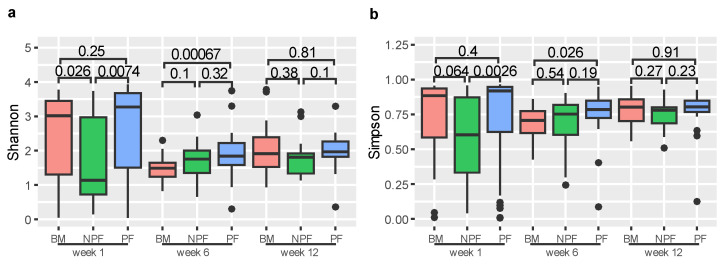
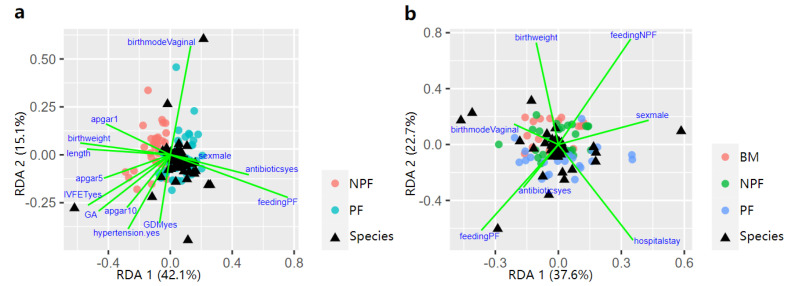
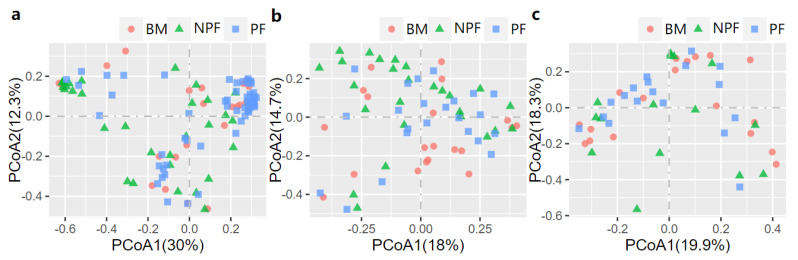
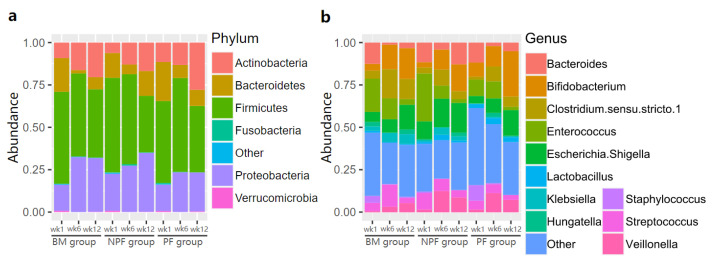
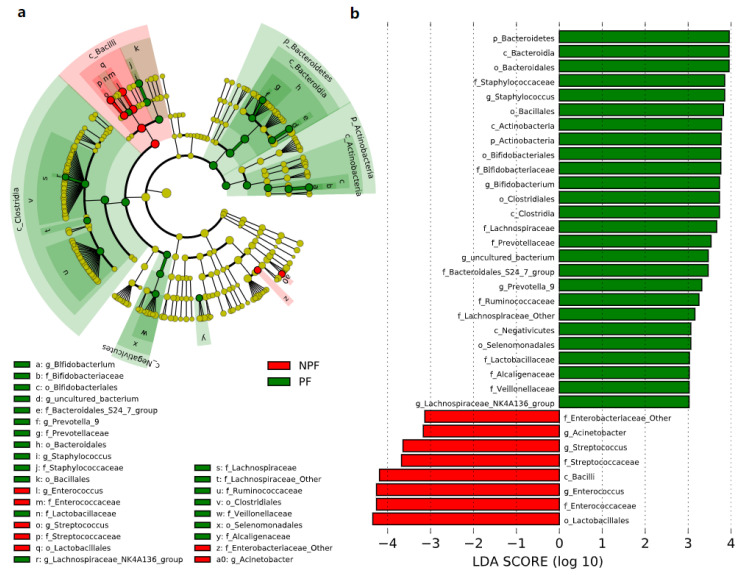
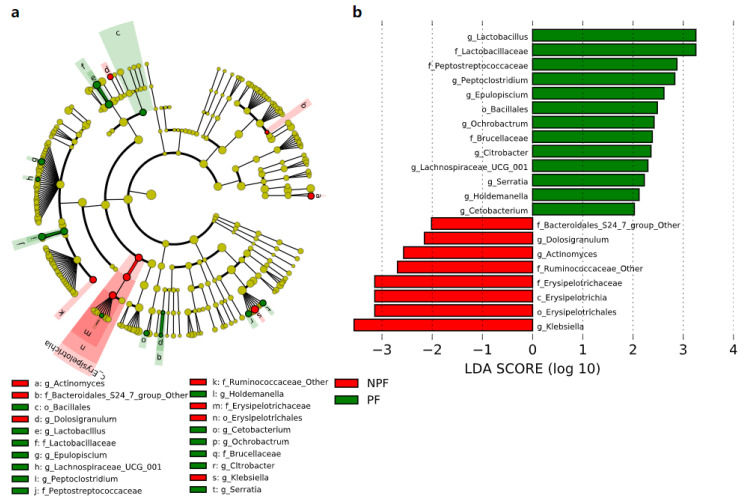
Premature infants have a fragile ecology of the gut microbiota, which is associated with many health problems and may be influenced by formula versus breast feeding. The present study investigated differences in the process of gut microbiota colonisation in preterm infants fed with breastmilk or formula with or without probiotics before 12 weeks. This cohort study recruited 138 premature infants; 31 in the breastmilk (BM) group, 59 in the probiotics formula (PF) group and 48 in the non-probiotics formula (NPF) group, according to the feeding practice they received at birth. Gut bacterial composition was identified with 16S rRNA gene sequencing in faecal samples collected at 1 week, 6 weeks and 12 weeks after birth. The alpha diversity was higher in the PF group compared to the other groups at week 1 and 6 (both < 0.01) but showed no difference at week 12. The beta diversity of the three groups showed a trend towards similarity at the first two stages ( < 0.001 and = 0.009, respectively) and finally showed no difference at week 12. Canonical redundancy analysis showed that feeding type could explain the difference in gut microbiota composition at week one and six (both < 0.01). At genus level, was enriched in the PF group, while the and was enriched in the NPF group. In summary, formula with probiotics feeding after birth can affect gut microbiota colonisation and lead to a bacterial community with less potential pathogens.
早产儿的肠道微生物群生态脆弱,与许多健康问题有关,并且可能受到母乳喂养与配方奶喂养的影响。本研究调查了在 12 周前分别给予母乳喂养、含益生菌配方奶和不含益生菌配方奶的早产儿肠道微生物定植过程的差异。这项队列研究招募了 138 名早产儿;根据出生时的喂养方式,31 名在母乳喂养组(BM 组)、59 名在益生菌配方组(PF 组)和 48 名在非益生菌配方组(NPF 组)。在出生后 1 周、6 周和 12 周时采集粪便样本,用 16S rRNA 基因测序鉴定肠道细菌组成。PF 组在第 1 周和第 6 周的 alpha 多样性高于其他组(均<0.01),但在第 12 周时无差异。三组的 beta 多样性在前两个阶段呈相似趋势(分别为<0.001 和=0.009),最后在第 12 周时无差异。典范冗余分析显示,喂养方式可以解释第 1 周和第 6 周肠道微生物群组成的差异(均<0.01)。在属水平上,PF 组中 丰度增加,而 NPF 组中 和 丰度增加。总之,出生后给予含益生菌的配方奶喂养可以影响肠道微生物定植,并导致潜在病原体较少的细菌群落。