State Key Laboratory of Loess and Quaternary Geology, Institute of Earth Environment, Chinese Academy of Sciences, Xi'an, China.
Open Studio for Oceanic-Continental Climate and Environment Changes, Pilot National Laboratory for Marine Science and Technology (Qingdao), Qingdao, China.
Nat Commun. 2021 Nov 26;12(1):6935. doi: 10.1038/s41467-021-27054-5.
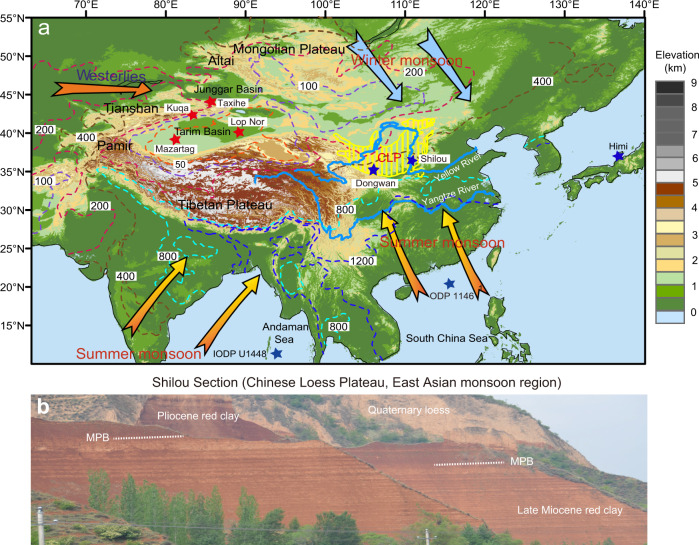
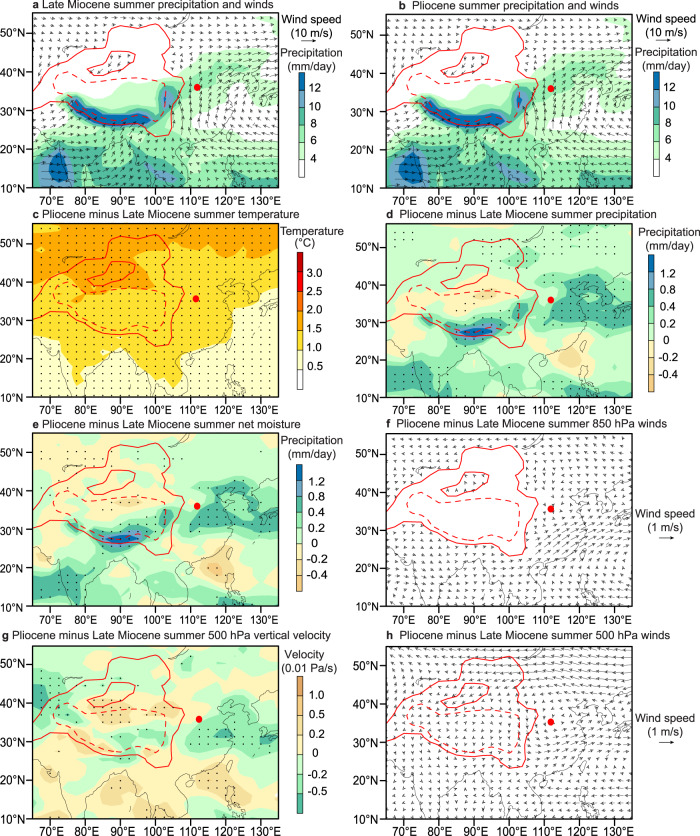
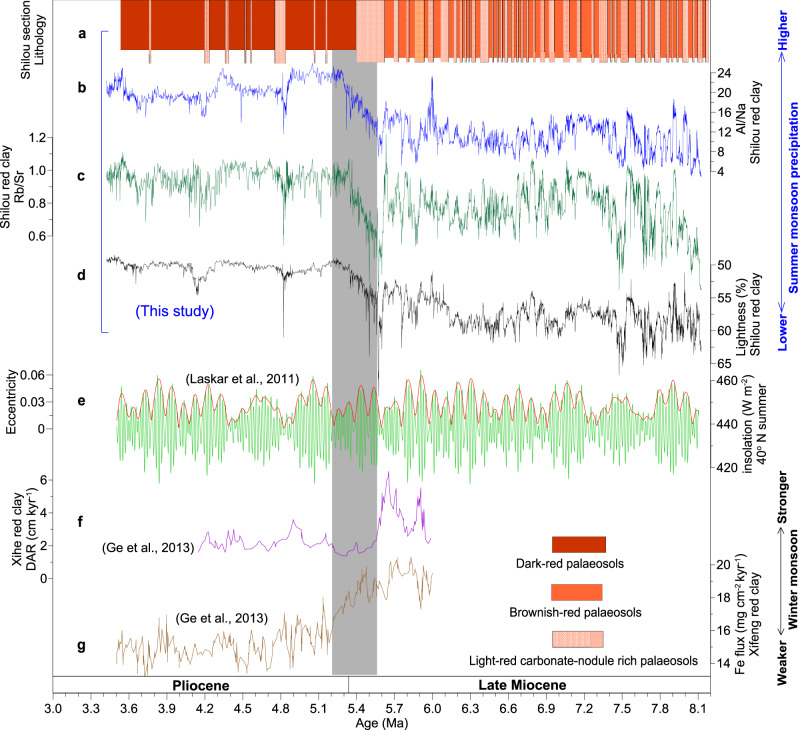
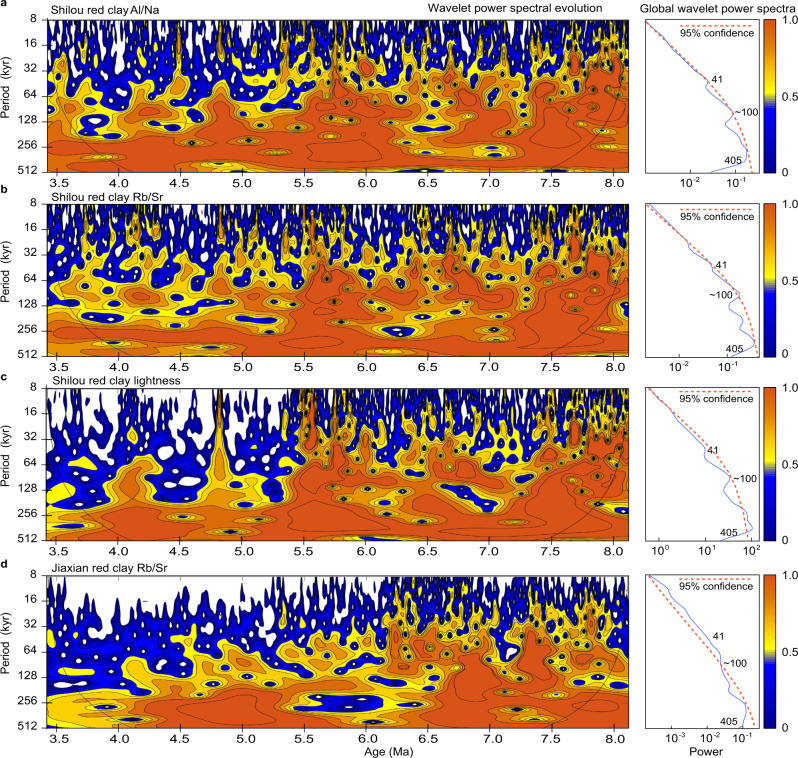
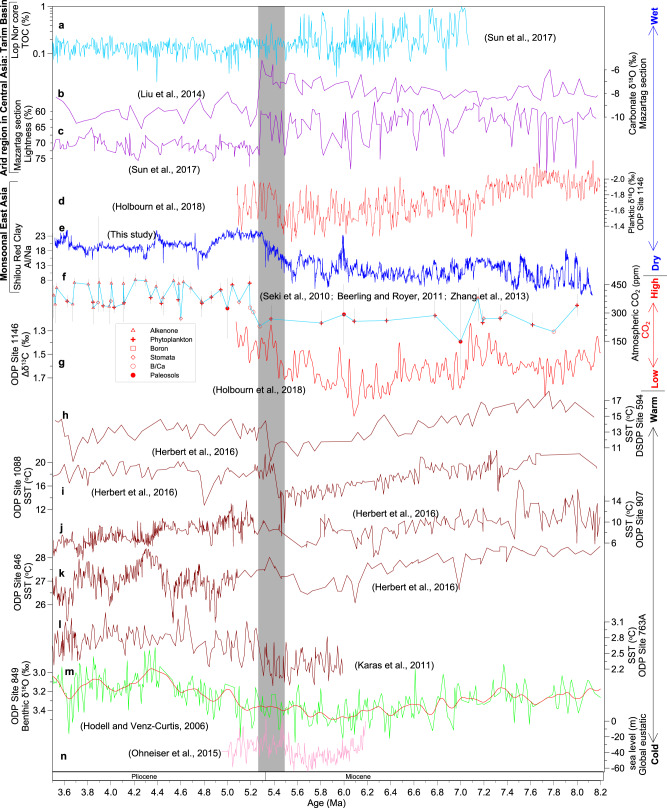
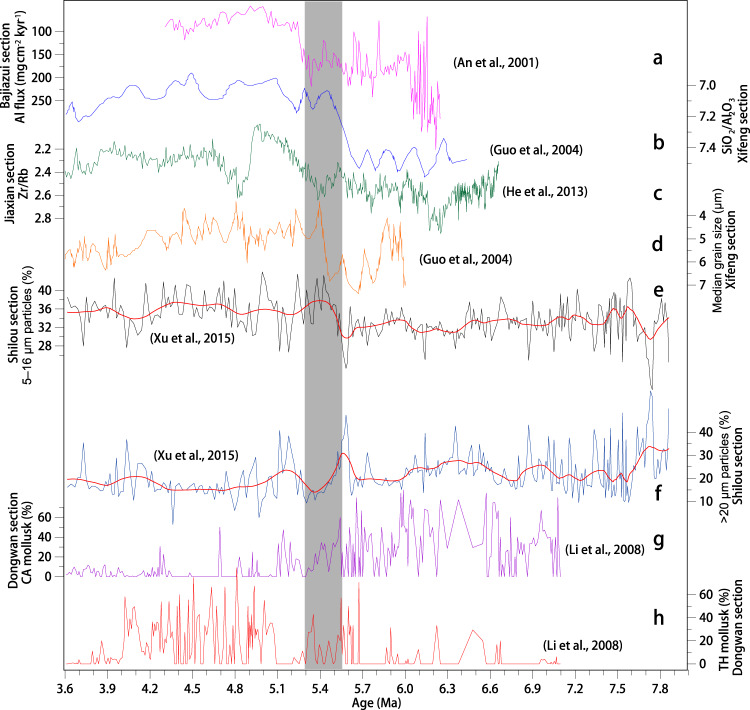
Across the Miocene-Pliocene boundary (MPB; 5.3 million years ago, Ma), late Miocene cooling gave way to the early-to-middle Pliocene Warm Period. This transition, across which atmospheric CO concentrations increased to levels similar to present, holds potential for deciphering regional climate responses in Asia-currently home to more than half of the world's population- to global climate change. Here we find that CO-induced MPB warming both increased summer monsoon moisture transport over East Asia, and enhanced aridification over large parts of Central Asia by increasing evaporation, based on integration of our ~1-2-thousand-year (kyr) resolution summer monsoon records from the Chinese Loess Plateau aeolian red clay with existing terrestrial records, land-sea correlations, and climate model simulations. Our results offer palaeoclimate-based support for 'wet-gets-wetter and dry-gets-drier' projections of future regional hydroclimate responses to sustained anthropogenic forcing. Moreover, our high-resolution monsoon records reveal a dynamic response to eccentricity modulation of solar insolation, with predominant 405-kyr and ~100-kyr periodicities between 8.1 and 3.4 Ma.
在中新世-上新世边界(MPB;530 万年前),晚中新世的冷却让位于早中新世到中中新世暖期。这一转变跨越了大气 CO2浓度增加到与现今相似水平的时期,为解码亚洲(目前是世界上一半以上人口的家园)对全球气候变化的区域气候响应提供了潜力。在这里,我们发现 CO2 引起的 MPB 变暖既增加了东亚夏季季风的水汽输送,又通过增加蒸发增强了中亚大部分地区的干旱化,这是基于我们在中国黄土高原风尘红粘土与现有陆地记录、陆海相关关系和气候模型模拟的约 1-2 千年夏季季风记录的综合。我们的结果为未来区域水文气候对持续人为强迫的响应的“湿者更湿,干者更干”的预测提供了基于古气候的支持。此外,我们的高分辨率季风记录揭示了对太阳辐射的轨道调制的动态响应,在 8.1 到 3.4 百万年前,主要有 405 千周期和~100 千周期的周期。