Department of Pathology, Johns Hopkins Medical Institutions, Baltimore, MD 21205, USA.
Department of Pathology, Johns Hopkins Medical Institutions, Baltimore, MD 21205, USA.
Cell. 2021 Dec 9;184(25):6193-6206.e14. doi: 10.1016/j.cell.2021.11.005. Epub 2021 Nov 26.
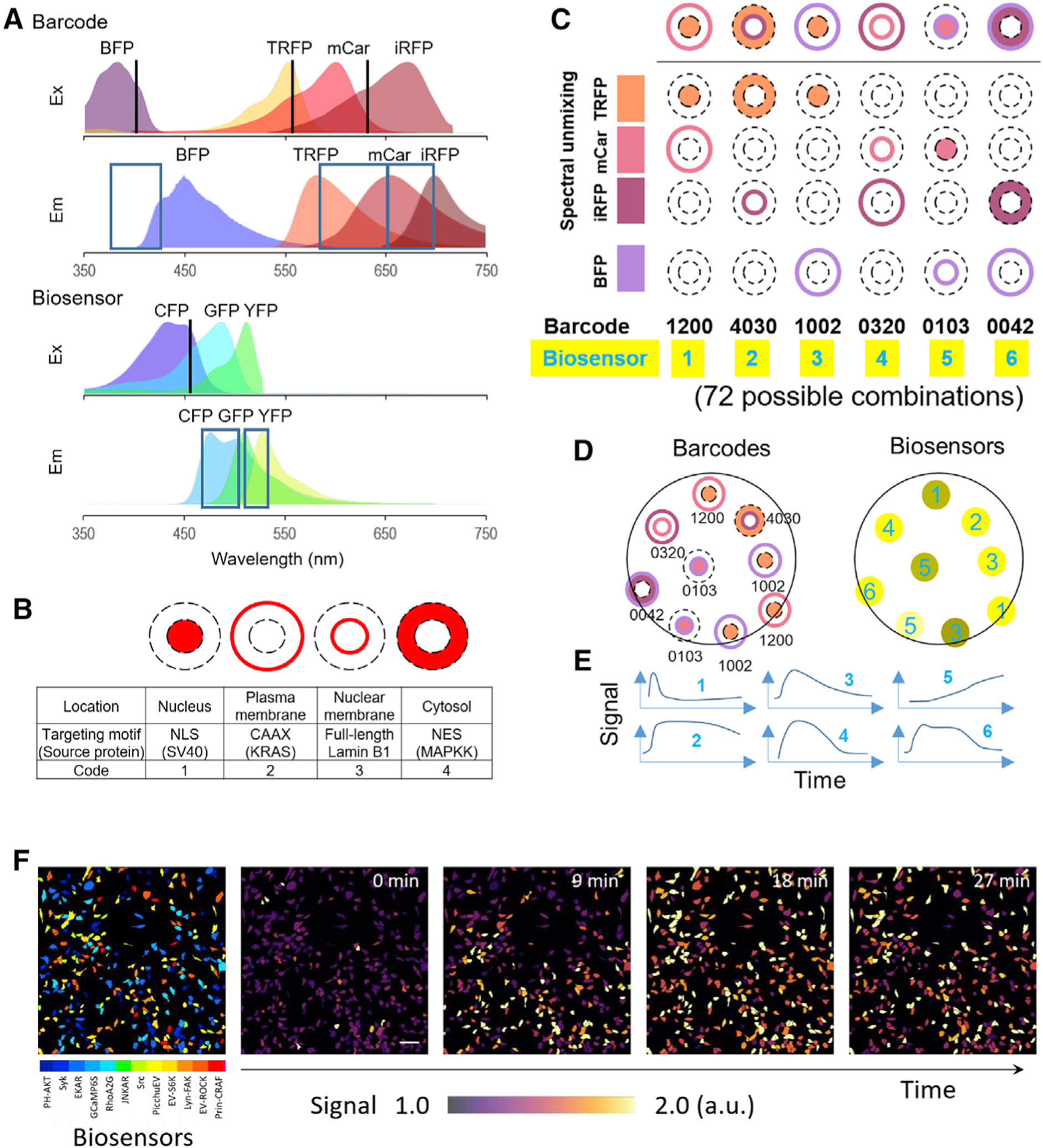
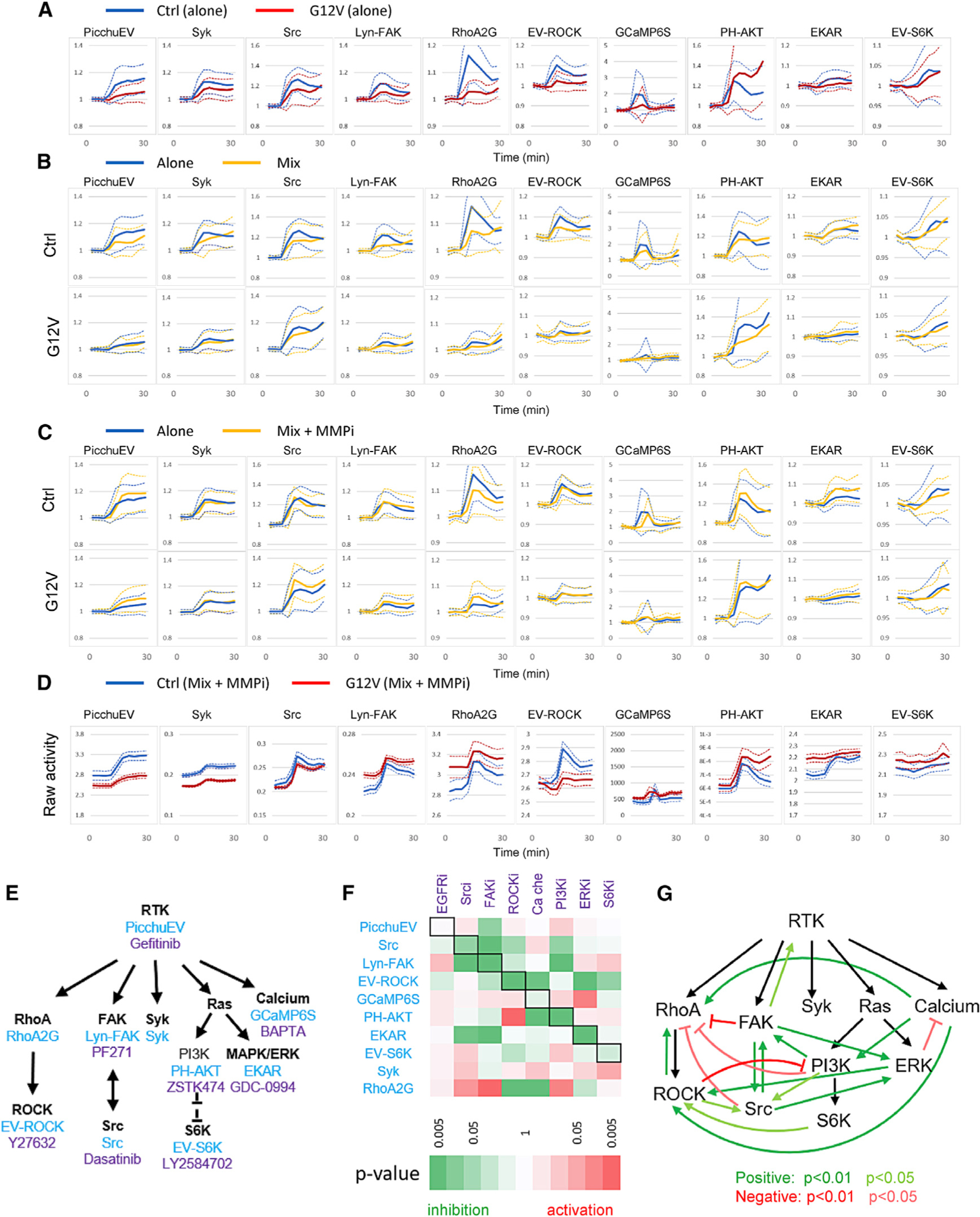
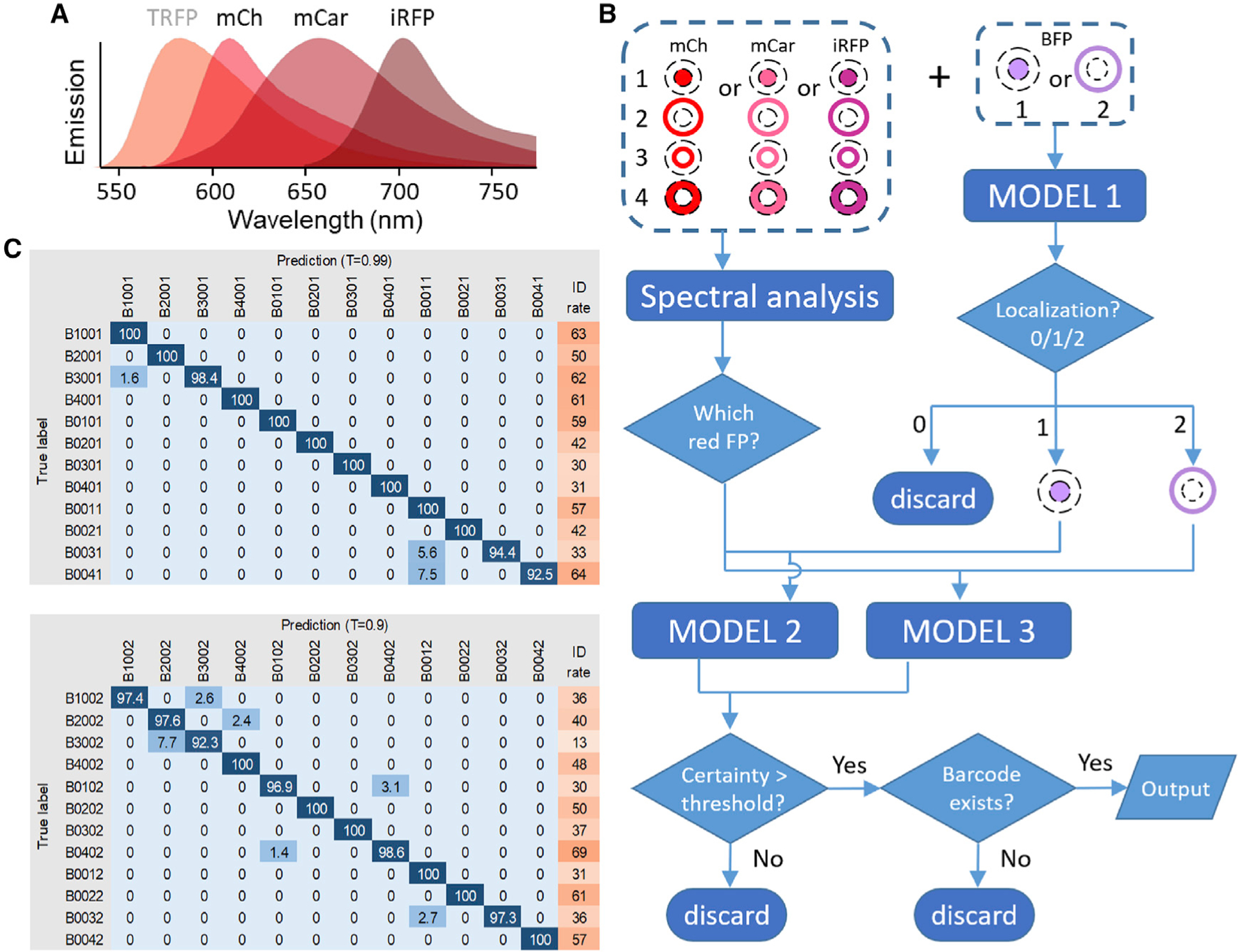
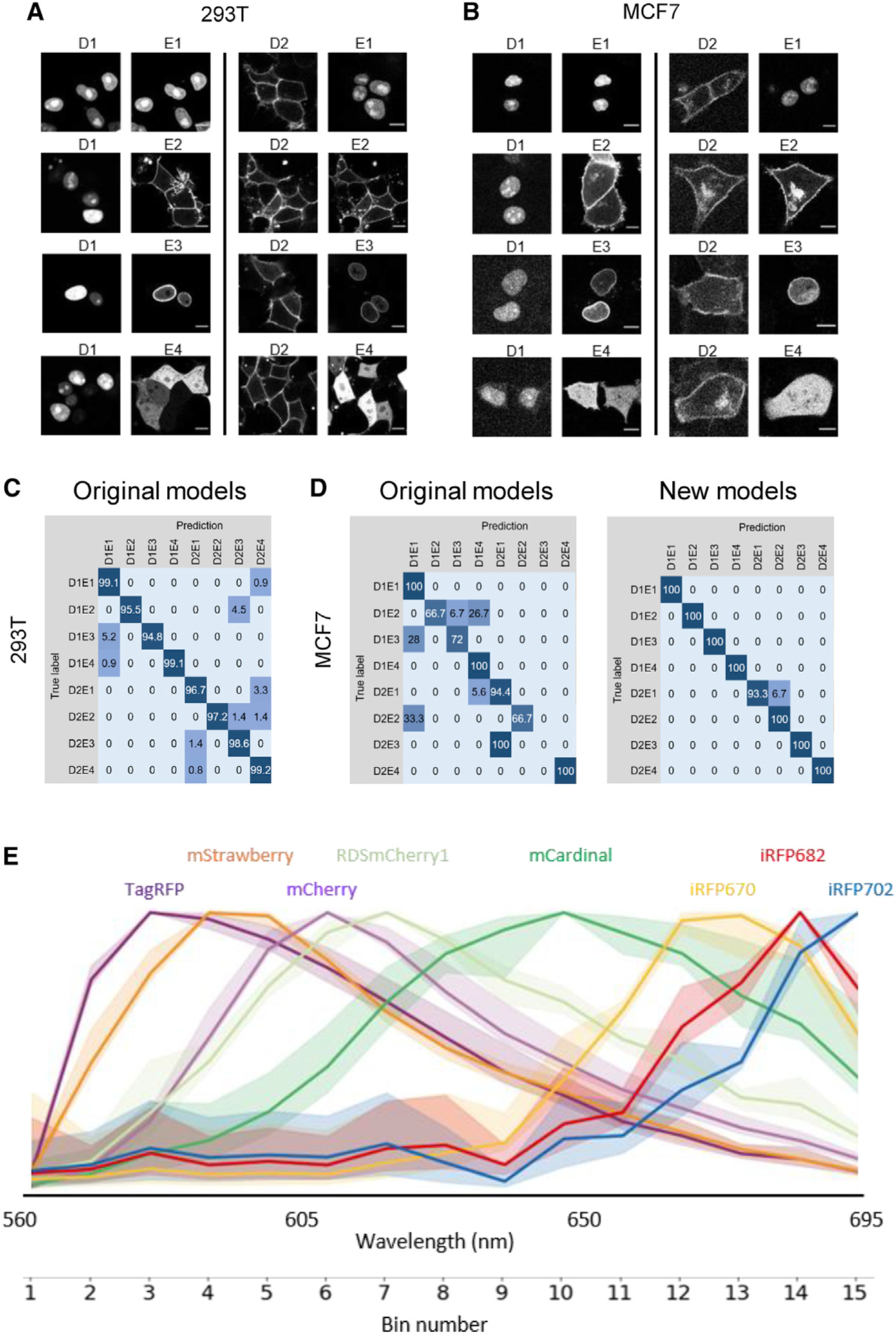
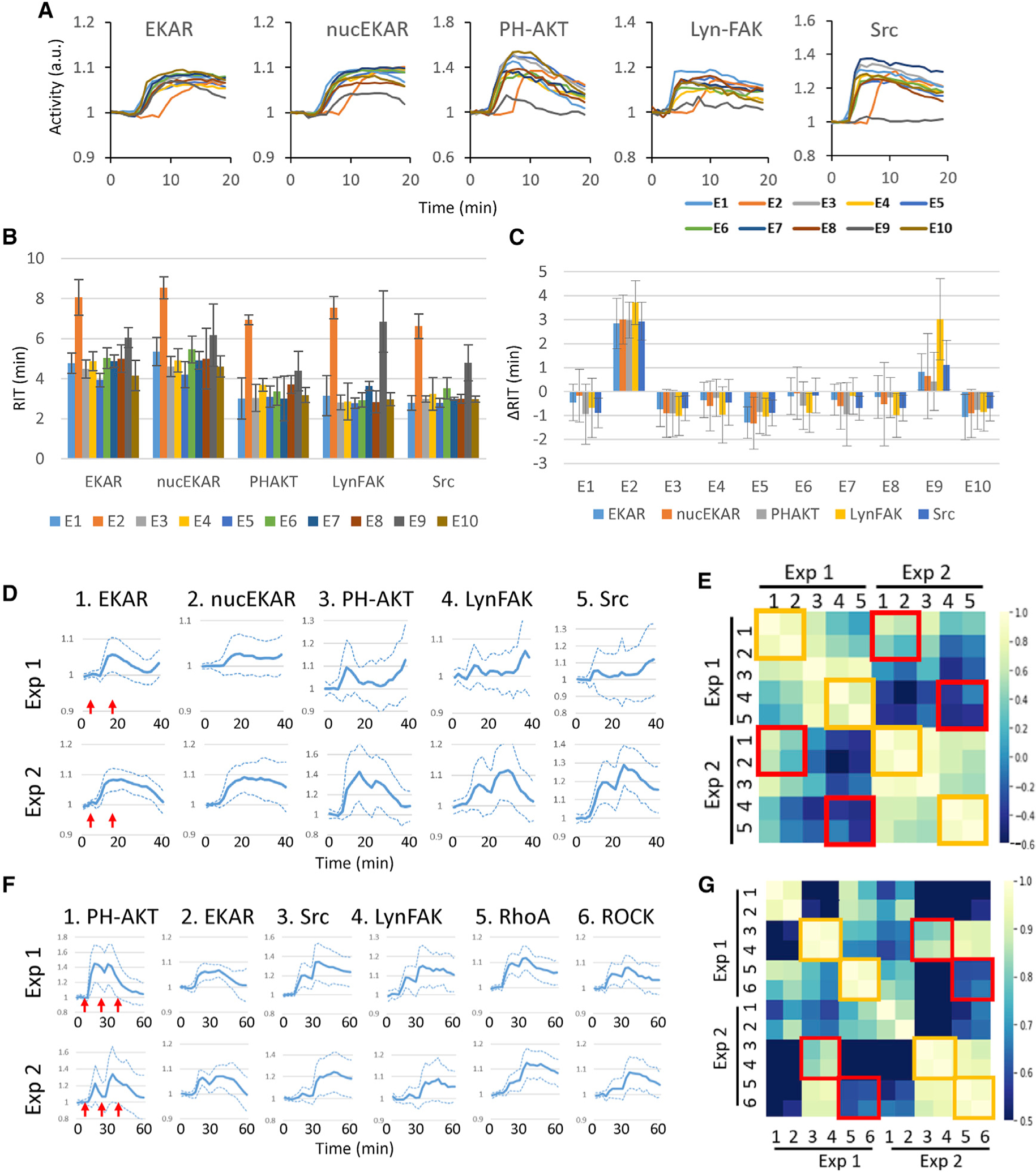
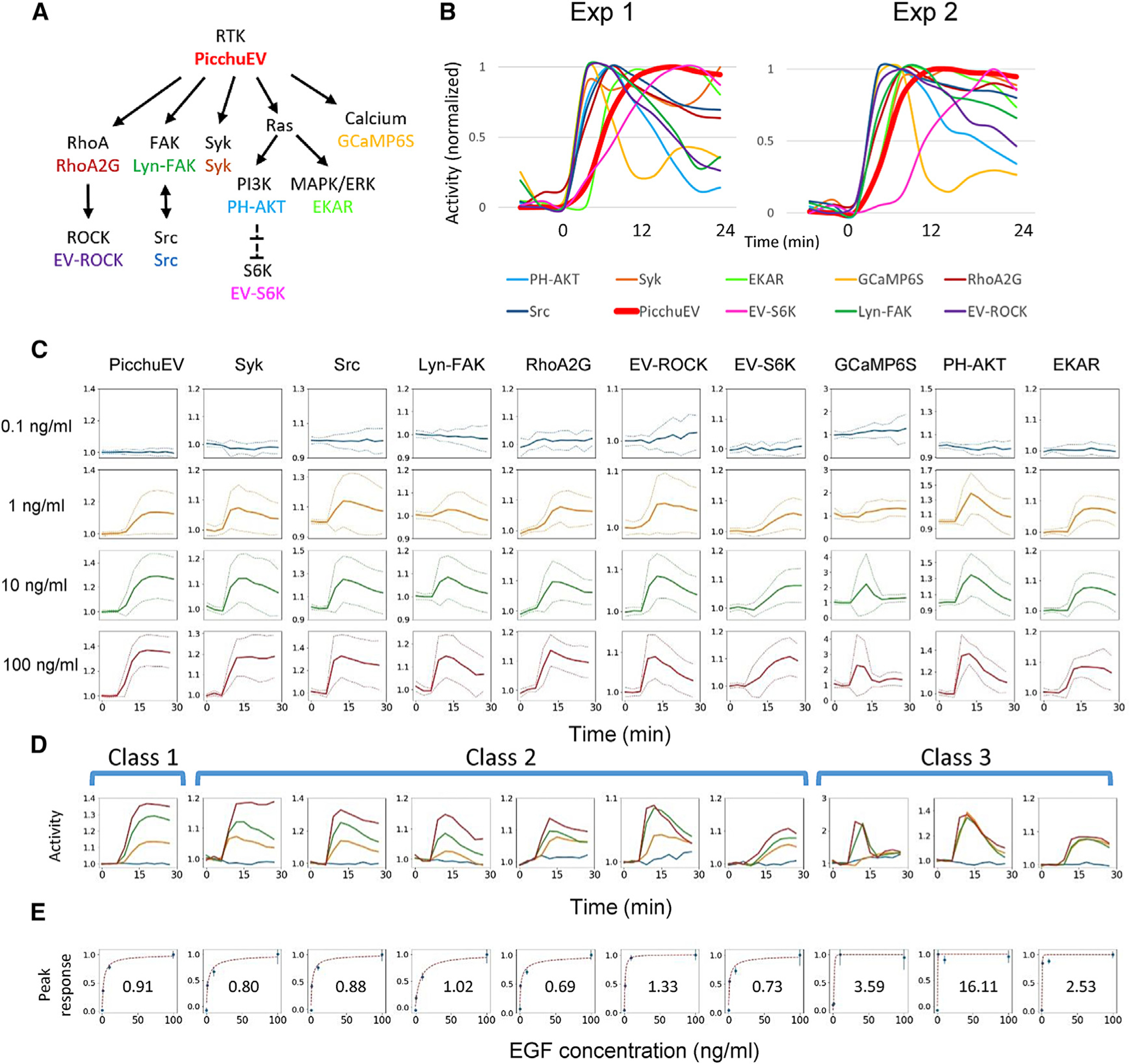
Genetically encoded fluorescent biosensors are powerful tools for monitoring biochemical activities in live cells, but their multiplexing capacity is limited by the available spectral space. We overcome this problem by developing a set of barcoding proteins that can generate over 100 barcodes and are spectrally separable from commonly used biosensors. Mixtures of barcoded cells expressing different biosensors are simultaneously imaged and analyzed by deep learning models to achieve massively multiplexed tracking of signaling events. Importantly, different biosensors in cell mixtures show highly coordinated activities, thus facilitating the delineation of their temporal relationship. Simultaneous tracking of multiple biosensors in the receptor tyrosine kinase signaling network reveals distinct mechanisms of effector adaptation, cell autonomous and non-autonomous effects of KRAS mutations, as well as complex interactions in the network. Biosensor barcoding presents a scalable method to expand multiplexing capabilities for deciphering the complexity of signaling networks and their interactions between cells.
基因编码荧光生物传感器是监测活细胞生化活性的有力工具,但它们的多路复用能力受到可用光谱空间的限制。我们通过开发一组可生成 100 多个条码且与常用生物传感器在光谱上可分离的条形码蛋白来克服这个问题。通过深度学习模型对表达不同生物传感器的条形码细胞混合物进行同时成像和分析,实现对信号事件的大规模多路复用跟踪。重要的是,细胞混合物中的不同生物传感器表现出高度协调的活动,从而有助于描绘它们的时间关系。同时跟踪受体酪氨酸激酶信号网络中的多个生物传感器揭示了效应器适应的不同机制、KRAS 突变的细胞自主和非自主效应,以及网络中的复杂相互作用。生物传感器条形码为扩展多路复用能力以破译信号网络及其细胞间相互作用的复杂性提供了一种可扩展的方法。