Morselli Davide, Cataldi Pietro, Paul Uttam Chandra, Ceseracciu Luca, Benitez Jose Jesus, Scarpellini Alice, Guzman-Puyol Susana, Heredia Antonio, Valentini Paola, Pompa Pier Paolo, Marrero-López David, Athanassiou Athanassia, Heredia-Guerrero José Alejandro
Smart Materials, Istituto Italiano di Tecnologia, Via Morego 30, 16163 Genova, Italy.
Department of Civil, Chemical, Environmental and Materials Engineering (DICAM), Università di Bologna, Via Terracini 28, 40131 Bologna, Italy.
ACS Sustain Chem Eng. 2021 Nov 22;9(46):15484-15495. doi: 10.1021/acssuschemeng.1c04815. Epub 2021 Nov 3.
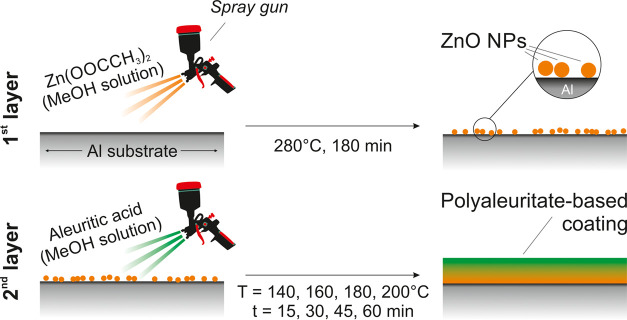
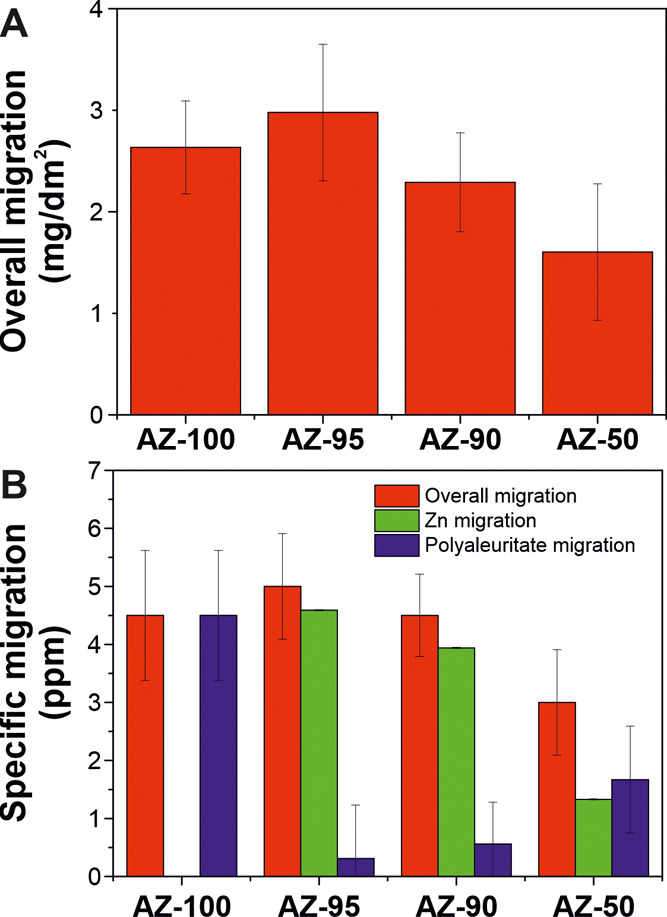
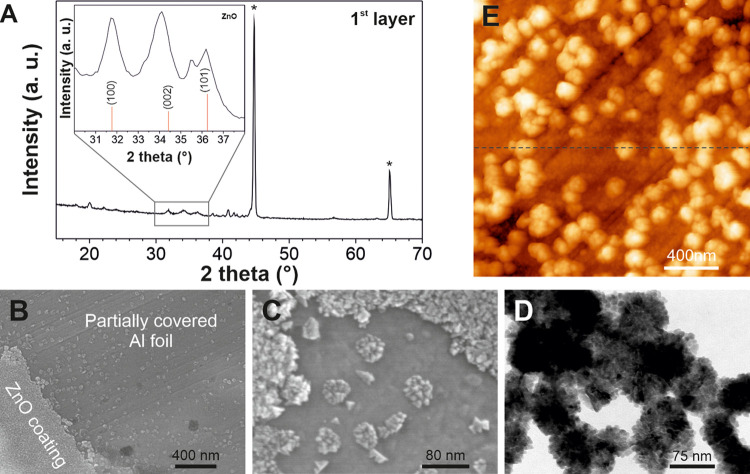
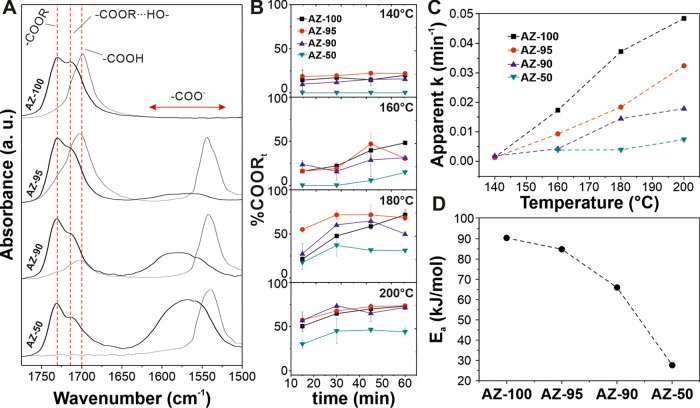
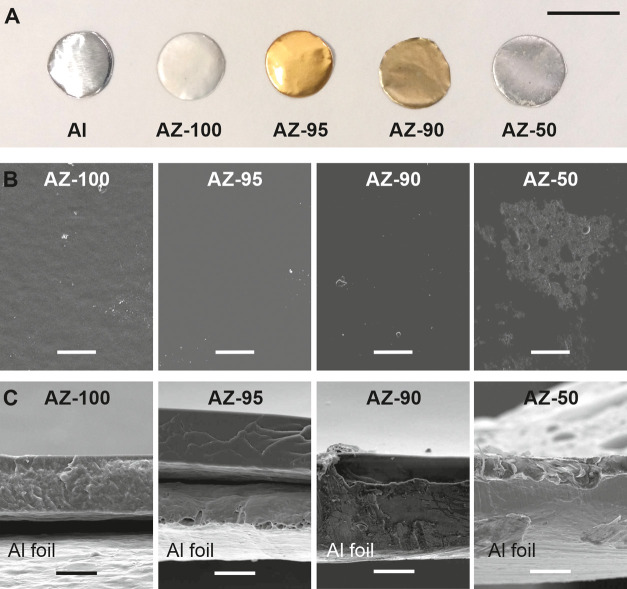
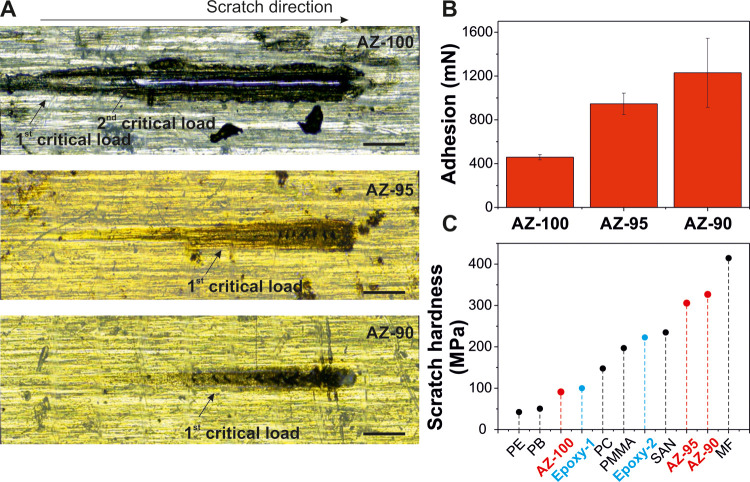
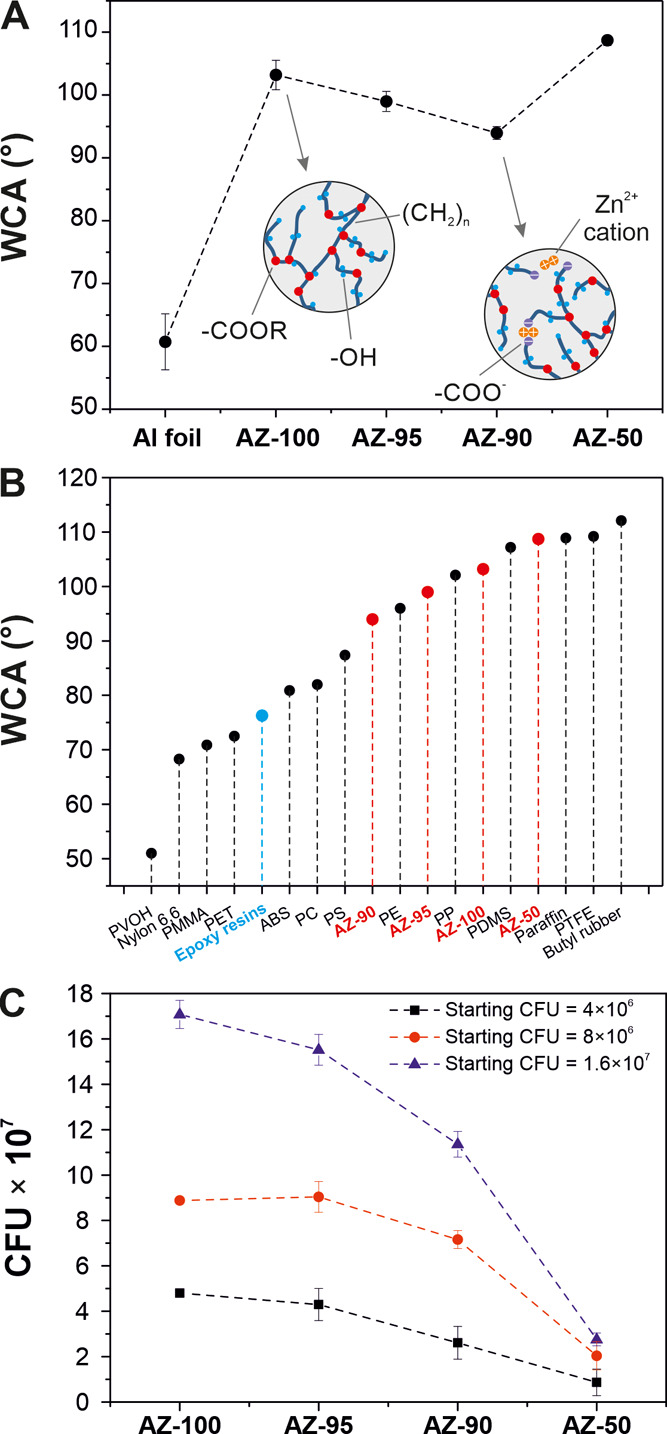
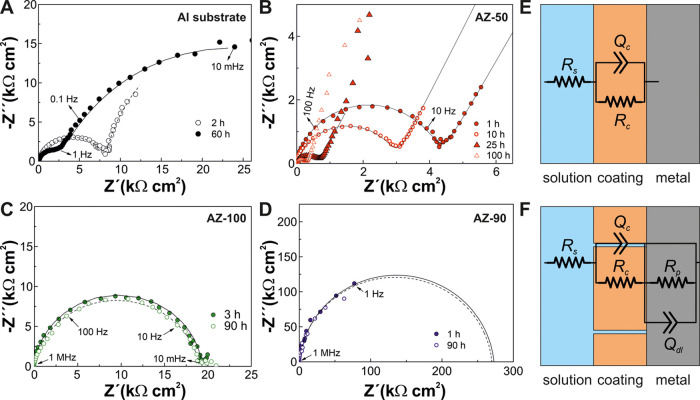
Sustainable coatings for metal food packaging were prepared from ZnO nanoparticles (obtained by the thermal decomposition of zinc acetate) and a naturally occurring polyhydroxylated fatty acid named aleuritic (or 9,10,16-trihydroxyhexadecanoic) acid. Both components reacted, originating under specific conditions zinc polyaleuritate ionomers. The polymerization of aleuritic acid into polyaleuritate by a solvent-free, melt polycondensation reaction was investigated at different times (15, 30, 45, and 60 min), temperatures (140, 160, 180, and 200 °C), and proportions of zinc oxide and aleuritic acid (0:100, 5:95, 10:90, and 50:50, w/w). Kinetic rate constants calculated by infrared spectroscopy decreased with the amount of Zn due to the consumption of reactive carboxyl groups, while the activation energy of the polymerization decreased as a consequence of the catalyst effect of the metal. The adhesion and hardness of coatings were determined from scratch tests, obtaining values similar to robust polymers with high adherence. Water contact angles were typical of hydrophobic materials with values ≥94°. Both mechanical properties and wettability were better than those of bisphenol A (BPA)-based resins and most likely are related to the low migration values determined using a hydrophilic food simulant. The presence of zinc provided a certain degree of antibacterial properties. The performance of the coatings against corrosion was studied by electrochemical impedance spectroscopy at different immersion times in an aqueous solution of NaCl. Considering the features of these biobased lacquers, they can be potential materials for bisphenol A-free metal packaging.
用于金属食品包装的可持续涂层由氧化锌纳米颗粒(通过醋酸锌的热分解获得)和一种天然存在的多羟基脂肪酸——紫胶酸(或9,10,16 - 三羟基十六烷酸)制备而成。两种成分发生反应,在特定条件下生成聚紫胶酸锌离聚物。通过无溶剂熔融缩聚反应将紫胶酸聚合成聚紫胶酸的过程,在不同时间(15、30、45和60分钟)、温度(140、160、180和200℃)以及氧化锌与紫胶酸的比例(0:100、5:95、10:90和50:50,w/w)下进行了研究。通过红外光谱计算得到的动力学速率常数随着锌含量的增加而降低,这是由于活性羧基的消耗,而聚合反应的活化能由于金属的催化作用而降低。涂层的附着力和硬度通过划痕试验测定,得到的值与具有高附着力的坚固聚合物相似。水接触角具有疏水性材料的典型特征,值≥94°。涂层的机械性能和润湿性均优于双酚A(BPA)基树脂,并且很可能与使用亲水性食品模拟物测定的低迁移值有关。锌的存在提供了一定程度的抗菌性能。通过电化学阻抗谱研究了涂层在NaCl水溶液中不同浸泡时间下的耐腐蚀性能。考虑到这些生物基漆的特性,它们可能是用于无双酚A金属包装的潜在材料。