Rosenbaum Peter L, Novak-Pavlic Monika
Faculty of Health Sciences, McMaster University, CanChild Centre for Childhood Disability Research, 1400 Main Street West, Hamilton, ON L8S 1C7 Canada.
School of Rehabilitation Science, CanChild Centre for Childhood Disability Research, McMaster University, 1400 Main Street West, Hamilton, ON L8S 1C7 Canada.
Curr Dev Disord Rep. 2021;8(4):212-218. doi: 10.1007/s40474-021-00240-2. Epub 2021 Nov 20.
Traditional thinking and focus in 'childhood disability' have been on the child with the impairment - with the imperative to make the right diagnosis and find the right treatments. The implicit if not direct expectation was that interventions should aim to 'fix' the problems. Professionals have led the processes of investigation and management planning, with parents expected to 'comply' with professionals' recommendations. Much less attention has been paid to parents' perspectives or their wellbeing.
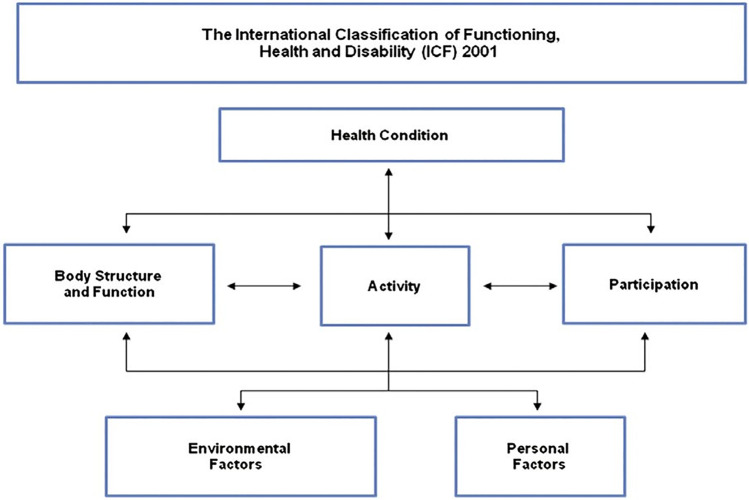
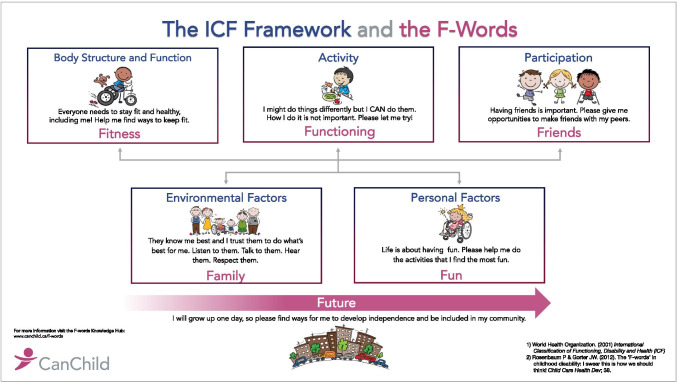
In the past two decades, we have seen a sea change in our conceptualizations of childhood disability. The WHO's framework for health (the International Classification of Functioning, Disability and Health (aka ICF)) and CanChild's 'F-words for Child Development' inform modern thinking and action. We now recognize the family as the unit of interest, with parents' voices an essential element of all aspects of management. The goals of intervention are built around the F-words ideas of function, family, fun, friendships, fitness and future.
There has been world-wide uptake of the F-words concepts, with increasing evidence of the impact of these ideas on parents and professionals alike. There are important implications of these developments on the structure, processes and content of services for children with neurodevelopmental disorders, their families and the services designed to support them.
传统上对“儿童残疾”的思考和关注重点一直是有损伤的儿童——必须做出正确诊断并找到正确的治疗方法。即使没有直接表达,但隐含的期望是干预措施应旨在“解决”问题。专业人员主导调查和管理规划过程,期望家长“遵守”专业人员的建议。对家长的观点或他们的幸福关注较少。
在过去二十年中,我们对儿童残疾的概念有了翻天覆地的变化。世界卫生组织的健康框架(《国际功能、残疾和健康分类》(即ICF))以及加拿大儿童健康与发展中心的“儿童发展F字理念”为现代思维和行动提供了指导。我们现在认识到家庭是关注的单位,家长的声音是管理各方面的重要元素。干预目标围绕功能、家庭、乐趣、友谊、健康和未来这些F字理念构建。
F字理念已在全球范围内得到采用,越来越多的证据表明这些理念对家长和专业人员都有影响。这些发展对神经发育障碍儿童及其家庭的服务结构、流程和内容以及旨在支持他们的服务有着重要意义。