Freeman Anna, Watson Alastair, O'Regan Paul, Wysocki Oskar, Burke Hannah, Freitas Andre, Livingstone Robert, Dushianthan Ahilanadan, Celinski Michael, Batchelor James, Phan Hang, Borca Florina, Fitzpatrick Paul, Landers Donal, Wilkinson Tom Ma
Faculty of Medicine, University of Southampton, United Kingdom; University Hospitals Southampton NHS Foundation Trust, United Kingdom.
Faculty of Medicine, University of Southampton, United Kingdom; University Hospitals Southampton NHS Foundation Trust, United Kingdom.
J Clin Virol. 2022 Jan;146:105031. doi: 10.1016/j.jcv.2021.105031. Epub 2021 Nov 23.
Dexamethasone has now been incorporated into the standard of care for COVID-19 hospital patients. However, larger intensive care unit studies have failed to show discernible improvements in mortality in the recent wave. We aimed to investigate the impacts of these factors on disease outcomes in a UK hospital study.
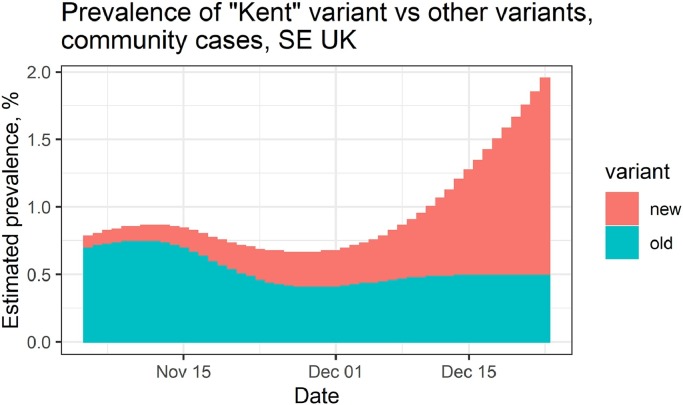
This retrospective observational study reports patient characteristics, interventions and outcomes in COVID-19 patients from a UK teaching hospital; cohort 1, pre 16th June-2020 (pre-dexamethasone); cohort 2, 17th June to 30th November-2020 (post-dexamethasone, pre-VOC 202,012/01 as dominant strain); cohort 3, 1st December-2020 to 3rd March-2021 (during establishment of VOC202012/01 as the dominant strain).
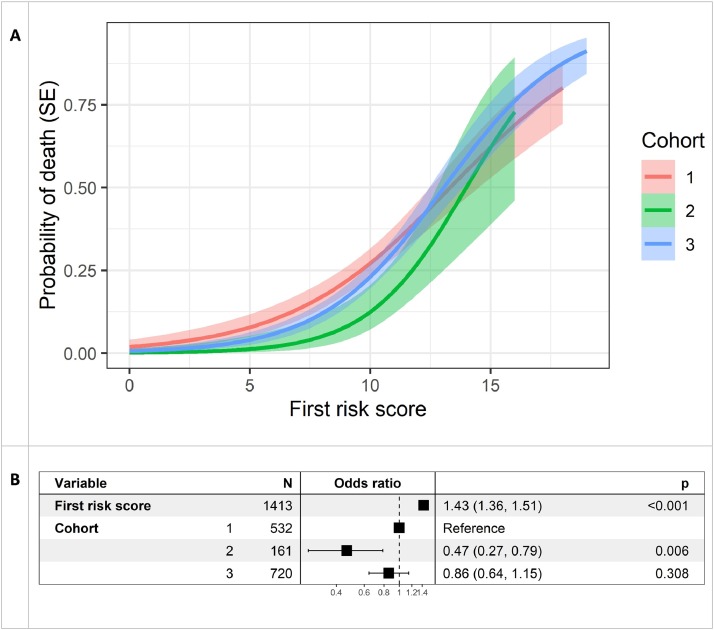
Dexamethasone treatment was more common in cohorts 2 and 3 (42.7% and 51.6%) compared with cohort 1 (2.5%). After adjusting for risk, odds of death within 28 days were 2-fold lower in cohort 2 vs 1 (OR:0.47,[0.27,0.79],p = 0.006). Mortality was higher cohort 3 vs 2 (20% vs 14%); but not significantly different to cohort 1 (OR: 0.86,[0.64, 1.15],p = 0.308).
The real world finding of lower mortality following dexamethasone supports the published trial evidence and highlights ongoing need for research with introduction of new treatments and ongoing concern over new COVID-19 variants.
地塞米松现已纳入新冠肺炎住院患者的标准治疗方案。然而,近期大规模重症监护病房研究未能显示出死亡率有明显改善。我们旨在通过一项英国医院研究调查这些因素对疾病结局的影响。
这项回顾性观察性研究报告了英国一家教学医院新冠肺炎患者的特征、干预措施和结局;队列1,2020年6月16日前(地塞米松使用前);队列2,2020年6月17日至11月30日(地塞米松使用后,VOC 202,012/01为主导毒株之前);队列3,2020年12月1日至2021年3月3日(VOC202012/01成为主导毒株期间)。
与队列1(2.5%)相比,地塞米松治疗在队列2和队列3中更为常见(分别为42.7%和51.6%)。在调整风险后,队列2患者28天内死亡几率较队列1降低了2倍(OR:0.47,[0.27,0.79],p = 0.006)。队列3的死亡率高于队列2(20%对14%);但与队列1相比无显著差异(OR:0.86,[0.64, 1.15],p = 0.308)。
地塞米松降低死亡率这一现实世界中的发现支持了已发表的试验证据,并凸显了随着新治疗方法的引入持续开展研究的必要性,以及对新冠病毒新变种的持续关注。