Evert Benjamin J, Chen Shuxiong, McConville Robyn, Steel Ryan W J, Healer Julie, Boddey Justin A, Huntimer Lucas, Rehm Bernd H A
Centre for Cell Factories and Biopolymers, Griffith Institute for Drug Discovery, Griffith University, Brisbane, QLD, Australia.
The Walter and Eliza Hall Institute of Medical Research, Parkville, VIC, Australia.
NPJ Vaccines. 2021 Nov 29;6(1):141. doi: 10.1038/s41541-021-00408-2.
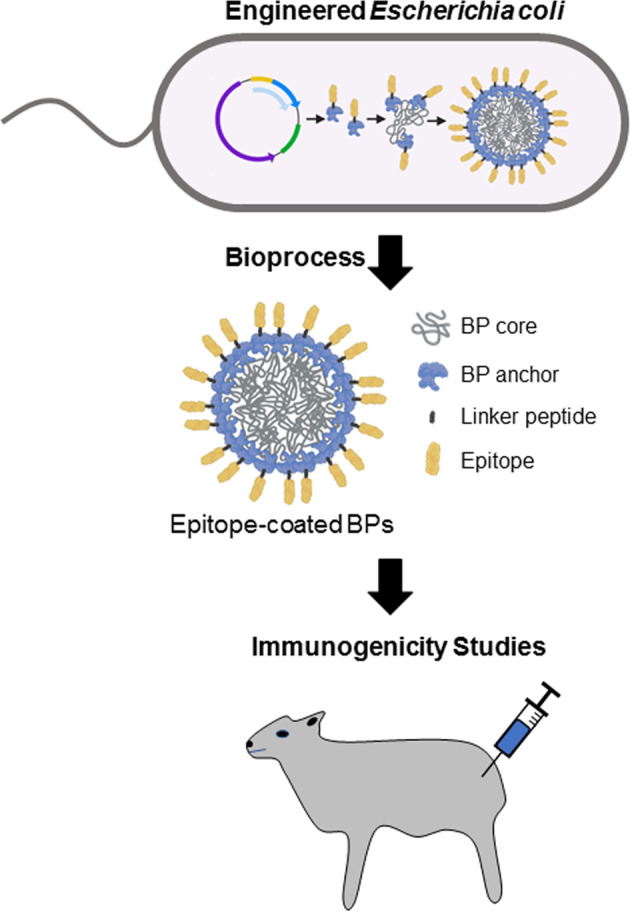
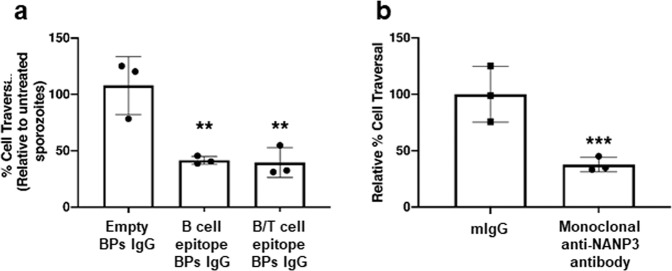
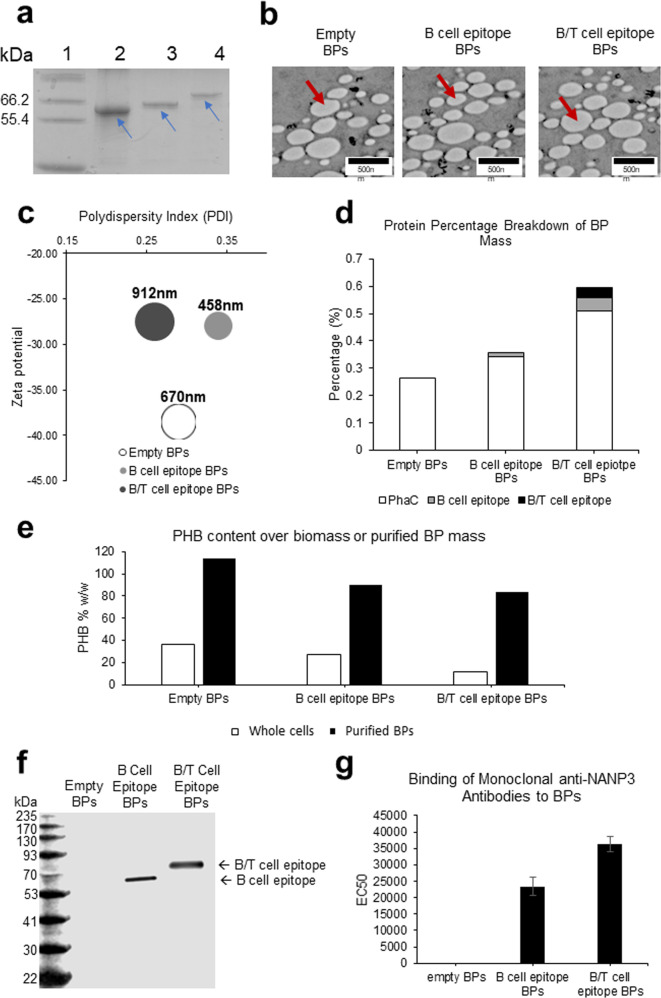
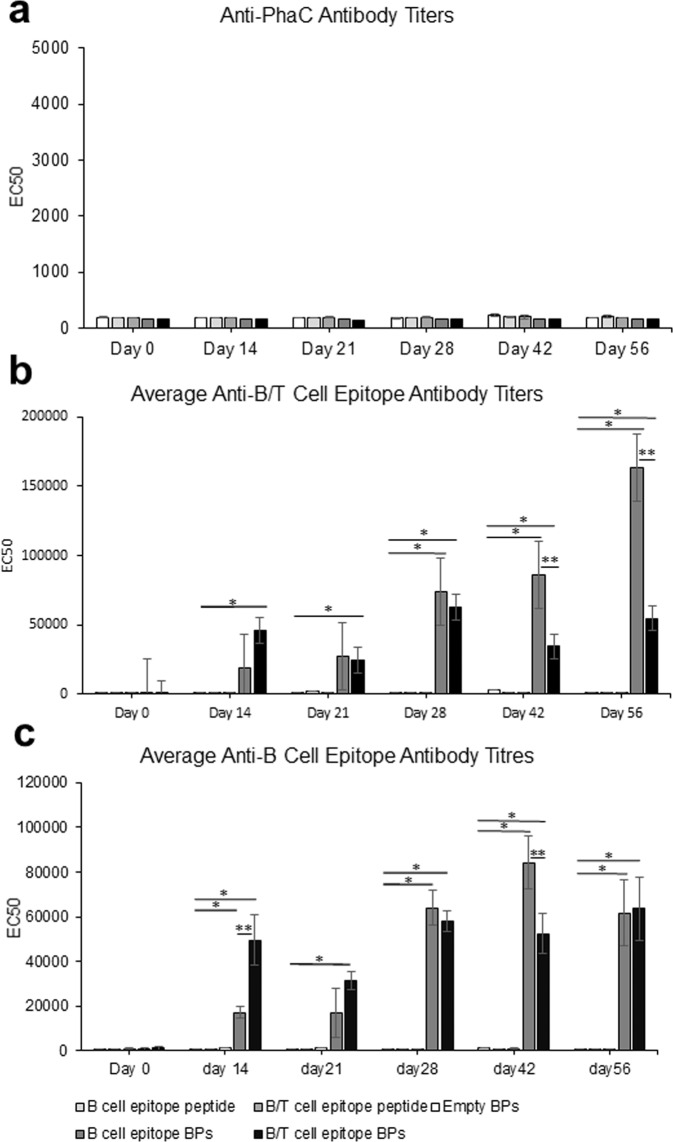
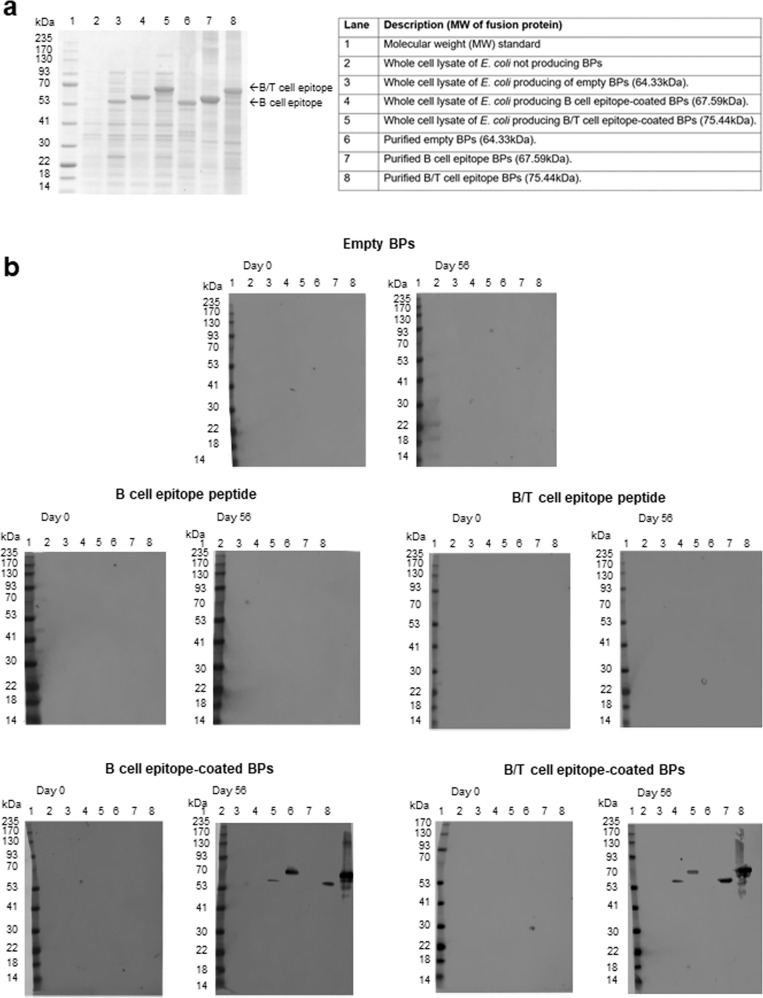
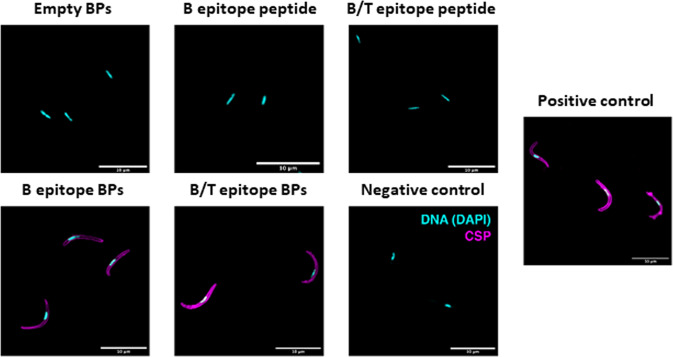
The current Malaria RTS,S vaccine is based on virus-like particles (VLPs) comprising the NANP repetitive epitopes from the cicumsporozoite protein (CSP) of Plasmodium falciparum. This vaccine has limited efficacy, only preventing severe disease in about 30% of vaccinated individuals. A more efficacious vaccine is urgently needed to combat malaria. Here we developed a particulate malaria vaccine based on the same CSP epitopes but using biopolymer particles (BPs) as an antigen carrier system. Specific B- and T-cell epitope-coated BPs were assembled in vivo inside an engineered endotoxin-free mutant of Escherichia coli. A high-yield production process leading to ~27% BP vaccine weight over biomass was established. The epitope-coated BPs were purified and their composition, i.e., the polymer core and epitope identity, was confirmed. Epitope-coated BPs were used alongside soluble peptide epitopes and empty BPs to vaccinate sheep. Epitope-coated BPs showed enhanced immunogenicity by inducing anti-NANP antibody titre of EC50 > 150,000 that were at least 20 times higher than induced by the soluble peptides. We concluded that the additional T-cell epitope was not required as it did not enhance immunogenicity when compared with the B-cell epitope-coated BPs. Antibodies specifically bound to the surface of Plasmodium falciparum sporozoites and efficiently inhibited sporozoite motility and traversal of human hepatocytes. This study demonstrated the utility of biologically self-assembled epitope-coated BPs as an epitope carrier for inclusion in next-generation malaria vaccines.
目前的疟疾RTS,S疫苗基于病毒样颗粒(VLP),其包含恶性疟原虫环子孢子蛋白(CSP)的NANP重复表位。这种疫苗的效力有限,仅能在约30%的接种个体中预防严重疾病。迫切需要一种更有效的疫苗来对抗疟疾。在此,我们开发了一种基于相同CSP表位的颗粒状疟疾疫苗,但使用生物聚合物颗粒(BP)作为抗原载体系统。在工程改造的无内毒素大肠杆菌突变体体内组装了特异性B细胞和T细胞表位包被的BP。建立了一种高产率生产工艺,使BP疫苗重量占生物量的比例达到约27%。对表位包被的BP进行了纯化,并确认了其组成,即聚合物核心和表位特性。将表位包被的BP与可溶性肽表位和空BP一起用于给绵羊接种疫苗。表位包被的BP通过诱导EC50>150,000的抗NANP抗体滴度显示出增强的免疫原性,该滴度比可溶性肽诱导的滴度至少高20倍。我们得出结论,额外的T细胞表位并非必需,因为与B细胞表位包被的BP相比,它并未增强免疫原性。抗体特异性结合到恶性疟原虫子孢子表面,并有效抑制子孢子的运动性和穿过人肝细胞的能力。这项研究证明了生物自组装的表位包被BP作为表位载体用于下一代疟疾疫苗的实用性。