Department of Immunology, University of Washington, Seattle, Washington, USA.
Immunol Rev. 2022 Mar;306(1):93-107. doi: 10.1111/imr.13046. Epub 2021 Nov 29.
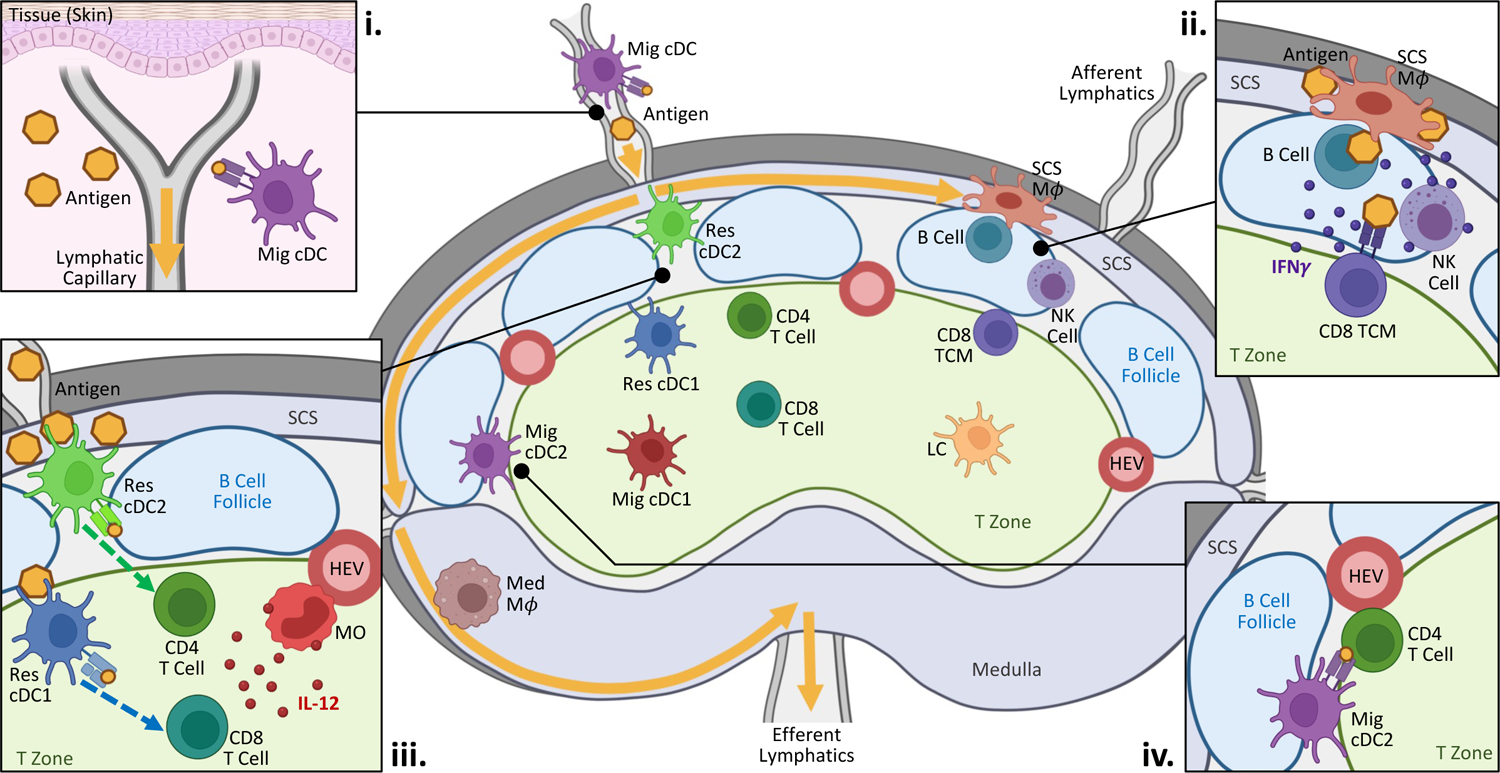
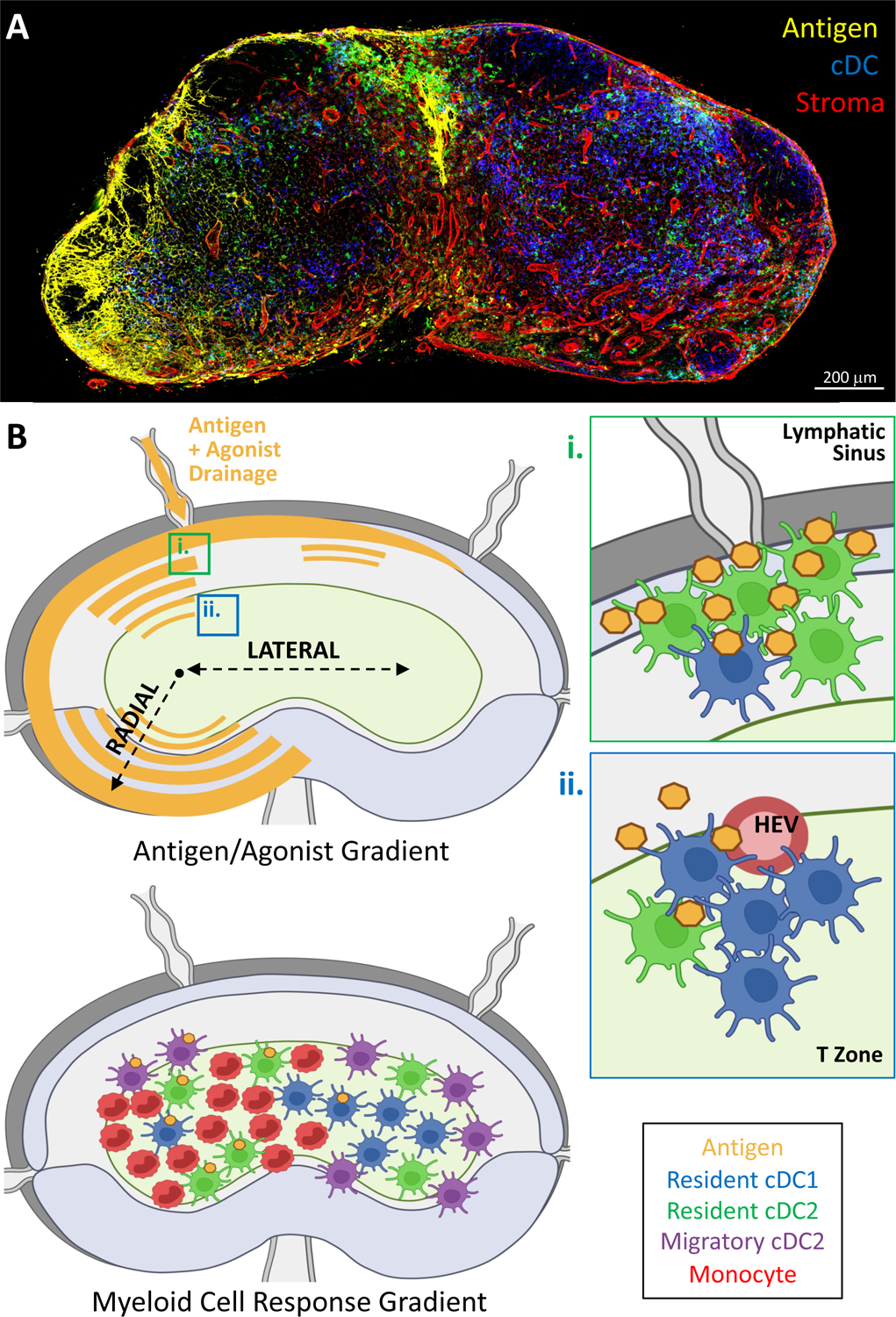
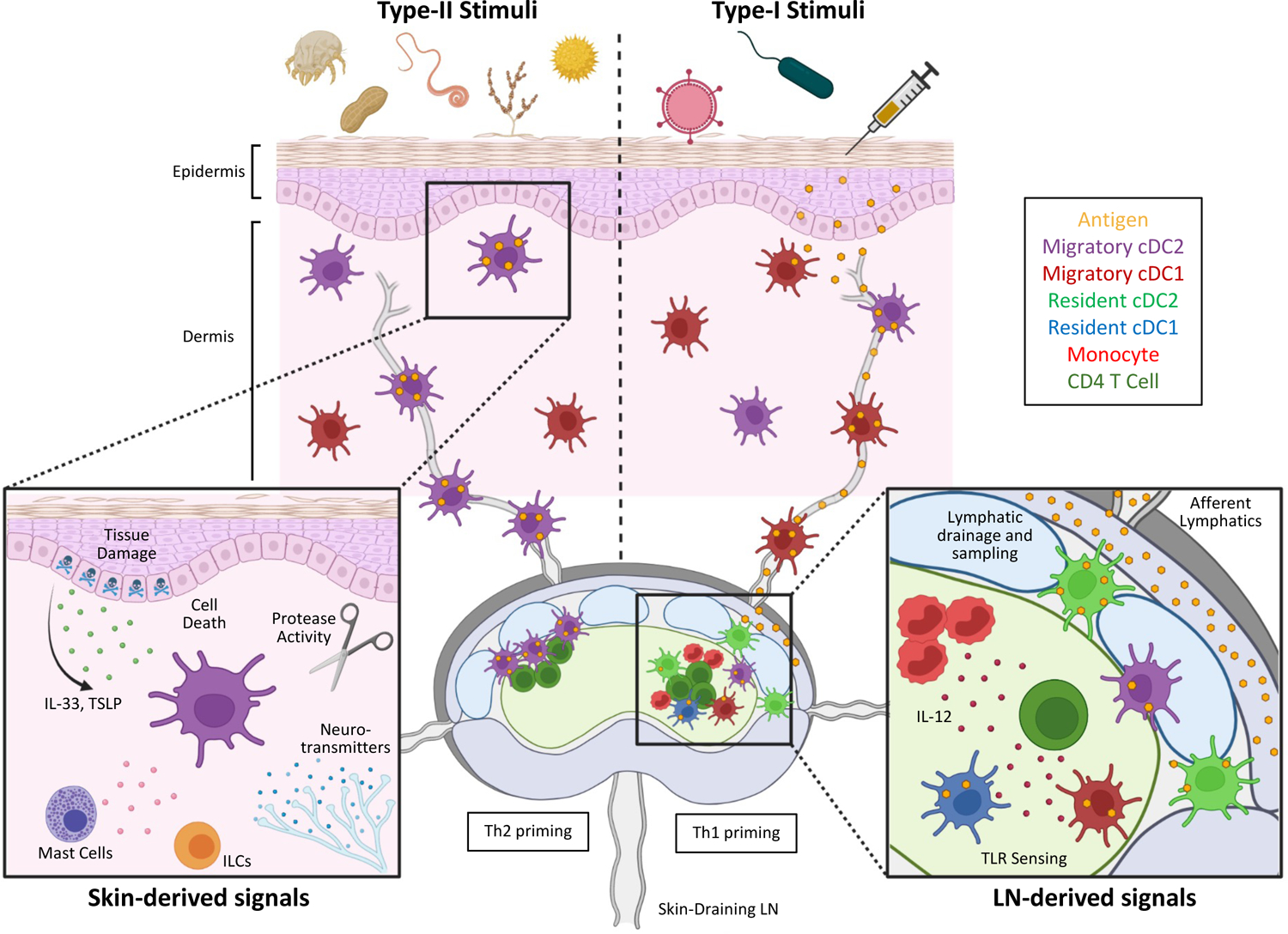
Immune responses must be rapid, tightly orchestrated, and tailored to the encountered stimulus. Lymphatic vessels facilitate this process by continuously collecting immunological information (ie, antigens, immune cells, and soluble mediators) about the current state of peripheral tissues, and transporting these via the lymph across the lymphatic system. Lymph nodes (LNs), which are critical meeting points for innate and adaptive immune cells, are strategically located along the lymphatic network to intercept this information. Within LNs, immune cells are spatially organized, allowing them to efficiently respond to information delivered by the lymph, and to either promote immune homeostasis or mount protective immune responses. These responses involve the activation and functional cooperation of multiple distinct cell types and are tailored to the specific inflammatory conditions. The natural patterns of lymph flow can also generate spatial gradients of antigens and agonists within draining LNs, which can in turn further regulate innate cell function and localization, as well as the downstream generation of adaptive immunity. In this review, we explore how information transmitted by the lymph shapes the spatiotemporal organization of innate and adaptive immune responses in LNs, with particular focus on steady state and Type-I vs. Type-II inflammation.
免疫反应必须迅速、协调一致,并针对所遇到的刺激进行调整。淋巴管通过不断收集有关外周组织当前状态的免疫学信息(即抗原、免疫细胞和可溶性介质),并通过淋巴将其运送到淋巴系统,从而促进了这一过程。淋巴结(LNs)是先天和适应性免疫细胞的关键交汇点,它们沿着淋巴网络战略性地定位,以拦截这些信息。在 LNs 中,免疫细胞在空间上进行组织,使它们能够有效地响应来自淋巴的信息,并促进免疫稳态或引发保护性免疫反应。这些反应涉及多种不同细胞类型的激活和功能合作,并针对特定的炎症情况进行了调整。淋巴的自然流动模式也可以在引流的 LNs 内产生抗原和激动剂的空间梯度,这反过来又可以进一步调节先天细胞的功能和定位,以及适应性免疫的下游产生。在这篇综述中,我们探讨了淋巴传递的信息如何塑造 LNs 中先天和适应性免疫反应的时空组织,特别关注稳态和 I 型与 II 型炎症。