Lekskul Apatsa, Thanomteeranant Supanat, Tangtammaruk Phantaraporn, Wuthisiri Wadakarn
Department of Ophthalmology, Ramathibodi Hospital, Mahidol University, Bangkok, Thailand.
Int Med Case Rep J. 2021 Nov 23;14:801-808. doi: 10.2147/IMCRJ.S334476. eCollection 2021.
To describe isolated sixth nerve palsy as an uncommon presentation of nasopharyngeal carcinoma (NPC).
We analyzed the demographics, clinical presentation, neuroimaging findings, and pathological examination results of the nasopharyngeal masses of patients diagnosed with isolated sixth nerve palsy due to NPC.
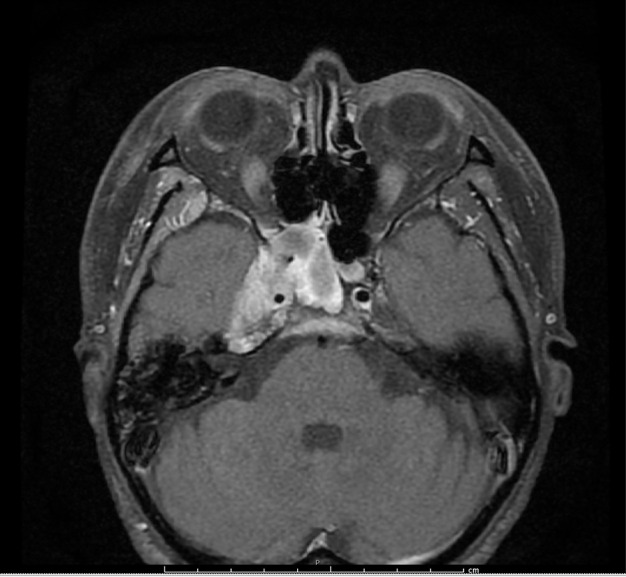
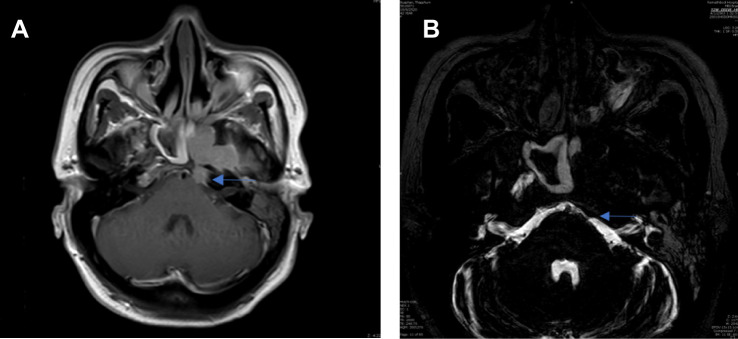
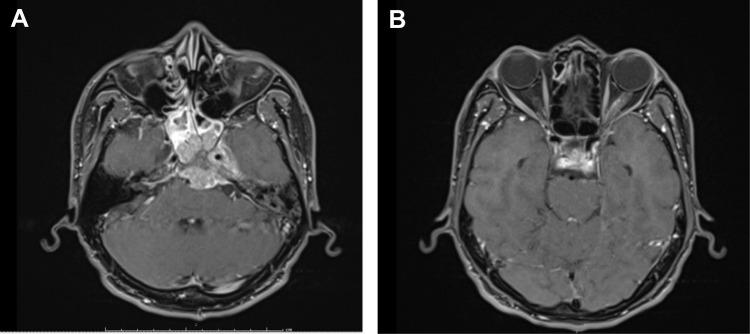
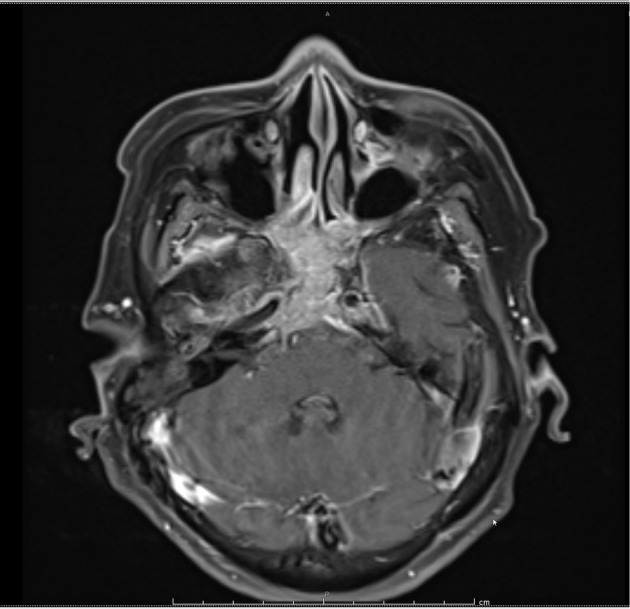
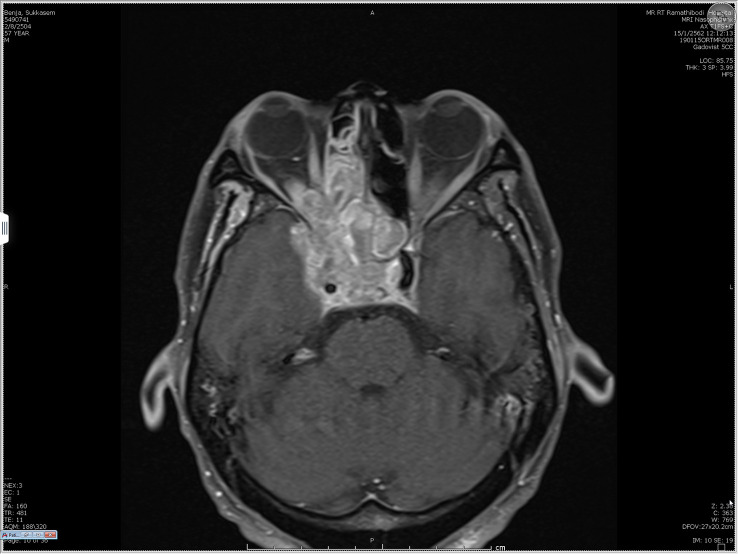
Isolated sixth nerve palsy as the first presenting sign of NPC was diagnosed in five patients. Two patients were aged <50 years and three were aged >50 years, and one of these three older patients had vascular risk factors. Most of the patients in our case study had an uncommon presentation of isolated sixth nerve palsy with diplopia, followed by typical NPC signs such as a neck lump (two patients), nasal obstruction (two patients), tinnitus (two patients), hearing loss (one patient), and epistaxis (one patient). Pathological examination revealed non-keratinizing NPC in all cases. Neuroimaging showed that the sites of tumor invasion were the clivus, Dorello's canal, and cavernous sinus, which explained the sixth nerve palsy. One patient whose NPC had progressed to the orbital apex later developed other cranial nerve palsies. Three patients underwent concurrent chemoradiotherapy (CCRT), and one patient underwent CCRT with adjuvant chemotherapy. The last patient was unfortunately lost to follow-up. The symptoms of four patients who underwent treatment improved.
Isolated sixth nerve palsy can be the first presentation of NPC, especially in patients aged <50 years old without microvascular risk factors or even in patients aged >50 years old with microvascular risk factors. This case study emphasizes that a thorough clinical history and careful physical and neuroimaging examinations might be necessary to rule out life-threatening conditions in patients with isolated sixth nerve palsy.
描述孤立性第六脑神经麻痹作为鼻咽癌(NPC)一种不常见的表现形式。
我们分析了因NPC导致孤立性第六脑神经麻痹而被诊断出的患者的人口统计学资料、临床表现、神经影像学检查结果以及鼻咽部肿块的病理检查结果。
5例患者被诊断为以孤立性第六脑神经麻痹为首发症状的NPC。2例患者年龄小于50岁,3例患者年龄大于50岁,其中3例老年患者中有1例存在血管危险因素。在我们的病例研究中,大多数患者表现为不常见的伴有复视的孤立性第六脑神经麻痹,其次是典型的NPC体征,如颈部肿块(2例患者)、鼻塞(2例患者)、耳鸣(2例患者)、听力丧失(1例患者)和鼻出血(1例患者)。病理检查在所有病例中均显示为非角化型NPC。神经影像学检查显示肿瘤侵犯部位为斜坡、Dorello管和海绵窦,这解释了第六脑神经麻痹的原因。1例NPC已进展至眶尖的患者后来出现了其他脑神经麻痹。3例患者接受了同步放化疗(CCRT),1例患者接受了CCRT联合辅助化疗。最后1例患者不幸失访。4例接受治疗的患者症状有所改善。
孤立性第六脑神经麻痹可能是NPC的首发表现,尤其是在年龄小于50岁且无微血管危险因素的患者中,甚至在年龄大于50岁且有微血管危险因素的患者中也可能出现。本病例研究强调,对于孤立性第六脑神经麻痹的患者,可能需要详细的临床病史、仔细的体格检查和神经影像学检查,以排除危及生命的疾病。