Center for non-coding RNA in Technology and Health, Department of Veterinary and Animal Sciences, University of Copenhagen, Thorvaldsensvej 57, 1871 Frederiksberg, Denmark.
Nucleic Acids Res. 2022 Feb 28;50(4):e20. doi: 10.1093/nar/gkab1131.
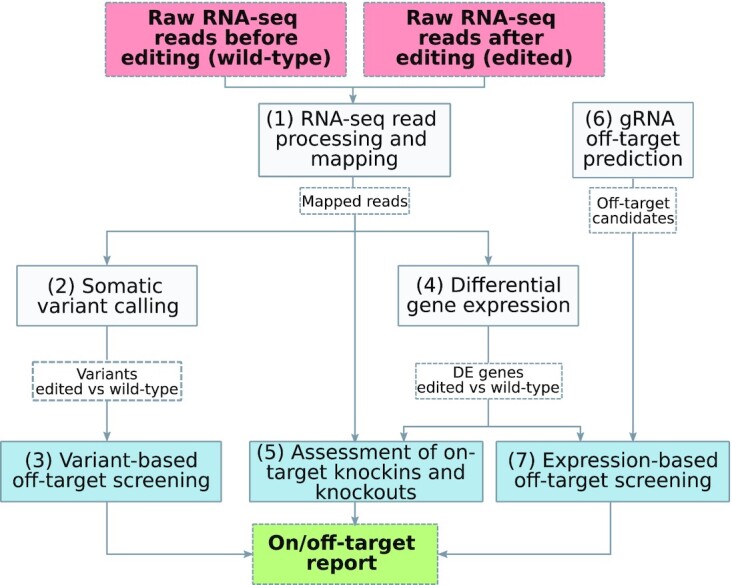
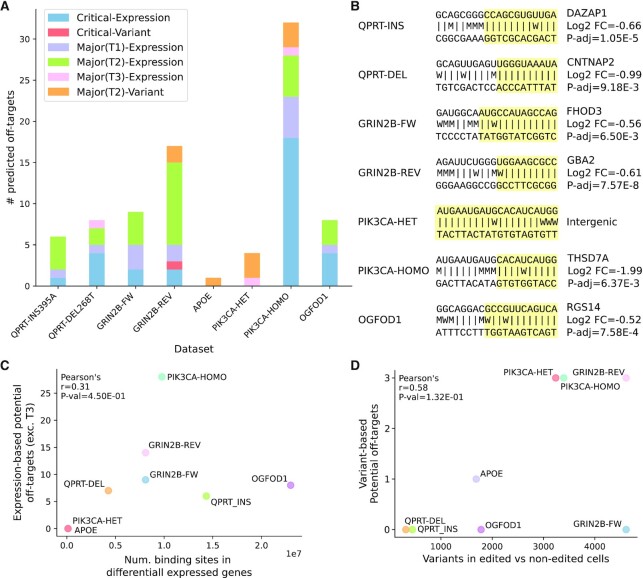
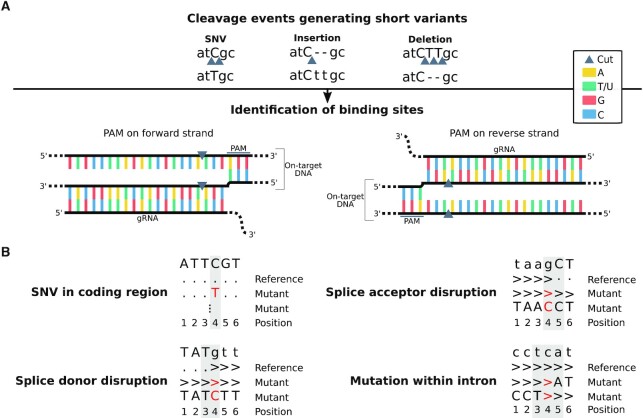
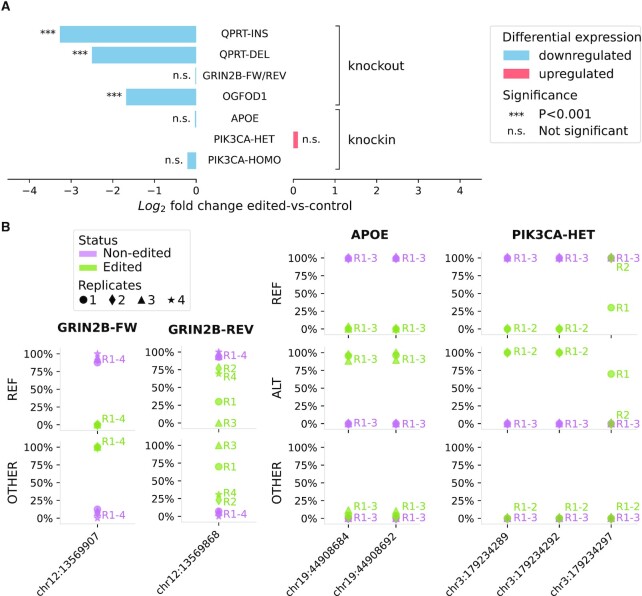
The CRISPR-Cas9 genome editing tool is used to study genomic variants and gene knockouts, and can be combined with transcriptomic analyses to measure the effects of such alterations on gene expression. But how can one be sure that differential gene expression is due to a successful intended edit and not to an off-target event, without performing an often resource-demanding genome-wide sequencing of the edited cell or strain? To address this question we developed CRISPRroots: CRISPR-Cas9-mediated edits with accompanying RNA-seq data assessed for on-target and off-target sites. Our method combines Cas9 and guide RNA binding properties, gene expression changes, and sequence variants between edited and non-edited cells to discover potential off-targets. Applied on seven public datasets, CRISPRroots identified critical off-target candidates that were overlooked in all of the corresponding previous studies. CRISPRroots is available via https://rth.dk/resources/crispr.
CRISPR-Cas9 基因组编辑工具用于研究基因组变体和基因敲除,并且可以与转录组分析相结合,以测量这些改变对基因表达的影响。但是,如果不进行编辑细胞或菌株的全基因组测序(通常需要大量资源),如何确定差异基因表达是由于成功的预期编辑引起的,而不是由于脱靶事件引起的?为了解决这个问题,我们开发了 CRISPRroots:具有伴随 RNA-seq 数据的 CRISPR-Cas9 介导编辑,用于评估靶和脱靶位点。我们的方法结合了 Cas9 和向导 RNA 结合特性、基因表达变化以及编辑和未编辑细胞之间的序列变体,以发现潜在的脱靶位点。在七个公共数据集上应用 CRISPRroots 后,发现了之前所有对应研究都忽略的关键脱靶候选者。CRISPRroots 可通过 https://rth.dk/resources/crispr 使用。