Department of Learning, Informatics, Management and Ethics, Karolinska Institutet, 171 77, Stockholm, Sweden.
The Swedish Institute for Health Economics, Lund, Sweden.
Eur J Health Econ. 2022 Aug;23(6):1059-1070. doi: 10.1007/s10198-021-01409-7. Epub 2021 Dec 2.
In 2015, the Swedish government in an unprecedented move decided to allocate 150 million € to provide funding for new drugs for hepatitis C. This was triggered by the introduction of the first second generation of direct-acting antivirals (DAAs) promising higher cure rates and reduced side effects. The drugs were cost-effective but had a prohibitive budget impact. Subsequently, additional products have entered the market leading to reduction in prices and expansions of the eligible patient base.
We estimated the social surplus generated by the new DAAs in Stockholm, Sweden, for the years 2014-2019. The actual use and cost of the drugs was based on registry data. Effects on future health care costs, indirect costs and QALY gains were estimated using a Markov model based primarily on Swedish data and using previous generations of interferon-based therapies as the counterfactual.
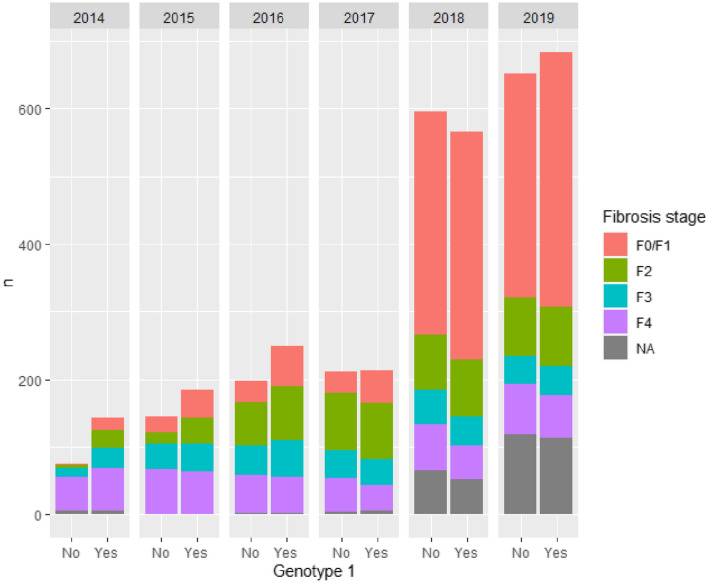
A considerable social surplus was generated, 15% of which was appropriated by the producers whose share fell rapidly over time as prices fell. Most of the consumer surplus was generated by QALY gains, although 10% was from reduced indirect costs. QALY gains increased less rapidly than the number of treated patients as the eligibility criteria was loosened.
The transfer of funds from the government to the regions helped generate substantial surplus for both consumers and producers with indirect costs playing an important role. The funding model may serve as a model for the financing of innovative treatments in the future.
2015 年,瑞典政府采取了一项前所未有的举措,决定拨款 1.5 亿欧元,为新的丙型肝炎药物提供资金。这是由于第一代直接作用抗病毒药物(DAAs)的推出,这些药物具有更高的治愈率和更低的副作用。这些药物具有成本效益,但对预算有很大的影响。随后,更多的产品进入市场,导致价格下降和合格患者群体扩大。
我们估计了瑞典斯德哥尔摩地区 2014 年至 2019 年新 DAA 产生的社会盈余。药物的实际使用和成本基于登记数据。使用基于马尔可夫模型的主要基于瑞典数据和以前的干扰素为对照的疗法来估计对未来医疗保健成本、间接成本和 QALY 收益的影响。
产生了相当大的社会盈余,其中 15%被生产者占有,随着价格的下降,生产者的份额迅速下降。大部分消费者盈余来自 QALY 收益,尽管 10%来自间接成本的降低。随着资格标准放宽,QALY 收益的增长速度低于治疗患者的数量。
政府向地区转移资金,为消费者和生产者带来了大量的盈余,间接成本起着重要作用。该融资模式可作为未来创新治疗融资的模式。