Berdud Mikel, Ferraro Jimena, Towse Adrian
Office of Health Economics (OHE), London, United Kingdom.
Economics Department, University of Buenos Aires, Buenos Aires, Argentina.
Front Health Serv. 2023 Aug 24;3:1055471. doi: 10.3389/frhs.2023.1055471. eCollection 2023.
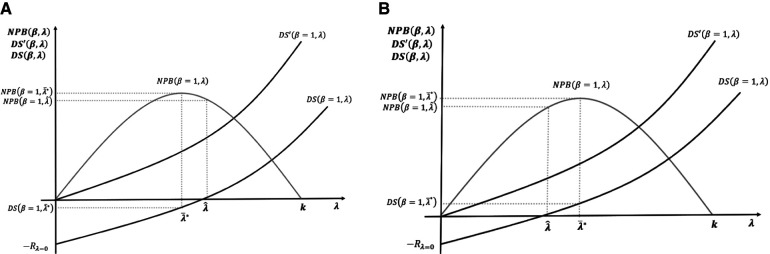
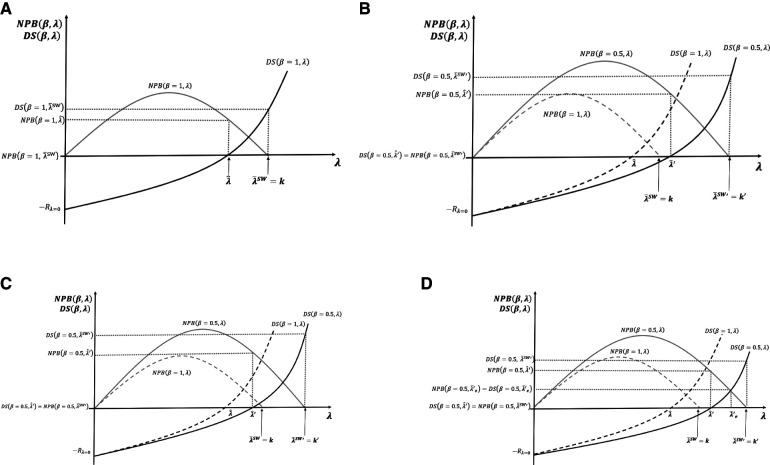
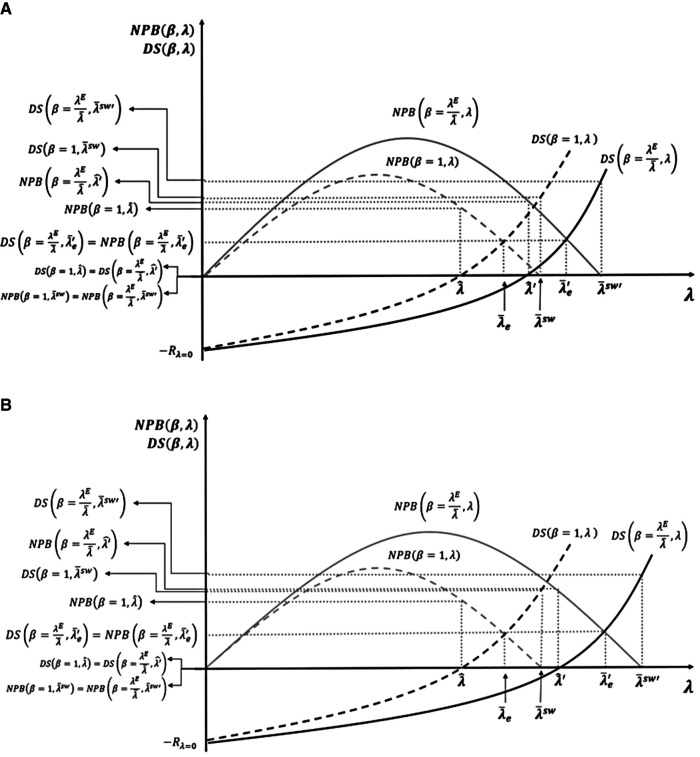
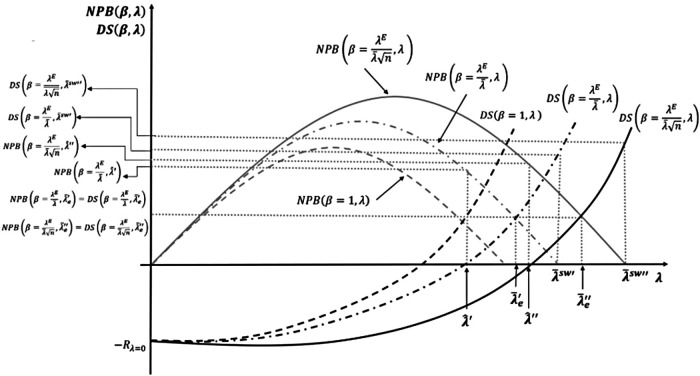
In many health systems around the world, decisions about the reimbursement of-and patient access to-new medicines are based on health technology assessments (HTA) which, in some countries, include the calculation of an incremental cost-effectiveness ratio (ICER). Decision-makers compare the ICER against a pre-specified value for money criterion, known as the cost-effectiveness threshold (CET), to decide in favour of or against reimbursement. We developed a general model of pharmaceutical markets to analyse the relationship between the CET value and the distribution of the health and economic value of new medicines between consumers (payers) and producers (life science industry developers). We added to the existing literature in three ways: including research and development (R&D) cost for developers as a sunk cost; incorporating bargaining using the Nash bargaining solution to model payer bargaining power from regulation and use of competition; and analysing the impact of a non-uniform distribution of developers R&D costs on the supply of innovation. In some circumstances of bargaining power distribution and R&D cost, we found that using a CET value in HTA decision-making higher than the supply-side CET is socially efficient. Decision-makers should consider adjustable levels of the CET or interpretation of ICERs higher than the CET according to the bargaining power effect. The findings of this research pointed to the need for more research on the impact of bargaining power, how R&D investment responds to rewards, i.e. the elasticity of innovation, and pre- and post-patent expiry modelling.
在全球许多卫生系统中,关于新药报销及患者获取的决策是基于卫生技术评估(HTA)做出的,在一些国家,卫生技术评估包括增量成本效益比(ICER)的计算。决策者将ICER与预先设定的性价比标准(即成本效益阈值,CET)进行比较,以决定是否支持报销。我们开发了一个药品市场通用模型,来分析CET值与新药在消费者(付款方)和生产者(生命科学产业开发者)之间的健康和经济价值分配之间的关系。我们在现有文献基础上做了三点补充:将开发者的研发(R&D)成本作为沉没成本纳入;采用纳什议价解进行讨价还价,以模拟监管和竞争使用所赋予付款方的议价能力;分析开发者研发成本分布不均对创新供给的影响。在某些议价能力分布和研发成本的情况下,我们发现,在卫生技术评估决策中使用高于供给侧CET的CET值具有社会效率。决策者应根据议价能力效应,考虑CET的可调整水平或对高于CET的ICER的解读。本研究结果表明,有必要就议价能力的影响、研发投资如何对回报做出反应(即创新弹性)以及专利到期前后的模型进行更多研究。