
基因调控网络分析定义了人脐静脉内皮细胞在复制性衰老过程中通过可变剪接的转录组景观。
Gene regulatory network analysis defines transcriptome landscape with alternative splicing of human umbilical vein endothelial cells during replicative senescence.
机构信息
Research, Takeda Pharmaceutical Company Limited, 26-1, Muraoka-Higashi 2-chome, Fujisawa, Kanagawa, Japan.
Present address: Discovery Technology Research Laboratories, Tsukuba Research Institute, Ono Pharmaceutical Co., Ltd, 17-2 Wadai, 300-4247, Tsukuba, Ibaraki, Japan.
出版信息
BMC Genomics. 2021 Dec 2;22(1):869. doi: 10.1186/s12864-021-08185-x.
BACKGROUND
Endothelial cell senescence is the state of permanent cell cycle arrest and plays a critical role in the pathogenesis of age-related diseases. However, a comprehensive understanding of the gene regulatory network, including genome-wide alternative splicing machinery, involved in endothelial cell senescence is lacking.
RESULTS
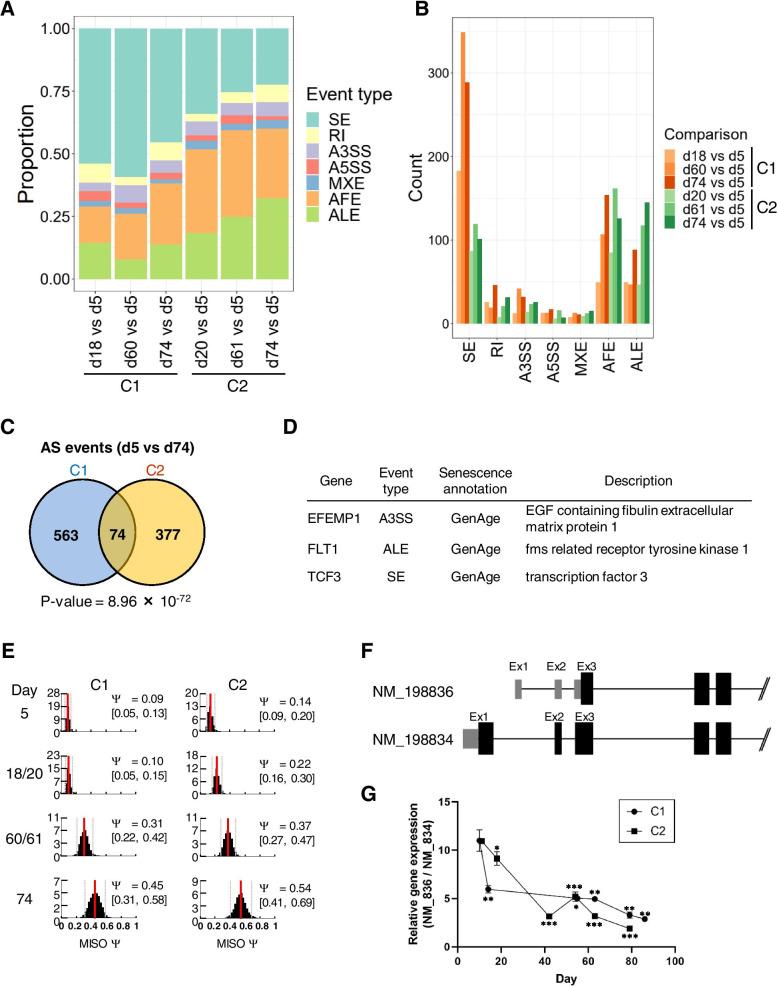
We thoroughly described the transcriptome landscape of replicative senescent human umbilical vein endothelial cells. Genes with high connectivity showing a monotonic expression increase or decrease with the culture period were defined as hub genes in the co-expression network. Computational network analysis of these genes led to the identification of canonical and non-canonical senescence pathways, such as E2F and SIRT2 signaling, which were down-regulated in lipid metabolism, and chromosome organization processes pathways. Additionally, we showed that endothelial cell senescence involves alternative splicing. Importantly, the first and last exon types of splicing, as observed in FLT1 and ACACA, were preferentially altered among the alternatively spliced genes during endothelial senescence. We further identified novel microexons in PRUNE2 and PSAP, each containing 9 nt, which were altered within the specific domain during endothelial senescence.
CONCLUSIONS
These findings unveil the comprehensive transcriptome pathway and novel signaling regulated by RNA processing, including gene expression and splicing, in replicative endothelial senescence.
背景
内皮细胞衰老(Endothelial cell senescence)是一种永久性细胞周期停滞的状态,在与年龄相关的疾病发病机制中起着关键作用。然而,对于参与内皮细胞衰老的基因调控网络,包括全基因组的可变剪接机制,人们的了解还不够全面。
结果
我们详细描述了复制性衰老的人脐静脉内皮细胞的转录组图谱。具有高连通性的基因,其表达随着培养时间呈单调增加或减少,被定义为共表达网络中的枢纽基因。对这些基因的计算网络分析导致了经典和非经典的衰老途径的识别,如 E2F 和 SIRT2 信号通路,它们在脂质代谢和染色体组织过程途径中被下调。此外,我们表明内皮细胞衰老涉及可变剪接。重要的是,在 FLT1 和 ACACA 中观察到的第一和最后外显子类型的剪接,在内皮细胞衰老过程中,在可变剪接基因中优先发生改变。我们进一步鉴定了 PRUNE2 和 PSAP 中的新型微外显子,每个都包含 9 个核苷酸,它们在内皮细胞衰老过程中在特定结构域内发生改变。
结论
这些发现揭示了复制性内皮细胞衰老中受 RNA 加工(包括基因表达和剪接)调控的全面转录组途径和新信号。



 Zotero 插件