Abraham Susanna Aba, Berchie Gifty Osei, Doe Patience Fakornam, Agyare Elizabeth, Addo Stephen Ayisi, Obiri-Yeboah Dorcas
Department of Adult Health, School of Nursing and Midwifery, College of Health and Allied Sciences, University of Cape Coast, Cape Coast, Ghana.
Maternal and Child Health Department, School of Nursing and Midwifery, University of Cape Coast, Cape Coast, Ghana.
BMC Health Serv Res. 2021 Dec 2;21(1):1295. doi: 10.1186/s12913-021-07330-2.
Ghana has a generalized HIV epidemic and efforts have been made to curb the spread and reverse its effects on the general population. In the wake of COVID-19 pandemic, the health system was unsettled and antiretroviral therapy (ART) care has been impacted in diverse ways. The study sought to explore the effects of COVID-19 on ART service provision in Ghana from the perspectives of the healthcare workers.
An exploratory-descriptive qualitative approach was employed in this study. Using maximum variation sampling method, fifteen healthcare workers; nurses, data managers and pharmacists were recruited from an ART clinic in a Teaching Hospital in Ghana. In-depth interviews were conducted and analysed using Braun and Clarke thematic approach.
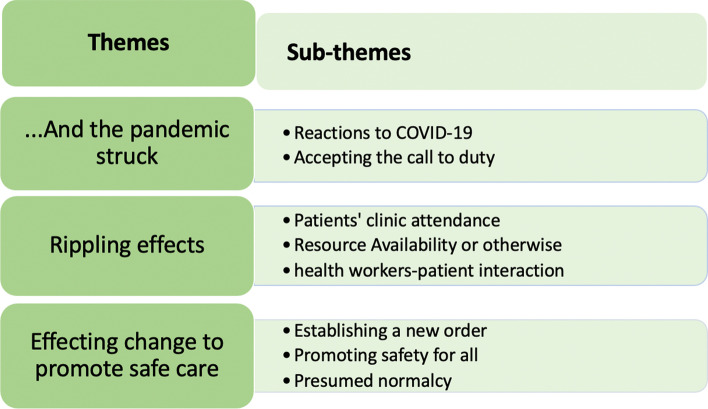
Three themes emerged from the data; "… And the pandemic struck", "Impact of the pandemic on ART service delivery"; "Effecting the needed change". The healthcare workers' initial reactions to the pandemic and their show of commitment in ensuring continued ART service was evident. COVID-19 impacted service delivery in three main ways; (1) clients' clinic attendance was erratic at various stages of the pandemic, (2) irregular resource availability as shortage was reported due to affected last mile delivery as a result of the lockdown in Accra, and (3) the health worker-patient interaction became less engaging because of established COVID-19 protocols. The healthcare workers however instituted strategies such as adjusting the patient appointment schedule, health professionals' work schedule, establishing several work stations, task-shifting, and ensuring the implementation of all the COVID-19 protocols within the ART unit to ensure consistent service delivery as well as patient and staff safety. The study also found a decline in the implementation of several strategies established in the ART clinic during the initial phases of the pandemic such as a decline in the supply of Personal Protective Equipment (PPEs) by hospital management.
Although several strategies were implemented to manage the effects of the pandemic on ART care, there is a need to establish pathways of support for healthcare workers within the ART clinic and to consolidate as well as institutionalise the changes that ensured continuous but safe service delivery.
加纳的艾滋病疫情呈广泛流行态势,该国已努力遏制其传播并扭转其对普通人群的影响。在新冠疫情之后,卫生系统受到冲击,抗逆转录病毒疗法(ART)护理也受到了多方面的影响。本研究旨在从医护人员的角度探讨新冠疫情对加纳抗逆转录病毒疗法服务提供的影响。
本研究采用探索性描述性定性研究方法。使用最大差异抽样法,从加纳一家教学医院的抗逆转录病毒疗法诊所招募了15名医护人员,包括护士、数据管理人员和药剂师。进行了深入访谈,并采用布劳恩和克拉克主题分析法进行分析。
数据中出现了三个主题:“……疫情来袭”、“疫情对抗逆转录病毒疗法服务提供的影响”、“促成所需变革”。医护人员对疫情的最初反应以及他们在确保抗逆转录病毒疗法服务持续提供方面所表现出的奉献精神显而易见。新冠疫情在三个主要方面影响了服务提供:(1)在疫情的不同阶段,患者的门诊就诊情况不稳定;(2)资源供应不规律,由于阿克拉实施封锁影响了最后一公里的配送,报告出现了短缺;(3)由于既定的新冠疫情防控规程,医护人员与患者之间的互动变得不那么密切。然而,医护人员制定了一些策略,如调整患者预约时间表、卫生专业人员的工作时间表、设立多个工作站、任务转移,并确保在抗逆转录病毒疗法科室实施所有新冠疫情防控规程,以确保服务持续提供以及患者和工作人员的安全。研究还发现,在疫情初期,抗逆转录病毒疗法诊所制定的一些策略的实施出现了下降,例如医院管理层提供的个人防护装备(PPE)供应减少。
尽管实施了多项策略来应对疫情对抗逆转录病毒疗法护理的影响,但仍有必要为抗逆转录病毒疗法诊所内的医护人员建立支持途径,并巩固以及将确保持续但安全的服务提供的变革制度化。