Chippaux Jean-Philippe
Paris Cité University, Research Institute for Development, Mother and child in tropical environment: pathogens, health system and epidemiological transition, Paris, France.
J Venom Anim Toxins Incl Trop Dis. 2023 Jul 3;29:e20230002. doi: 10.1590/1678-9199-JVATITD-2023-0002. eCollection 2023.
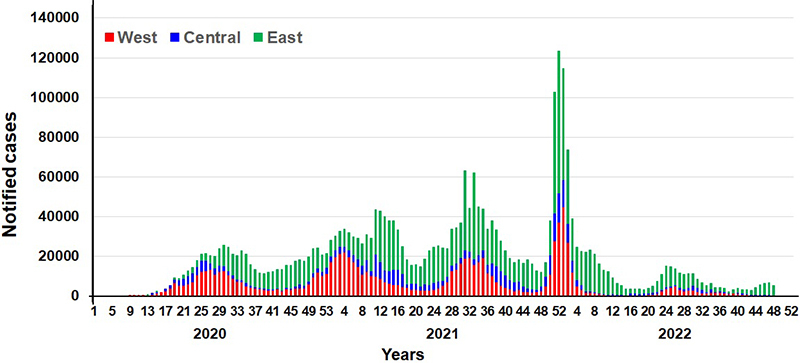
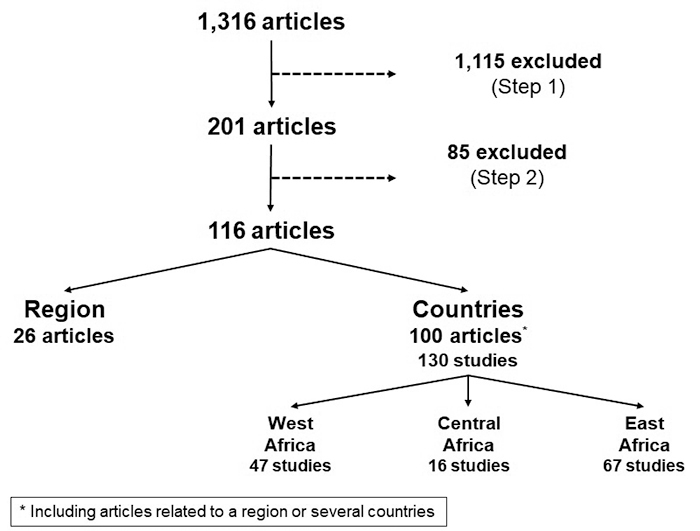
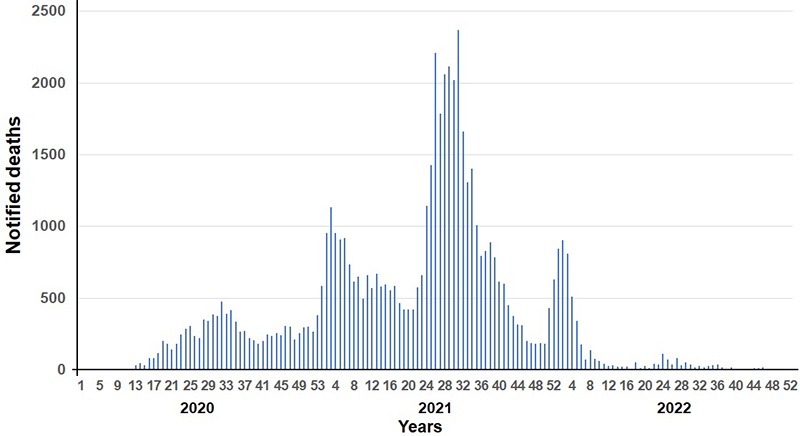
This overview aimed to describe the situation of healthcare access in sub-Saharan Africa, excluding South Africa, during the COVID-19 pandemic. A PubMed search from March 31, 2020, to August 15, 2022, selected 116 articles. Healthcare access and consequences of COVID-19 were assessed based on comparisons with months before its onset or an identical season in previous years. A general reduction of healthcare delivery, associated with the decline of care quality, and closure of many specialty services were reported. The impact was heterogeneous in space and time, with an increase in urban areas at the beginning of the pandemic (March-June 2020). The return to normalcy was gradual from the 3 quarter of 2020 until the end of 2021. The impact of COVID-19 on the health system and its use was attributed to (a) conjunctural factors resulting from government actions to mitigate the spread of the epidemic (containment, transportation restrictions, closures of businesses, and places of entertainment or worship); (b) structural factors related to the disruption of public and private facilities and institutions, in particular, the health system; and (c) individual factors linked to the increase in costs, impoverishment of the population, and fear of contamination or stigmatization, which discouraged patients from going to health centers. They have caused considerable socio-economic damage. Several studies emphasized some adaptability of the healthcare offer and resilience of the healthcare system, despite its unpreparedness, which explained a return to normal activities as early as 2022 while the COVID-19 epidemic persisted. There appears to be a strong disproportion between the moderate incidence and severity of COVID-19 in sub-Saharan Africa, and the dramatic impact on healthcare access. Several articles make recommendations for lowering the socioeconomic consequences of future epidemics to ensure better management of health issues.
本概述旨在描述2019冠状病毒病疫情期间撒哈拉以南非洲(不包括南非)的医疗服务可及情况。通过在PubMed上检索2020年3月31日至2022年8月15日期间的文献,筛选出116篇文章。基于与疫情暴发前几个月或前几年同一季节的比较,评估了医疗服务可及情况以及2019冠状病毒病的影响。据报告,医疗服务普遍减少,护理质量下降,许多专科服务关闭。这种影响在空间和时间上存在异质性,在疫情初期(2020年3月至6月)城市地区的影响有所增加。从2020年第三季度到2021年底,情况逐渐恢复正常。2019冠状病毒病对卫生系统及其使用的影响归因于:(a) 政府为减轻疫情传播采取行动(封锁、交通限制、企业及娱乐或宗教场所关闭)导致的偶发因素;(b) 与公共和私人设施及机构,特别是卫生系统中断相关的结构性因素;(c) 与成本增加、人口贫困以及对感染或污名化的恐惧相关的个体因素,这些因素使患者不愿前往医疗中心。它们造成了相当大的社会经济损害。几项研究强调,尽管卫生系统没有做好准备,但医疗服务仍具有一定的适应性和恢复力,这解释了为何在2019冠状病毒病疫情持续的情况下,早在2022年就恢复了正常活动。在撒哈拉以南非洲,2019冠状病毒病的发病率和严重程度适中,但对医疗服务可及性产生了巨大影响,两者之间似乎存在严重失衡。几篇文章就降低未来疫情的社会经济后果提出了建议,以确保更好地管理卫生问题。