Chair of Experimental Bioinformatics, TUM School of Life Sciences, Technical University of Munich, 85354, Freising, Germany.
Institute for Computational Systems Biology, University of Hamburg, Notkestrasse 9, 22607, Hamburg, Germany.
Genome Biol. 2021 Dec 2;22(1):327. doi: 10.1186/s13059-021-02538-1.
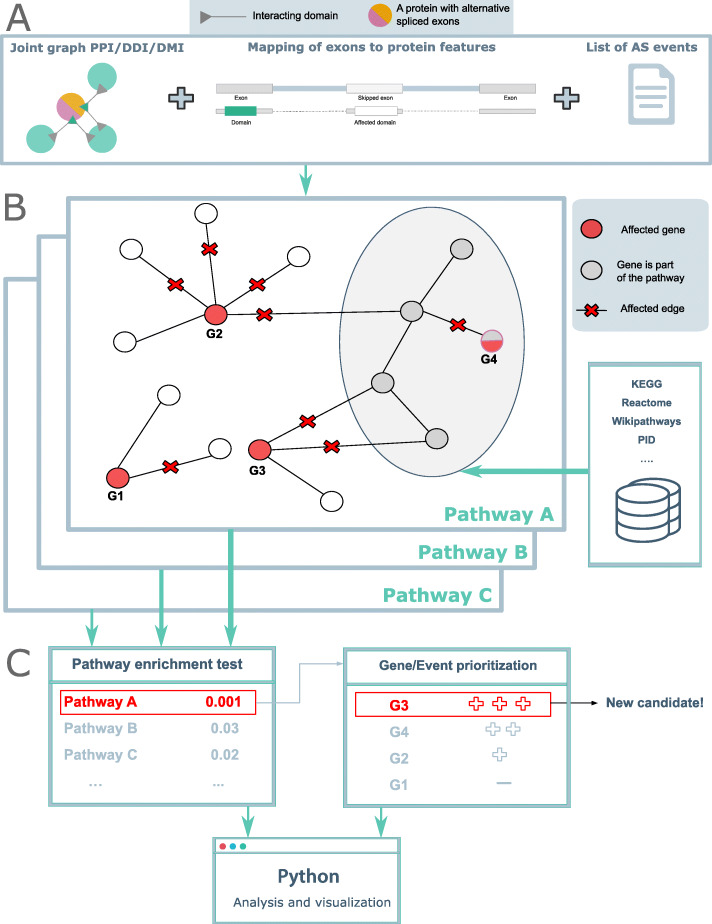
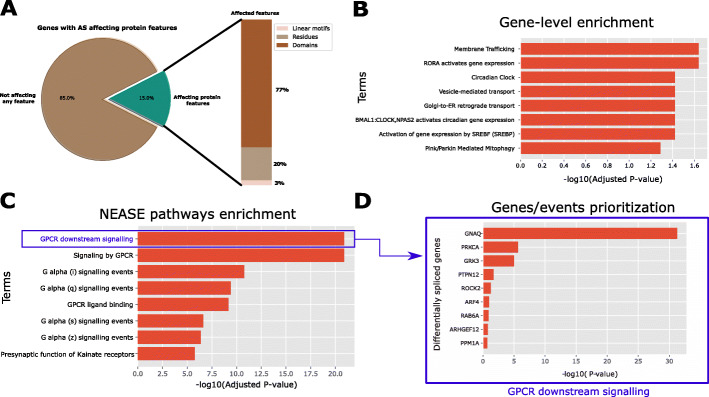
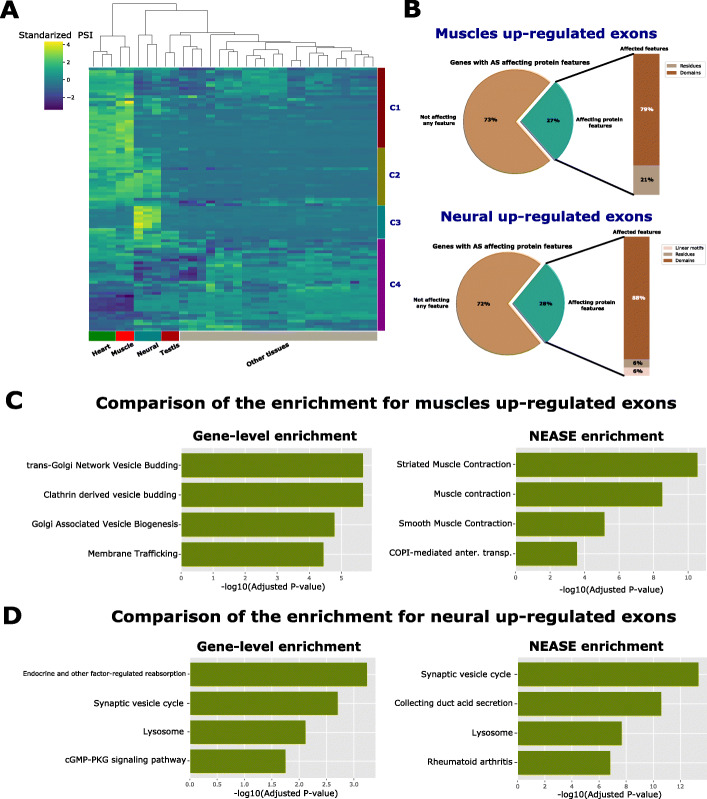
Alternative splicing (AS) is an important aspect of gene regulation. Nevertheless, its role in molecular processes and pathobiology is far from understood. A roadblock is that tools for the functional analysis of AS-set events are lacking. To mitigate this, we developed NEASE, a tool integrating pathways with structural annotations of protein-protein interactions to functionally characterize AS events. We show in four application cases how NEASE can identify pathways contributing to tissue identity and cell type development, and how it highlights splicing-related biomarkers. With a unique view on AS, NEASE generates unique and meaningful biological insights complementary to classical pathways analysis.
可变剪接(AS)是基因调控的一个重要方面。然而,其在分子过程和病理生物学中的作用还远未被理解。一个障碍是缺乏用于 AS 事件功能分析的工具。为了解决这个问题,我们开发了 NEASE,这是一种将途径与蛋白质-蛋白质相互作用的结构注释集成在一起的工具,用于对 AS 事件进行功能特征分析。我们在四个应用案例中展示了 NEASE 如何识别有助于组织特征和细胞类型发育的途径,以及它如何突出与剪接相关的生物标志物。通过对 AS 的独特观察,NEASE 生成了独特而有意义的生物学见解,补充了经典途径分析。