Sammour Yasser, Spertus John A, Austin Bethany A, Magalski Anthony, Gupta Sanjaya K, Shatla Islam, Dean Evelyn, Kennedy Kevin F, Jones Philip G, Nassif Michael E, Main Michael L, Sperry Brett W
Saint Luke's Mid America Heart Institute and the University of Missouri-Kansas City, Kansas City, Missouri, USA.
Saint Luke's Mid America Heart Institute and the University of Missouri-Kansas City, Kansas City, Missouri, USA.
JACC Heart Fail. 2021 Dec;9(12):916-924. doi: 10.1016/j.jchf.2021.07.003. Epub 2021 Oct 6.
This study sought to determine whether the increased use of telehealth was associated with a difference in outcomes for outpatients with heart failure.
The COVID-19 pandemic led to dramatic changes in the delivery of outpatient care. It is unclear whether increased use of telehealth affected outcomes for outpatients with heart failure.
In March 2020, a large Midwestern health care system, encompassing 16 cardiology clinics, 16 emergency departments, and 12 hospitals, initiated a telehealth-based model for outpatient care in the setting of the COVID-19 pandemic. A propensity-matched analysis was performed to compare outcomes between outpatients seen in-person in 2018 and 2019 and via telemedicine in 2020.
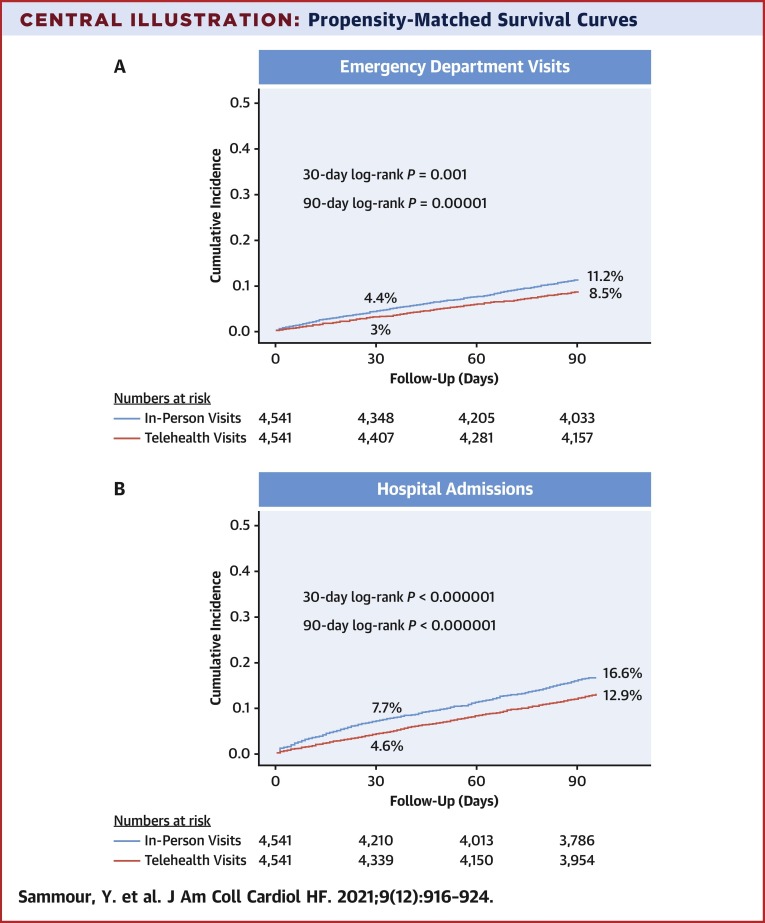
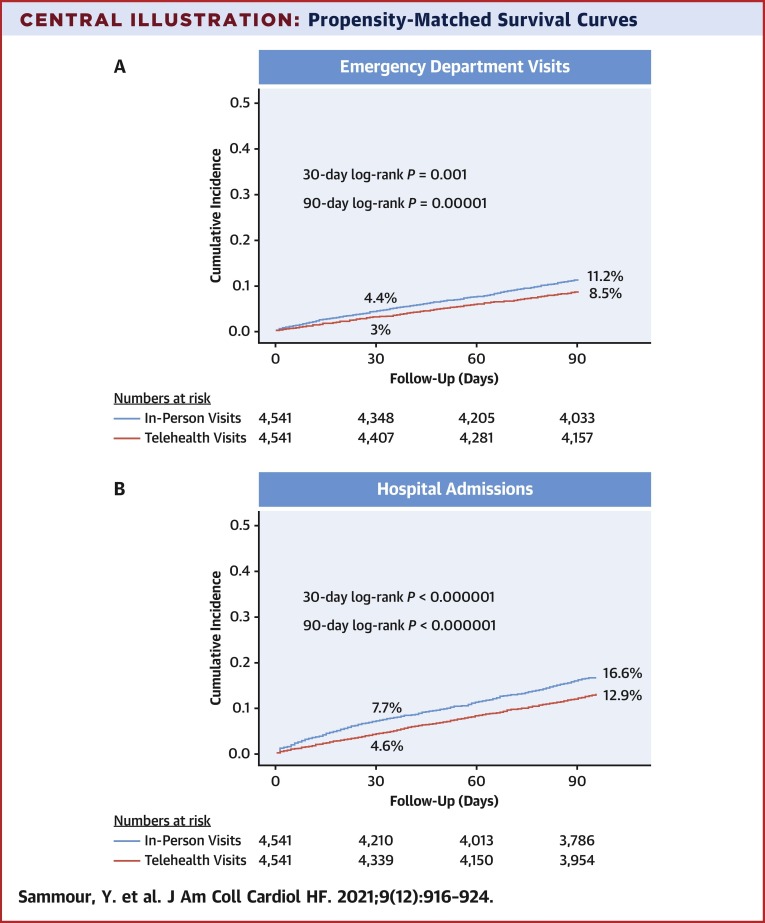
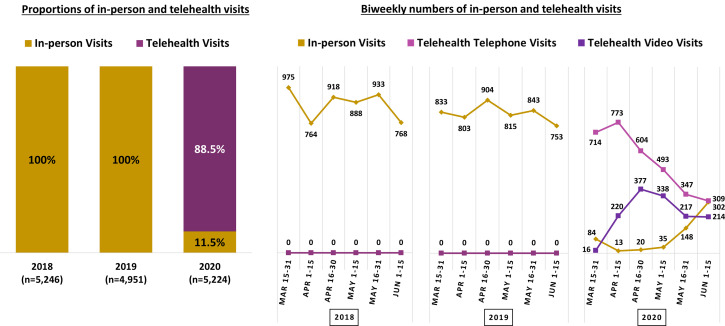
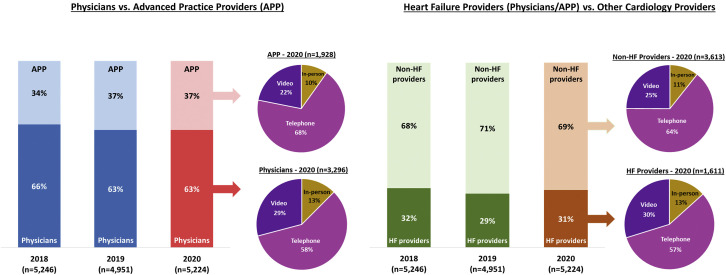
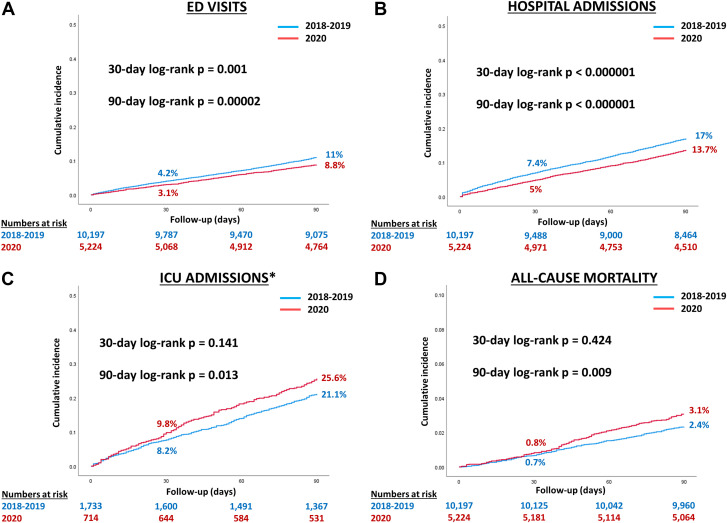
Among 8,263 unique patients with heart failure with 15,421 clinic visits seen from March 15 to June 15, telehealth was employed in 88.5% of 2020 visits but in none in 2018 or 2019. Despite the pandemic, more outpatients were seen in 2020 (n = 5,224) versus 2018 and 2019 (n = 5,099 per year). Using propensity matching, 4,541 telehealth visits in 2020 were compared with 4,541 in-person visits in 2018 and 2019, and groups were well matched. Mortality was similar for telehealth and in-person visits at both 30 days (0.8% vs 0.7%) and 90 days (2.9% vs 2.4%). Likewise, there was no excess in hospital encounters or need for intensive care with telehealth visits.
A telehealth model for outpatients with heart failure allowed for distanced encounters without increases in subsequent acute care or mortality. As the pressures of the COVID-19 pandemic abate, these data suggest that telehealth outpatient visits in patients with heart failure can be safely incorporated into clinical practice.
本研究旨在确定远程医疗使用的增加是否与心力衰竭门诊患者的预后差异相关。
2019冠状病毒病大流行导致门诊医疗服务发生了巨大变化。目前尚不清楚远程医疗使用的增加是否会影响心力衰竭门诊患者的预后。
2020年3月,一个涵盖16家心脏病诊所、16个急诊科和12家医院的大型中西部医疗系统,在2019冠状病毒病大流行背景下启动了基于远程医疗的门诊护理模式。进行倾向匹配分析,以比较2018年和2019年面对面就诊的门诊患者与2020年通过远程医疗就诊的门诊患者的预后。
在2020年3月15日至6月15日期间就诊的8263例心力衰竭患者中,共有15421次门诊就诊,其中88.5%的2020年就诊采用了远程医疗,而2018年和2019年的就诊均未采用远程医疗。尽管发生了大流行,但2020年门诊就诊的患者(n = 5224)仍多于2018年和2019年(每年n = 5099)。采用倾向匹配法,将2020年的4541次远程医疗就诊与2018年和2019年的4541次面对面就诊进行比较,两组匹配良好。远程医疗就诊和面对面就诊在30天(0.8%对0.7%)和90天(2.9%对2.4%)时的死亡率相似。同样,远程医疗就诊的住院次数或重症监护需求也没有增加。
心力衰竭门诊患者的远程医疗模式允许进行远程诊疗,而不会增加随后的急性护理或死亡率。随着2019冠状病毒病大流行压力的缓解,这些数据表明,心力衰竭患者的远程医疗门诊就诊可以安全地纳入临床实践。