Zhang Bo, Zhou Zhulin, Zhang Bingjie, Wang Dan
Department of Neurosurgery, First Hospital of Jilin University, Changchun, Jilin, China.
Department of Neurobiology, Care Sciences & Society, Division of Neurodegerneration, Karolinska Institutett, Karolinska University Hospital Huddinge, Stockholm, Sweden.
Front Pharmacol. 2021 Nov 9;12:709501. doi: 10.3389/fphar.2021.709501. eCollection 2021.
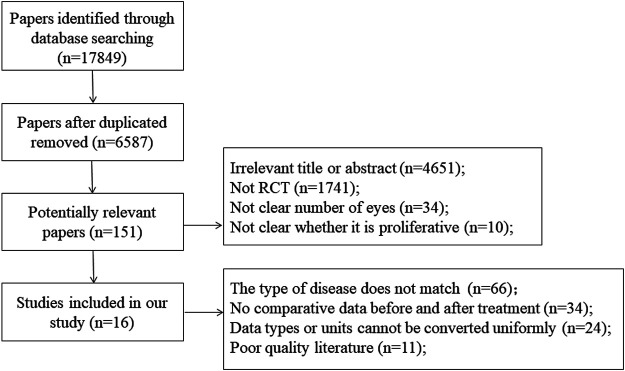
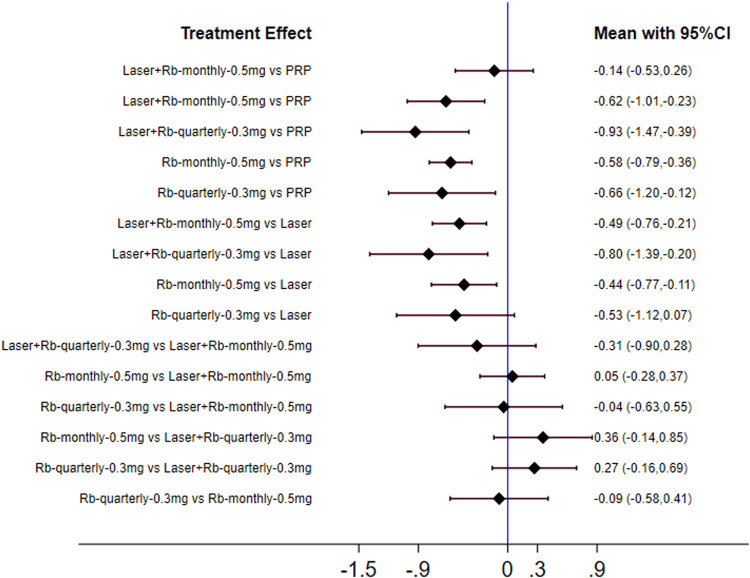
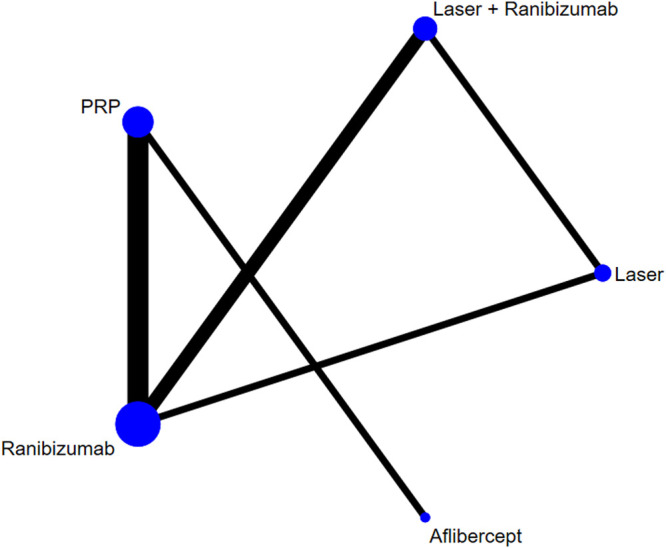
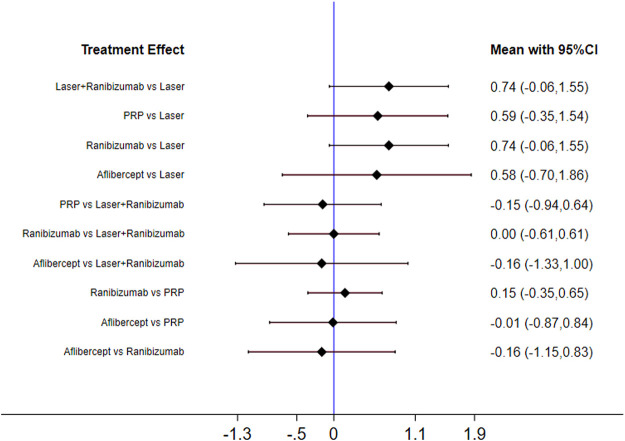
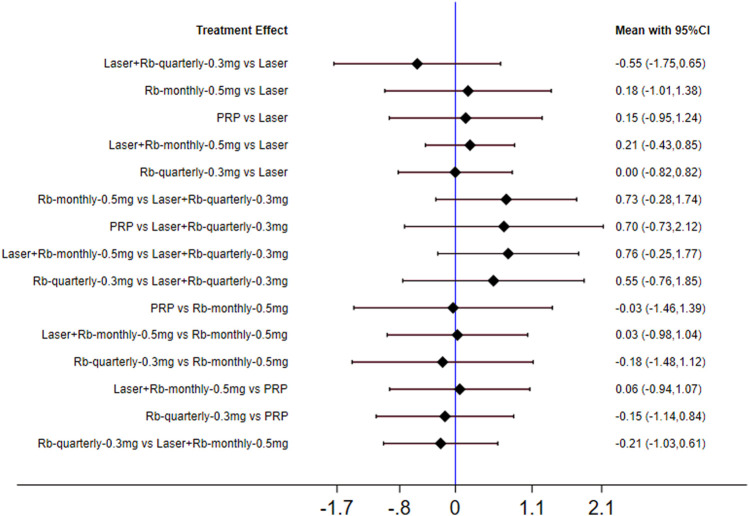
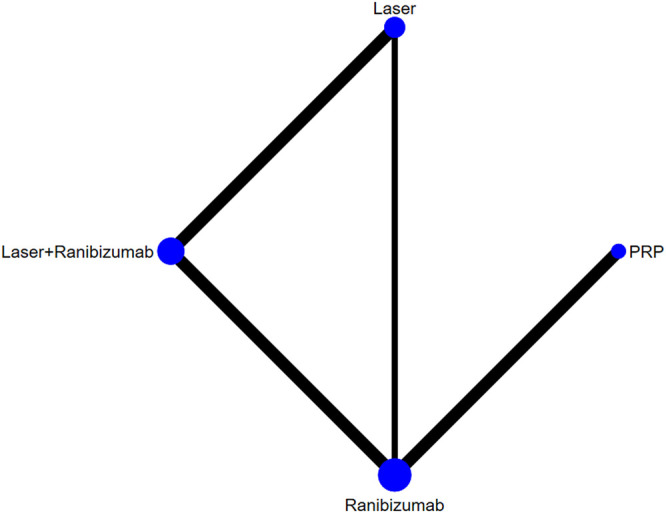
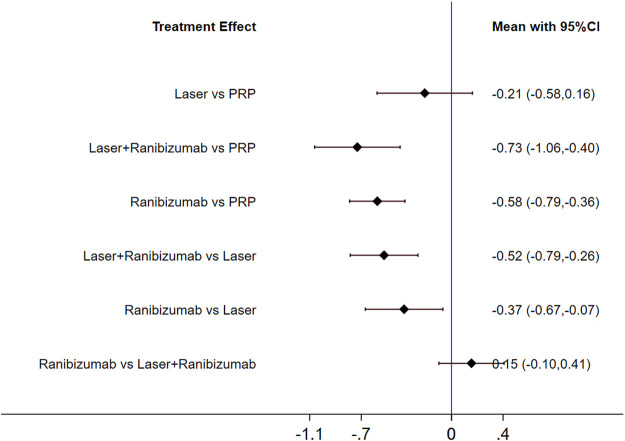
Diabetic retinopathy is the main cause of visual impairment and blindness. The proliferative diabetic retinopathy at the severe stage of diabetic retinopathy is more harmful to vision and even leads to total blindness. To evaluate the visual acuity, central retinal thickness, and adverse reactions of various treatments for proliferative diabetic retinopathy through a systematic network meta-analysis. The relevant research published in English or Chinese from January 1, 2011, to February 1, 2021, was systematically searched by using PubMed, science network, EMBASE, MEDLINE, Cochrane Library, China National Knowledge Infrastructure, Wanfang, and other electronic databases. A total of 15 studies were selected, including 3,222 eyes of PDR patients. Our results show that in terms of visual score improvement, ranibizumab alone (69.90%) and laser + ranibizumab (67.90%) are the best. However, if the groups were grouped again according to the dose and times of ranibizumab injection, the results showed that 0.5 mg ranibizumab injection per month (58.0%) had the best effect on vision improvement. For the change of central retinal thickness, the thickness decreased the most after the laser combined with ranibizumab (96.5%). After the same subgroup analysis, the results were further refined into the best effect of laser combined with 0.3 mg ranibizumab per quarter (72.7%). In addition, our analysis of complications also showed that the overall incidence of adverse reactions of PRP (11.1 ± 12.4, %) was greater than that of ranibizumab (10.6 ± 13.0, %). However, more high-quality randomized controlled trials with longer follow-up using standard methods are still needed to verify the correlation.
糖尿病视网膜病变是视力损害和失明的主要原因。糖尿病视网膜病变严重阶段的增殖性糖尿病视网膜病变对视力危害更大,甚至导致完全失明。通过系统的网络荟萃分析来评估增殖性糖尿病视网膜病变各种治疗方法的视力、视网膜中央厚度及不良反应。使用PubMed、科学网、EMBASE、MEDLINE、Cochrane图书馆、中国知网、万方等电子数据库,系统检索2011年1月1日至2021年2月1日以英文或中文发表的相关研究。共纳入15项研究,包括3222只增殖性糖尿病视网膜病变患者的眼睛。我们的结果显示,在视力评分改善方面,单用雷珠单抗(69.90%)和激光联合雷珠单抗(67.90%)效果最佳。然而,若根据雷珠单抗注射剂量和次数再次分组,结果显示每月注射0.5mg雷珠单抗(58.0%)对视力改善效果最佳。对于视网膜中央厚度的变化,激光联合雷珠单抗后厚度下降最多(96.5%)。经过同样的亚组分析,结果进一步细化为每季度激光联合0.3mg雷珠单抗效果最佳(72.7%)。此外,我们对并发症的分析还显示,全视网膜光凝(PRP)不良反应的总发生率(11.1±12.4,%)高于雷珠单抗(10.6±13.0,%)。然而,仍需要更多采用标准方法且随访时间更长的高质量随机对照试验来验证这种相关性。