Guan Jingyuan, Bao Wuyun, Xu Yao, Yang Wei, Li Mengmeng, Xu Mingjun, Zhang Yu, Zhang Mei
The Key Laboratory of Cardiovascular Remodeling and Function Research, Chinese Ministry of Education, Chinese National Health Commission and Chinese Academy of Medical Sciences, The State and Shandong Province Joint Key Laboratory of Translational Cardiovascular Medicine, Qilu Hospital of Shandong University, Jinan, China.
Front Pharmacol. 2021 Nov 11;12:770580. doi: 10.3389/fphar.2021.770580. eCollection 2021.
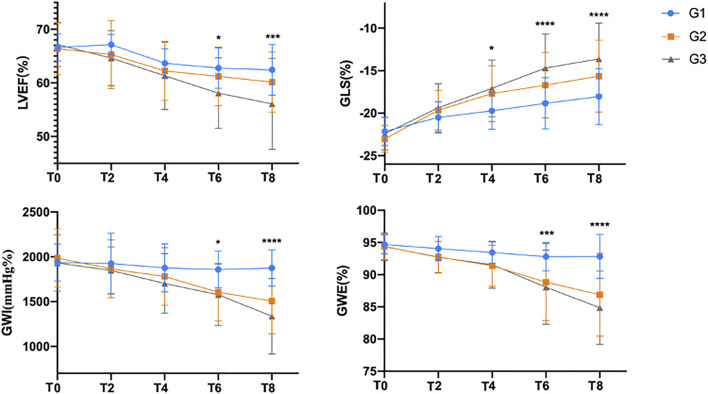
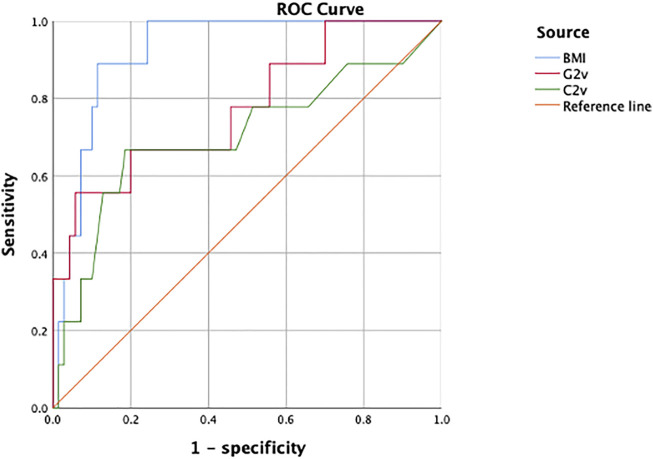
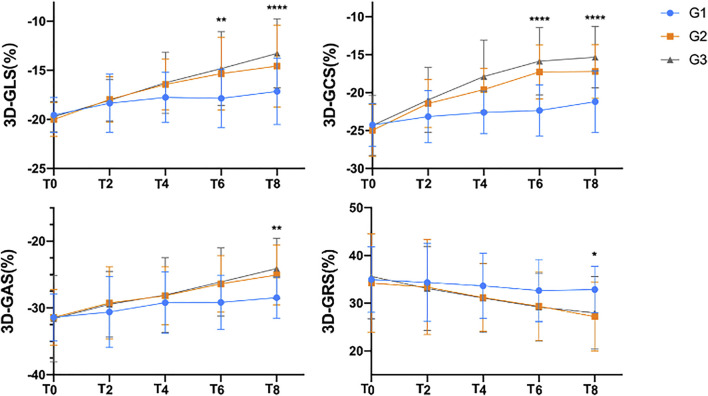
No study has examined myocardial work in subjects with cancer therapy-related cardiac dysfunction (CTRCD). Myocardial work, as a new ultrasonic indicator, reflects the metabolism and oxygen consumption of the left ventricle. The aim of this study was to test the relative value of new indices of myocardial work and global longitudinal strain (GLS) in detecting changes in myocardial function during the treatment of breast cancer by two-dimensional and three-dimensional echocardiography. We enrolled 79 breast cancer patients undergoing different tumor treatment regimens. Follow-up observation was conducted before and after chemotherapy. The effects of breast cancer chemotherapy and targeted therapy on the development of CTRCD [defined as an absolute reduction in left ventricular ejection fraction (LVEF) of >5% to <53%] were detected by two-dimensional and three-dimensional speckle tracking echocardiography. Our findings further indicate that LVEF, myocardial work index (GWI) and myocardial work efficiency (GWE) showed significant changes after the T6 cycle, and GLS showed significant changes after the T4 cycle ( < 0.05). The three-dimensional strain changes after T6 and T8 had no advantages compared with GLS. Body mass index (BMI), the GLS change rate after the second cycle of chemotherapy (G2v) and the 3D-GCS change rate after the second cycle of chemotherapy (C2v) were independent factors that could predict the occurrence of CTRCD during follow-up, among which BMI was the best predictor (area under the curve, 0.922). In conclusion, the current study determined that GLS was superior to GWI in predicting cardiac function in patients with tumors with little variation in blood pressure. BMI, G2v and C2v can be used to predict the occurrence of CTRCD.
尚无研究对癌症治疗相关心脏功能障碍(CTRCD)患者的心肌做功进行过检测。心肌做功作为一项新的超声指标,反映左心室的代谢和氧耗情况。本研究旨在通过二维和三维超声心动图检测心肌做功新指标和整体纵向应变(GLS)在乳腺癌治疗期间心肌功能变化检测中的相对价值。我们纳入了79例接受不同肿瘤治疗方案的乳腺癌患者。在化疗前后进行随访观察。通过二维和三维斑点追踪超声心动图检测乳腺癌化疗和靶向治疗对CTRCD发生发展的影响[定义为左心室射血分数(LVEF)绝对降低>5%至<53%]。我们的研究结果进一步表明,T6周期后LVEF、心肌做功指数(GWI)和心肌做功效率(GWE)出现显著变化,T4周期后GLS出现显著变化(<0.05)。T6和T8周期后的三维应变变化与GLS相比并无优势。体重指数(BMI)、化疗第二周期后GLS变化率(G2v)和化疗第二周期后三维全球心肌应变(3D-GCS)变化率(C2v)是随访期间可预测CTRCD发生的独立因素,其中BMI是最佳预测指标(曲线下面积,0.922)。总之,本研究确定在血压变化不大的肿瘤患者中,GLS在预测心脏功能方面优于GWI。BMI、G2v和C2v可用于预测CTRCD的发生。